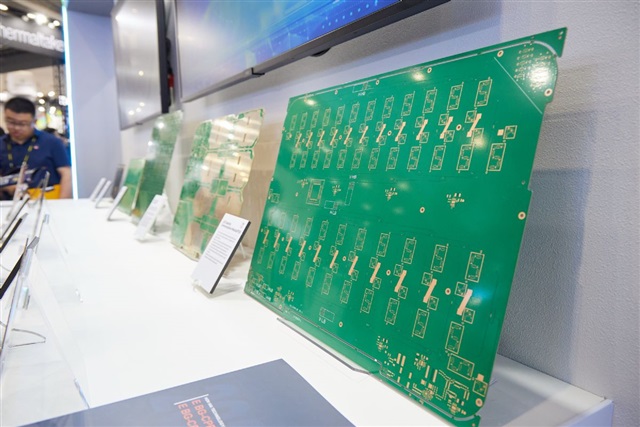
As data centers absorb every available GPU, a less visible but structural figure reshapes the hardware landscape: Taiwan will produce printed circuit boards (PCBs) for AI servers worth NT$256.1 billion in the second quarter of 2026, according to DIGITIMES estimates. That is the highest on record for the segment, telling the story of an industry racing to avoid becoming the bottleneck in the Large Language Model race.
Why PCBs matter in the AI game
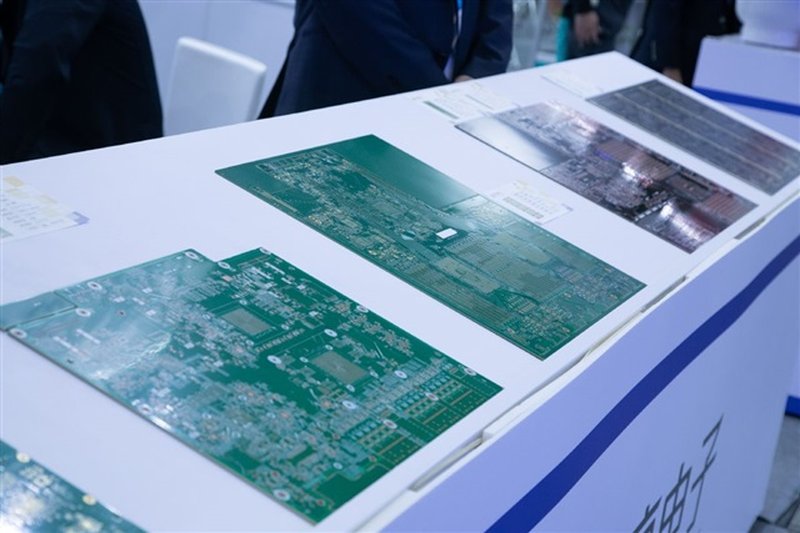
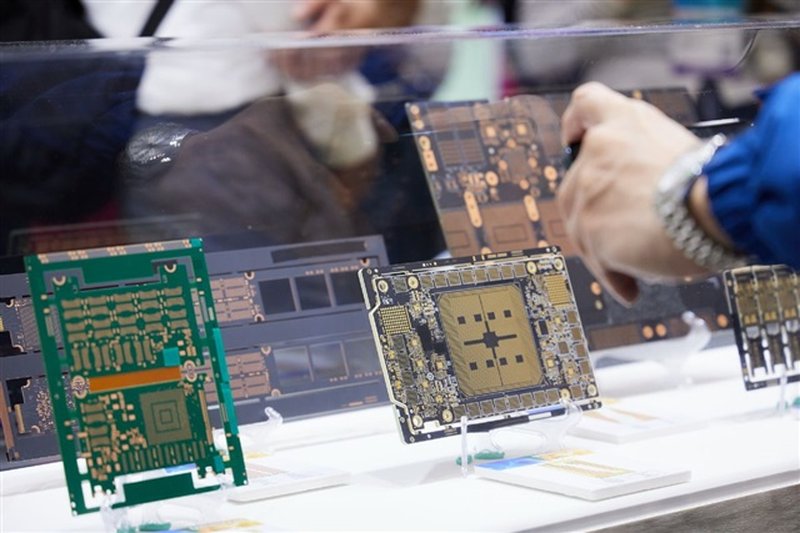
When the subject is LLM servers, attention grabs GPUs, VRAM, and memory bandwidth. Yet without high-density multilayer PCBs—those hosting accelerators like H100s or future ASICs—there would be neither stable NVLink interconnects nor efficient power delivery. AI boards must handle over 700 amps in tight spaces, with copper traces so thin they challenge material physics. Taiwan's dominance—more than 60% of global high-end PCB output—turns every demand swing into a temperature reading for the entire supply chain.
The signal behind the number
The NT$256.1 billion forecast (roughly €7.3 billion) is not just an accounting peak. It signals that server makers are betting on accelerating orders well past 2025, wagering on a market where inference and distributed training will be permanent assets, not passing fads. The beneficiaries include PCB manufacturers such as Unimicron, Kinsus, and Nan Ya, which are shifting capacity to ABF (Ajinomoto Build-up Film) substrates, essential for advanced GPU packaging.
What it means for those evaluating on-premise
For organizations weighing self-hosted deployments, the figure has a practical side. A supply chain this concentrated—and already stretched—can lengthen lead times for entire clusters, especially when ordering custom configurations or planning air-gapped setups. It's not just a CapEx issue: TCO feels the impact of delays and volatility in passive component pricing. At AI-RADAR, those facing such decisions often encounter analyses on the balance between direct hardware control and dependence on third-party suppliers, a theme this projection makes even more pressing.
Beyond Q2 2026: a geopolitical chess match
Finally, a sovereignty subplot. While Washington and Brussels push for chip reshoring, Taiwan's surge shows how hard it is to dislodge an ecosystem built over decades. For IT decision-makers, the question is no longer just “which GPU,” but “how much flexibility do I have if a single PCB supplier misses a quarter?” 2026 begins today.




💬 Comments (0)
🔒 Log in or register to comment on articles.
No comments yet. Be the first to comment!