
The Explosion in AI Cooling Demand
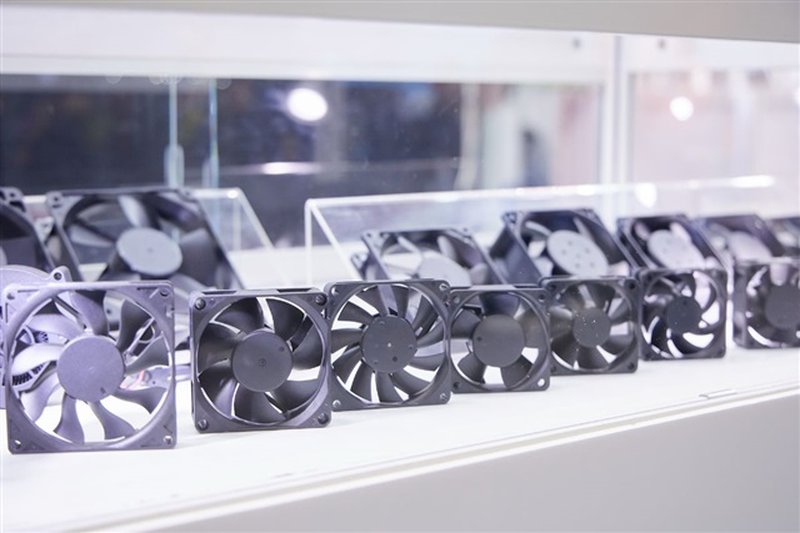
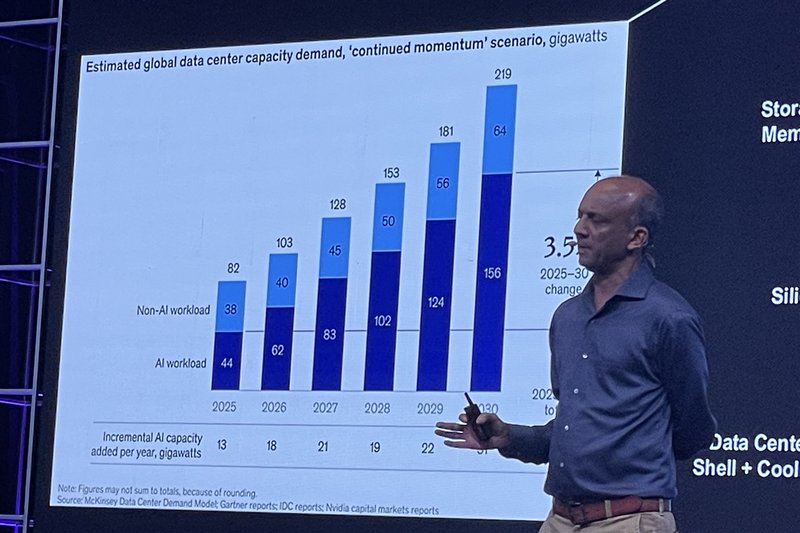
The artificial intelligence industry is undergoing a phase of exponential growth, driven by the increasingly widespread adoption of Large Language Models (LLM) and complex workloads. This expansion is not limited to software and algorithms but extends deeply into the physical infrastructure that supports these technologies. A critical, often underestimated aspect, is thermal management. According to DIGITIMES analyses, the demand for AI cooling systems is booming and is expected to continue growing significantly until 2029, leading to positive prospects for suppliers in the sector.
This surge in demand is a direct consequence of the relentless pursuit of higher computational density and performance. Modern AI applications, from sophisticated LLMs to advanced deep learning models, require vast amounts of processing power, primarily delivered by high-performance Graphics Processing Units (GPUs). These accelerators, while incredibly powerful, also generate substantial heat, making efficient cooling an indispensable component of any scalable AI infrastructure.
Infrastructural Challenges for On-Premise Deployments
The acceleration of AI workloads, particularly LLM inference and training, necessitates the use of high-performance hardware such as the latest generation GPUs (e.g., NVIDIA H100 or A100). These processors, with their high transistor density and intense power consumption, generate considerable amounts of heat. Traditional data centers, designed for less intensive workloads, are often unable to handle the thermal power density required by modern AI clusters.
To overcome these barriers, companies are actively exploring liquid cooling solutions, such as direct-to-chip or immersion cooling. These technologies, while more efficient and capable of supporting higher compute densities, involve significant investments in infrastructure (specialized racks, liquid distribution systems, chillers) and require specific expertise for deployment and maintenance. For CTOs and infrastructure architects, adapting existing data centers or designing new ones to accommodate these advanced cooling methods represents a major challenge.
Impact on TCO and Strategic Planning
The choice of cooling strategy has a direct impact on the Total Cost of Ownership (TCO) of an on-premise AI infrastructure. While the initial CapEx for liquid cooling might be higher, it can lead to substantial savings in long-term operational costs due to greater energy efficiency and the ability to concentrate more computing power in a smaller footprint. This is particularly relevant for organizations opting for self-hosted deployments due to data sovereignty, regulatory compliance (such as GDPR), or the need for air-gapped environments.
In these scenarios, autonomous management of the infrastructure, including the thermal component, becomes a critical success factor. Accurate planning of cooling capacities is therefore essential to avoid bottlenecks, ensure system reliability, and optimize overall operational costs. The trade-off between initial investment and long-term efficiency is a key consideration for any enterprise evaluating its AI infrastructure strategy.
Future Outlook and Considerations for Enterprises
The forecast of continuous growth in AI cooling demand until 2029 underscores that this aspect is no longer a secondary detail but a fundamental strategic component for any artificial intelligence deployment. For CTOs, DevOps leads, and infrastructure architects, it is imperative to consider the implications of cooling from the earliest stages of AI infrastructure design. The ability to effectively manage heat will not only influence system performance and reliability but also significantly impact TCO and future scalability.
AI-RADAR, through its analytical frameworks, offers tools to evaluate these complex trade-offs, supporting strategic decisions between on-premise and cloud solutions for LLM workloads. As the AI landscape evolves, proactive planning for thermal management will be a distinguishing factor for organizations aiming to maximize their investment in AI technologies while maintaining control over their data and infrastructure.





💬 Comments (0)
🔒 Log in or register to comment on articles.
No comments yet. Be the first to comment!