
AI Demand Drives Hardware Shipments
The artificial intelligence market continues to show robust growth, with strong and continuously increasing demand for AI tokens. This trend, as highlighted by the TAITRA chair, directly translates into an increase in dedicated hardware shipments, underscoring an unbreakable link between the adoption of advanced models and the need for increasingly powerful computational infrastructures. Companies, particularly those operating with Large Language Models (LLM), face the challenge of scaling their capabilities to meet this growing demand.
The expanding use of LLMs, for both internal applications and customer-facing services, requires significant resources. Every interaction, every text processing or content generation, results in token consumption, which in turn demands computational power. This virtuous, or in some respects challenging, cycle stimulates innovation and production in the silicon and hardware component sector, from specialized GPUs to high-speed memory systems, essential for managing intensive workloads and ensuring low latencies.
The Demand Landscape and Infrastructure Impact
The strong demand for AI tokens is not an isolated phenomenon but reflects a broader adoption of artificial intelligence across various industrial sectors. From finance to healthcare, logistics to research, organizations are integrating LLMs into their operational pipelines to automate processes, improve data analysis, and offer more personalized user experiences. This massive integration generates a computational requirement that extends far beyond the capabilities of traditional infrastructures.
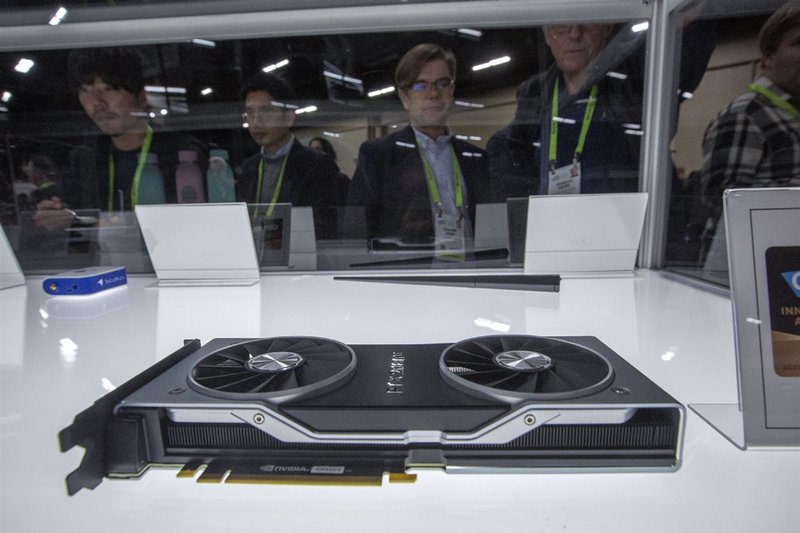
The impact is evident in a race to acquire the latest generation hardware, particularly GPUs with high VRAM and parallel processing capabilities. The availability of these resources becomes a critical factor for the success of AI projects, directly influencing model training speed, Inference efficiency, and the ability to handle large batch sizes. For CTOs and infrastructure architects, planning and procuring these components represent a strategic priority, with significant implications for costs and future scalability.
Deployment Strategies: On-Premise and Its Advantages
Given this surge in hardware demand, decisions regarding LLM deployment become crucial. While the cloud offers flexibility and immediate scalability, a growing number of companies are evaluating on-premise or hybrid solutions. Self-hosted deployment, on bare metal infrastructures or private clouds, allows for complete control over data and the computational environment, which are fundamental aspects for data sovereignty and regulatory compliance, such as GDPR.
Furthermore, for consistent and long-term AI workloads, a thorough Total Cost of Ownership (TCO) analysis may reveal that on-premise solutions offer significant economic advantages compared to recurring cloud operational expenses (OpEx). Although the initial capital expenditure (CapEx) may be higher, direct hardware management, energy optimization, and the absence of data transfer costs can lead to substantial savings over time. For those evaluating on-premise deployment, AI-RADAR offers analytical frameworks on /llm-onpremise to assess the trade-offs between performance, cost, and control.
Future Outlook and Strategic Considerations
The trend indicated by TAITRA suggests that the demand for AI hardware will not diminish in the near future. This scenario compels companies to adopt a strategic and forward-thinking approach to planning their AI infrastructures. The choice between on-premise, cloud, or a hybrid model must be guided by a careful evaluation of specific workload requirements, security and compliance needs, and TCO objectives.
The ability to effectively manage LLM Inference and fine-tuning on proprietary hardware, perhaps in air-gapped environments, will become a competitive differentiator. Today's infrastructure decisions will determine the flexibility and efficiency with which organizations can leverage the potential of artificial intelligence, while ensuring data protection and operational control. The continuous evolution of the hardware market and AI models will require constant monitoring and strategic adaptability to stay ahead.






💬 Comments (0)
🔒 Log in or register to comment on articles.
No comments yet. Be the first to comment!