An Unprecedented Conflict Among Chimpanzees
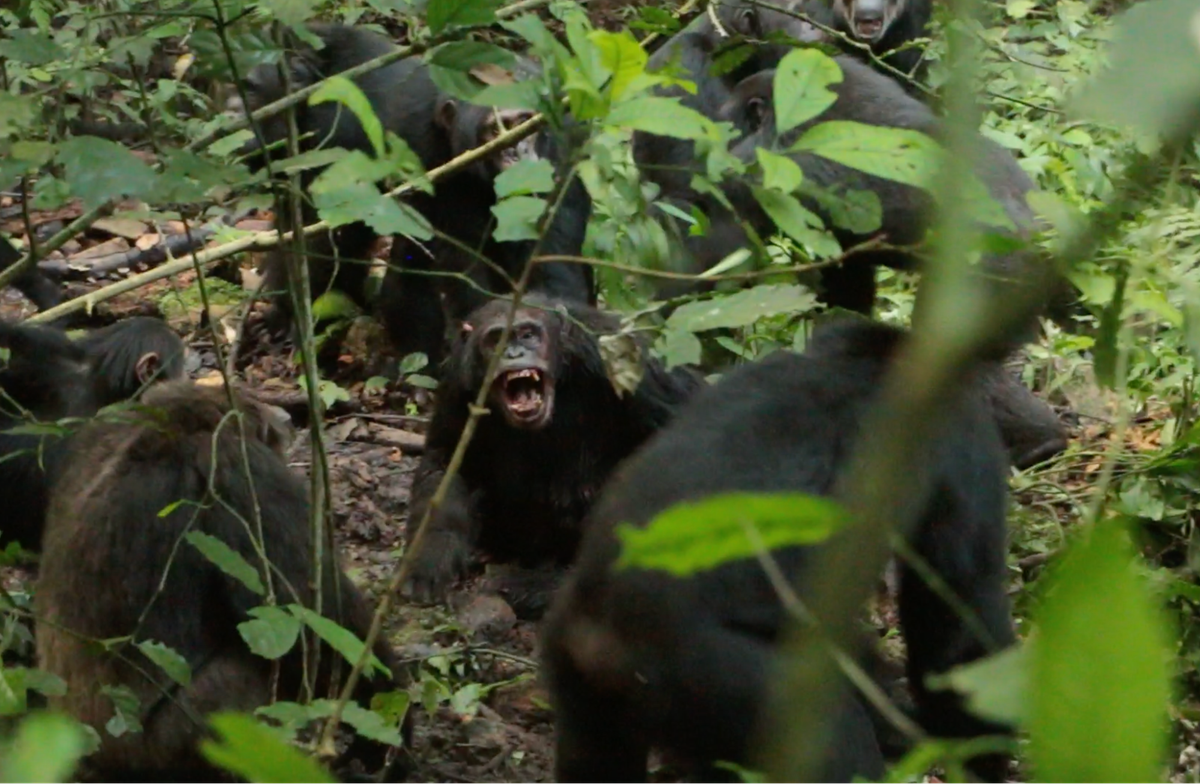
A new study, published in Science, has revealed an extremely rare event in the animal kingdom: a true "civil war" among chimpanzees. This conflict, observed among members of the Ngogo group in Uganda, has resulted in the deaths of at least seven adults and seventeen infants, providing new and profound insights into the very nature of warfare, even in human contexts. While aggression by male chimpanzees towards outsiders is common, it is unusual for them to kill former members of their own social groups.
History records one famous precedent: the "Gombe Chimpanzee War" in the 1970s, observed by Jane Goodall and her colleagues, which resulted in seven adult deaths. However, such violent episodes are estimated to occur only once every 500 years, based on genetic analyses of chimpanzee lineages. The rarity of these events makes the current observation even more significant for the scientific community.
The research team, led by Aaron Sandel, an associate professor of anthropology at the University of Texas at Austin, has documented a far deadlier "group fissure" among the Ngogo chimpanzees. This population, which at one point exceeded 200 individuals, represents the largest group of chimpanzees ever observed in the wild. Over the past decade, the group has fractured into two distinct factions, one of which has staged multiple lethal raids on the other, once part of the same community.
The Chronicle of a Deadly Division
The Ngogo group has been studied since the 1970s by primatologists like Thomas Struhsaker, and has been intensively observed since 1995 as part of the Ngogo Chimpanzee Project, set up by David Watts and John Mitani. This long history of observation allowed researchers to closely monitor every phase of the conflict. As Sandel emphasized, "Certainly, these are not strangers. These are chimps that once knew each other, and we know that for certain."
Before the fissure, the Ngogo group consisted of distinct subpopulations, such as the Western and Central clusters, which nonetheless regularly overlapped for shared social activities like grooming, patrolling, and interbreeding. Sandel vividly remembers June 24, 2015, as the exact day this dynamic noticeably shifted. Following the Western cluster, he noticed the chimpanzees went quiet and appeared nervous upon hearing members of the Central cluster, a behavior typical when encountering outsiders.
Instead of reuniting in typical chimpanzee fashion, with screaming and charging followed by reconciliation, the Western chimpanzees ran and the Central chimps chased them. What started as a weird vibe transformed into a weeks-long chill between the groups, followed by a temporary thaw, ultimately spiraling into bloody conflicts. "You act like a stranger, you become a stranger," Sandel said, suggesting this event planted the seed of polarization. Over the next few years, males in each cluster began treating each other like outsiders, and full separation occurred by 2018. The Western cluster, despite being smaller in number, has since escalated hostilities, staging 24 violent attacks and killing at least seven mature males and seventeen infants from the Central cluster.
Hypotheses on Causes and Social Dynamics
Sandel and his colleagues proposed a few possible causes for this "civil war," a term that, while specifically referring to human conflicts, may have parallels in other species. First, the unusually large size of the group may have amplified feeding competition among individuals, even in their lush forest habitat. Second, social networks within the group may have also been disrupted by a wave of six deaths in 2014 – five adult males and one adult female – some of whom likely died from disease.
The beginning of the fissure also coincides with the rise of a new alpha male, Jackson, who replaced the previous alpha, Miles. Sandel recalled Miles grunting in submission to Jackson on the same day that the Western cluster ran away from the Central cluster. Such transitions between alphas can introduce social instabilities as the dominance hierarchy is upended, a process that can take several months. Indeed, Miles reacted violently toward other members of the group in the wake of his displacement. Ironically, Jackson, who led the Central cluster, ended up as one of the casualties of the conflict, dying from injuries inflicted by the Western cluster in 2022.
Implications for Understanding Human Conflicts
Whatever the cause of the rupture, this group of former kin has now become a collection of hostile enemies. While it is always risky to draw broad comparisons between the behavior of humans and other animals, the team speculates in the study that one possible takeaway is that "it may be in the small, daily acts of reconciliation and reunion between individuals that we find opportunities for peace."
Sandel emphasized the importance of studying chimpanzees in detail to understand the mechanisms driving their cooperation and conflict. "If chimps are able to do this complex process in the absence of ethnicity, language, and religion – the things we often attribute to human warfare – chimps don't have those narratives and those excuses," he concluded. "They're stripped away of those cultural dimensions. It must be their interpersonal social bonds and daily conflicts, reconciliations, and avoidances – all those dynamics. If that's the case with chimps, to what extent is it the case in humans? It's a hypothesis to be tested."






💬 Comments (0)
🔒 Log in or register to comment on articles.
No comments yet. Be the first to comment!