
Musk's Vision and Intel's Role in the AI Chip Landscape
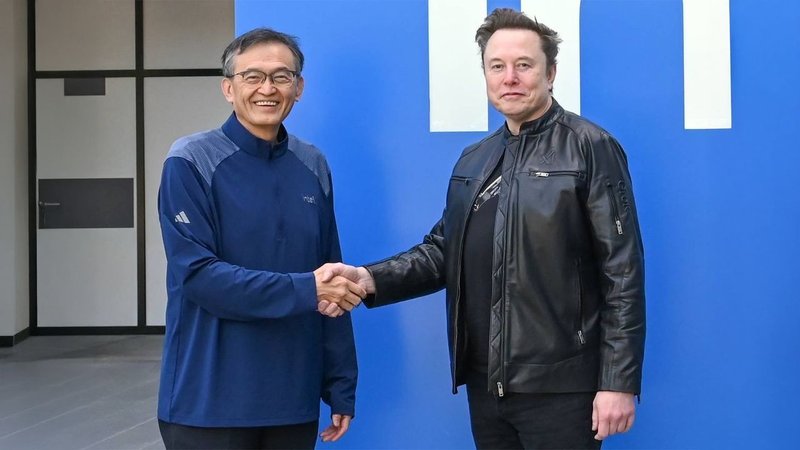
The artificial intelligence ecosystem, particularly that of Large Language Models (LLM), is intrinsically linked to the availability and capability of underlying silicio. In this scenario, the announcement of a potential collaboration between Elon Musk and Intel for a new chip initiative, reportedly named "Terafab," has generated considerable interest. However, the specific details of this partnership currently remain extremely vague, fueling speculation and questions about its true nature and prospects for success.
Musk's move, known for his ambitions of vertical integration in key sectors like automotive and space, suggests a clear desire to control the fundamental hardware infrastructure for his AI ventures, such as xAI. Intel, on the other hand, is seeking to reassert its leadership in the semiconductor manufacturing sector, including through its foundry division, offering fabrication services to third parties. This convergence of interests could, in theory, create a powerful synergy, but the lack of clarity on terms and objectives raises more questions than answers.
Technical and Strategic Unknowns of the Collaboration
The core of the uncertainty lies in precisely defining Intel's role in this "Terafab." Is it a partnership for designing AI-specific chips, perhaps optimized for LLM Inference or Training workloads? Or will Intel merely provide manufacturing capacity, acting as a foundry for Musk's designs? The answer to these questions has profound implications for both Intel's strategy and Musk's ambitions in the semiconductor sector.
Cutting-edge chip production is an extremely complex and capital-intensive undertaking, requiring massive investments in research and development, equipment, and highly specialized personnel. For companies evaluating self-hosted LLM deployments, the availability of custom or optimized hardware can be a critical factor for TCO and ensuring data sovereignty. An effective partnership could accelerate the development of dedicated silicio, but the technical and logistical challenges are immense, especially considering the need to achieve competitive volumes and performance.
Implications for On-Premise Deployments and Data Sovereignty
For CTOs, DevOps leads, and infrastructure architects considering self-hosted alternatives to the cloud for AI/LLM workloads, the possibility of accessing specialized silicio is a decisive factor. Direct control over hardware can offer advantages in terms of latency, throughput, and security—crucial elements for air-gapped environments or those with stringent compliance requirements. A successful "Terafab" could, in principle, provide an alternative source of high-performance chips, reducing dependence on a limited number of dominant suppliers.
However, the path to mass production of competitive chips is fraught with obstacles. The trade-offs between development costs, time-to-market, and final performance are constant. Choosing a partner like Intel, with its vast experience but also its recent challenges in the foundry sector, introduces an additional layer of complexity. Transparency and clear definition of objectives will be essential to overcome these uncertainties and determine whether this partnership can truly translate into a tangible advantage for the AI ecosystem.
Future Prospects: Between Ambition and Realism
Elon Musk and Intel's initiative, though still nebulous, highlights a growing trend in the tech sector: the pursuit of greater control over the hardware supply chain, particularly for AI. The ability to design and produce optimized chips in-house or through strategic partnerships can confer a significant competitive advantage, especially for companies managing large volumes of sensitive data and requiring robust, controlled infrastructures.
For those evaluating on-premise deployments, the evolution of these collaborations will be worth monitoring closely. The availability of new hardware options could influence decisions regarding CapEx, OpEx, and the choice between bare metal or containerized solutions. Currently, the partnership between Musk and Intel remains a question mark, but its potential influence on the future of AI silicio and on-premise deployment strategies is undeniable. Only time will tell if this ambitious vision will translate into a concrete and successful reality.





💬 Comments (0)
🔒 Log in or register to comment on articles.
No comments yet. Be the first to comment!