
AI Between Enthusiasm and Skepticism: The Public Perception Dilemma
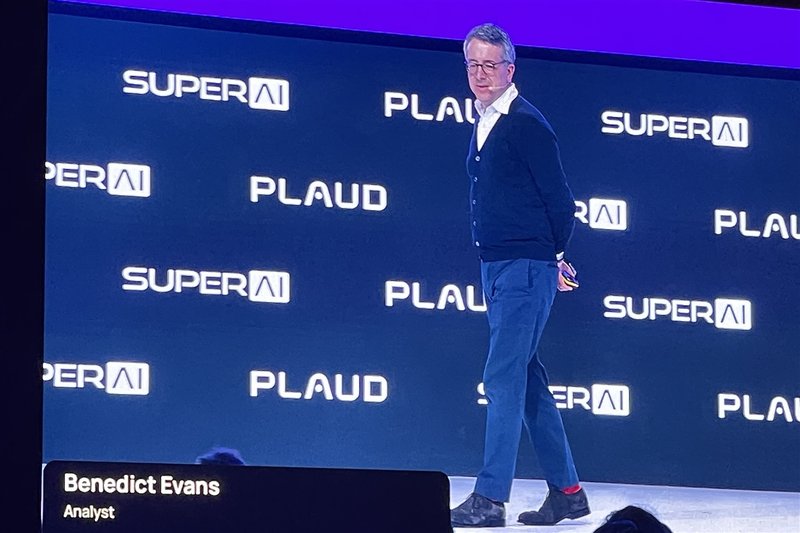
The narrative surrounding artificial intelligence, particularly Large Language Models (LLMs), is often polarized. While technological innovation generates high expectations, a growing caution emerges, especially among younger generations. The idea of a future shaped by AI struggles to elicit unanimous enthusiasm, as highlighted by the difficulty in engaging graduating students on this topic.
This ambivalence is not merely a cultural phenomenon; it translates into concrete implications for companies preparing to integrate AI into their operations. Public perception can influence the internal and external acceptance of AI solutions, trust in automated systems, and ultimately, the success of digital transformation projects. For CTOs and DevOps leads, understanding and managing this perception becomes a critical factor in defining deployment strategies.
From Distrust to Trust: The Role of Control and Transparency
Caution towards AI often stems from concerns related to privacy, data security, potential job displacement, and the lack of transparency in "black box" models. These fears cannot be ignored by organizations aiming for responsible and sustainable AI adoption. On the contrary, they reinforce the need for solutions that guarantee granular control over data and processes.
In this context, on-premise or hybrid deployment architectures emerge as strategic options. They allow companies to keep sensitive data within their own infrastructure boundaries, meeting data sovereignty and regulatory compliance requirements (such as GDPR). The ability to audit and understand the internal workings of models, even through local Fine-tuning and Quantization techniques, becomes a fundamental asset for building trust and mitigating perceived risks.
Data Sovereignty and TCO: The Pillars of On-Premise Deployment
The choice between cloud and self-hosted deployment for AI workloads is not just a technical matter, but also a strategic one, influenced by perception and the need for control. On-premise solutions offer unparalleled control over data security and location, crucial aspects for regulated sectors or companies with stringent security policies. An air-gapped environment, for example, ensures maximum protection against external access.
Beyond data sovereignty, the Total Cost of Ownership (TCO) is a decisive factor. Although the initial investment in hardware (GPUs like A100 or H100, VRAM, storage) can be significant, a thorough TCO analysis over a 3-5 year horizon can reveal economic advantages for intensive and predictable AI workloads compared to recurring cloud operational costs. Internal infrastructure management also allows for optimizing resource utilization and customizing the environment for specific Throughput and latency needs.
Building the Future of AI with Responsibility and Strategy
The challenge of generating enthusiasm for an AI-driven future is not just a communication problem, but an indicator of the need for a more mature and responsible approach to the development and deployment of these technologies. Companies must look beyond the hype, focusing on creating AI systems that are not only powerful but also reliable, transparent, and aligned with ethical values.
For tech decision-makers, this means carefully evaluating the trade-offs between cloud flexibility and on-premise control, considering the impact of public perception on adoption strategies. AI-RADAR offers analytical frameworks on /llm-onpremise to support these evaluations, providing tools to balance performance, costs, and data sovereignty requirements, and build an AI future that inspires trust, not just caution.








💬 Comments (0)
🔒 Log in or register to comment on articles.
No comments yet. Be the first to comment!