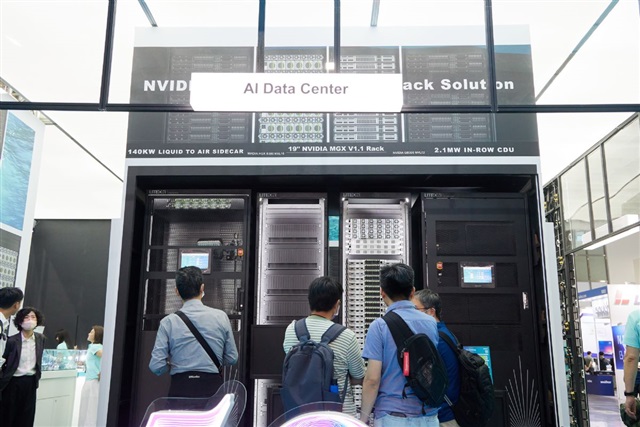
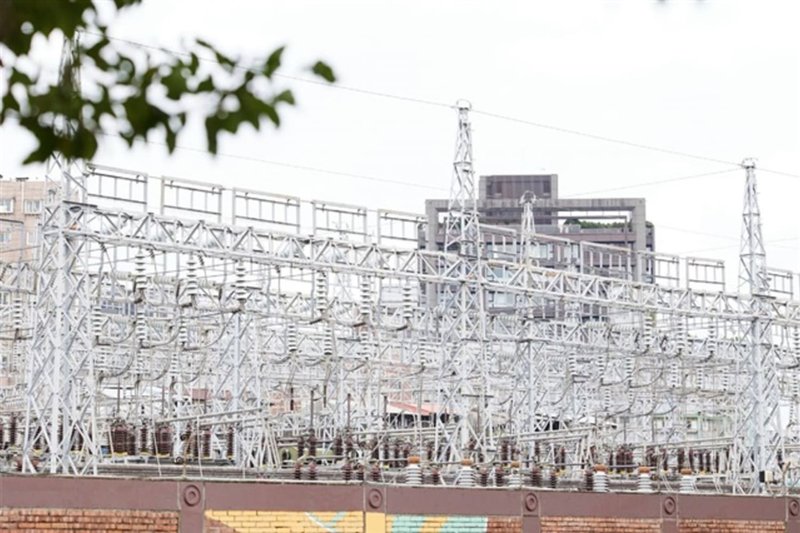
Taiwan is not just the factory for the chips powering global artificial intelligence—it is also an open-air laboratory for what happens when computing demand outstrips grid capacity. The analysis published by DIGITIMES highlights an issue that is as obvious as it is overlooked: AI data centers are becoming so energy-hungry that they are straining the island's electricity infrastructure.
The stress on Taiwan's grid is the most visible symptom of a structural dynamic. Training and inference on ever-larger models require GPUs with per-unit power draws well beyond a kilowatt, and when aggregated in clusters of thousands of nodes, the total consumption challenges any capacity planning. It is no coincidence that major cloud providers are negotiating directly with utilities to secure priority energy access.
This scenario has implications that extend far beyond Taiwan's geographical borders. For those evaluating on-premise deployments, energy cost was never a footnote: today it is the primary factor in Total Cost of Ownership, alongside cooling. A rack of GPUs can demand power densities of up to tens of kilowatts, and not every corporate facility or regional datacenter is equipped to handle such loads without massive structural investments. The question many organizations are now asking is not whether AI is needed, but whether the local grid can sustain it.
Yet energy scarcity is not just a constraint; it is a powerful accelerator of innovation. Hardware manufacturers are shifting focus from raw performance to per-watt efficiency, as seen in the architectural evolution of the latest GPU generations and dedicated accelerators. At the same time, techniques like quantization (from FP16 to INT8 and beyond) and inference pipeline optimization reduce computational requirements without critically sacrificing output quality. Smaller models, trained on curated data, are also proving that bigger is not always better.
In this context, the Taiwanese case signals a future where energy availability will become a siting criterion for AI data centers, on par with connectivity and latency. Regions with robust grids and favorable energy mixes will attract investment, while congested areas will see operating costs rise. For IT infrastructure managers, the imperative is clear: the next hardware purchasing decision will be measured not just in teraflops, but also in watts and thermal dissipation capacity.
At AI-RADAR we track these dynamics closely, offering analytical frameworks for those balancing computational power and operational sustainability in on-premise deployments. The lesson from Taiwan is that energy is not a detail—it is the true bottleneck.







💬 Comments (0)
🔒 Log in or register to comment on articles.
No comments yet. Be the first to comment!