
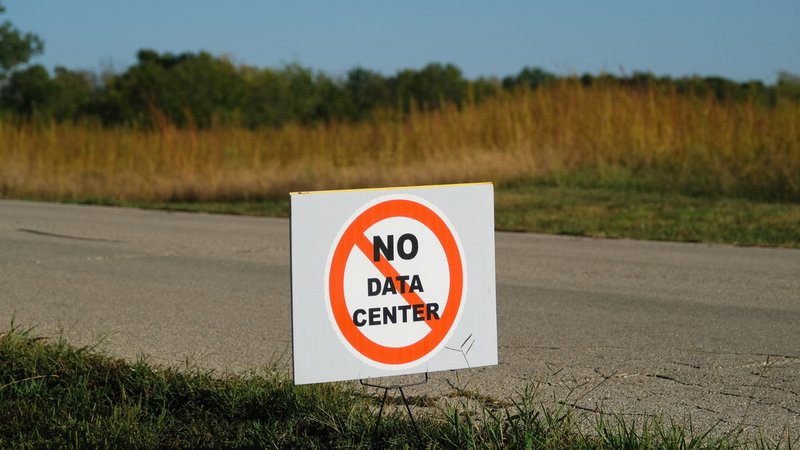
Last Saturday, American opposition to data centers stopped being a mosaic of scattered zoning appeals and started acting like a national movement. More than 140 rallies in 42 states, gathered under a single banner, turned into a day of mobilization aimed squarely at the concrete of artificial intelligence: the industrial buildings where large-scale models are trained and run. Virtual battlefields of zoning boards moved physically beneath cooling towers.
For anyone watching the explosive growth in compute demand, it is hardly a surprise. Training and inference for ever-larger LLMs devour energy, water, and land on the scale of small towns. We know the aggregate numbers: a single cluster’s energy trail can rival that of a steel plant, and major cloud providers’ expansion plans call for dozens of new campuses in the coming years. What shifts with Saturday’s coordination is the structure: no longer isolated committees, but a network of local groups, environmentalists, and land-use advocates sharing tactics and data, turning every new project into a potential legal and media battlefield.
Physics doesn’t negotiate
For those developing or adopting AI systems, the impact isn’t just reputational. Organized opposition alters the timeline and cost of building concentrated infrastructure. Blocked permits, public hearings, and tighter environmental constraints mean years of delay to capacity plans. In a market where compute availability is an immediate competitive advantage, uncertainty around new sites pushes enterprises to look elsewhere. That’s where the pendulum starts swinging toward distributed and on-premise architectures.
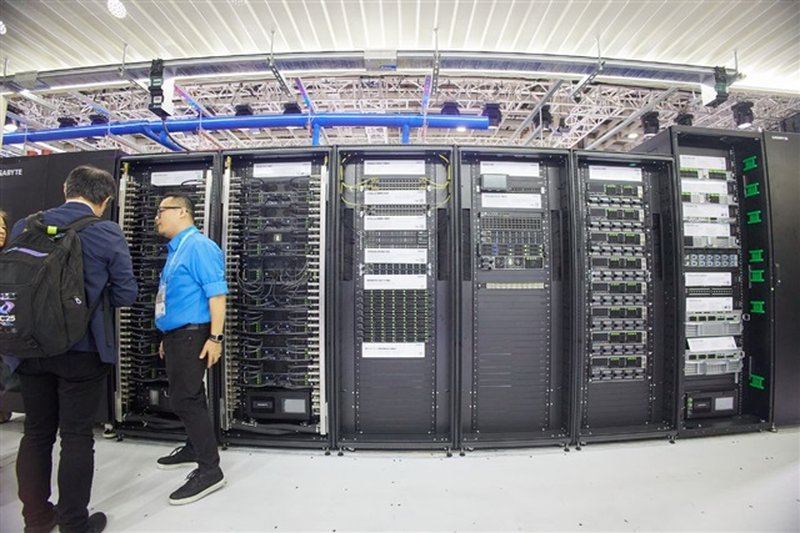
The logic is straightforward: if planting a mega-campus becomes politically expensive, the alternative is to spread the load across smaller nodes, closer to the point of consumption and less intrusive. A self-hosted cluster of a few tens of kilowatts installed in an existing warehouse or an urban edge data center doesn’t ignite the same protests as a new hundred-megawatt complex in open countryside. Scale matters, but so does direct control over infrastructure, which insulates it from social upheavals. Running your own inference servers avoids dependence on a pipeline of increasingly contested campuses.
Data sovereignty and operational control
There’s a subtler thread linking these protests to digital sovereignty. Many local committees raise objections beyond landscape impact: they talk about water usage, saturated power grids at the community’s expense, and implicitly about a development model decided elsewhere. When a hyperscaler proposes a data center, the governance of the data passing through and hardware ownership remain outside local decision-making. Shifting workloads to self-managed infrastructure—inside a corporate perimeter or a proximity data center with clear residency and audit rules—turns that tension into a safeguard. Hardware under your own physical control shortens the accountability chain and, for compliance, makes it easier to demonstrate where and how data is processed, not least for GDPR.
For those evaluating on-premise deployment, the trade-offs remain: upfront CapEx, internal skills to manage hardware, space and cooling constraints. But the national day of action suggests the indirect cost of the centralized approach is rising, and not just in electricity bills. Social licenses are now measured in months of hearings and construction stop risks.
The market structure may react by accelerating on the efficiency front: smaller models, aggressive quantization, inference on commodity hardware that can live in existing cabinets. It’s no coincidence that the open-source community is pushing hard on solutions that work without entire dedicated buildings. When the path of physical gigantism narrows, compute density becomes the real currency, and this dynamic rewards those who can make AI work close to the user, in homes or offices, off the radar of large national protests.







💬 Comments (0)
🔒 Log in or register to comment on articles.
No comments yet. Be the first to comment!