
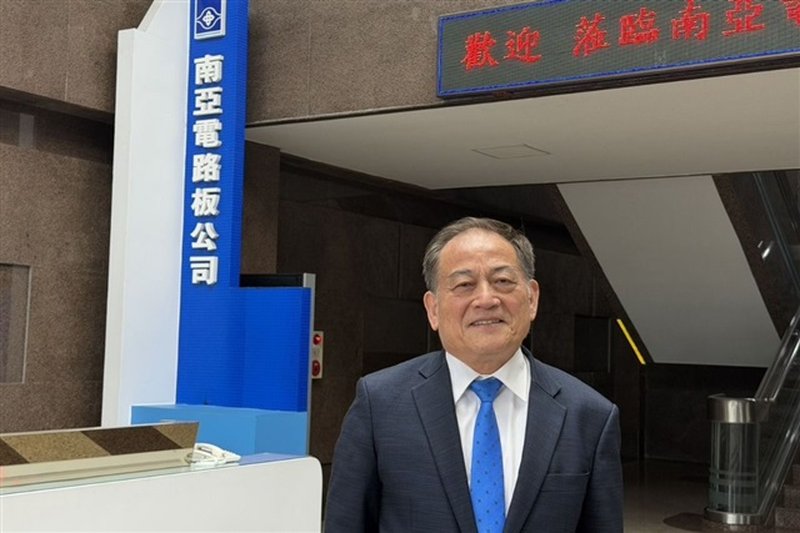
The latest voice from the hardware front doesn’t come from semiconductor giants but from Aurona, a Taiwanese printed circuit board (PCB) manufacturer. In an interview with DIGITIMES, executive director Xing-yung Feng spoke of “strong demand,” driven by artificial intelligence and high-end chips. A few words that, read at the right time, say more than a thousand roadmaps.
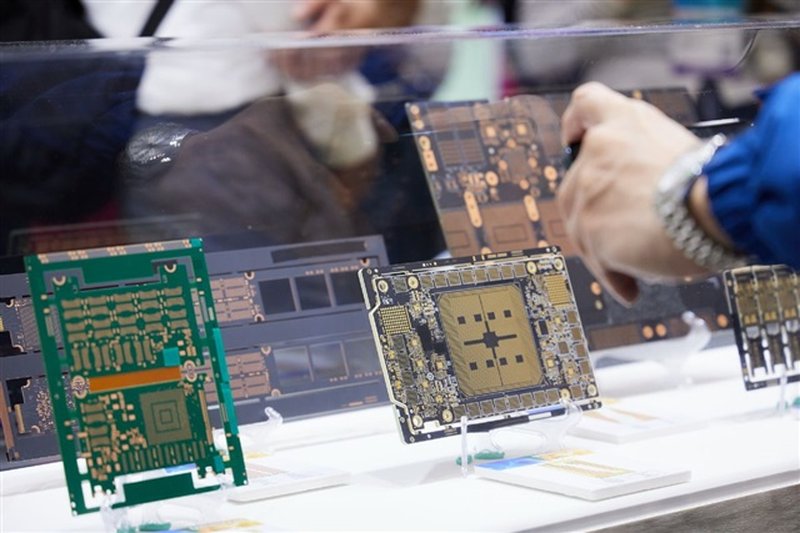
Those who follow only GPU numbers risk missing the real pulse of the supply chain. PCBs are the physical substrate on which processors, memory, and interconnects take shape. With the explosion of Large Language Models, every accelerator — be it an A100, an H100, or a custom ASIC — requires increasingly complex boards, with multiple layers, low-loss materials, and microscopic traces. The boom, therefore, is not confined to foundries or silicon producers: it propagates downstream, to component suppliers often considered “mundane” by those watching the industry from afar.
The real stake is the physical availability of servers for inference and training. Aurona’s signal suggests that the supply chain is gearing up for a volume of hardware that goes well beyond the initial batches of early adopters. For organizations evaluating on-premise deployment, this has a double meaning. On one hand, a well-oiled supply chain means shorter lead times and less erratic costs, lowering the real TCO. On the other, aggregate demand is growing so fast that bottlenecks can shift rapidly from one link to another: one day GPUs are scarce, the next day it might be PCBs, or chiplet substrates.
There is a structural implication that goes beyond procurement. For years, the PCB market was a volume business, with thin margins and incremental innovation. AI flips this dynamic, rewarding those who master high-density interconnect (HDI) technologies and advanced packaging substrates. Companies like Aurona, often ignored in mainstream reports, become sensitive thermometers of where enterprise hardware is heading. Moreover, the geographical concentration of these skills — Taiwan, but also mainland China and, to a lesser extent, Europe — will influence the map of server assembly hubs and, in turn, data sovereignty for organizations choosing self-hosted stacks.
On the inference and fine-tuning side, the availability of advanced PCBs is a non-negotiable prerequisite. Without boards capable of handling the thermal and signal demands of modern chips, every discussion about quantization, VRAM, or tokens per second remains theoretical. Aurona’s data point, anecdotal as it may be, suggests that the industry is betting on sustained growth in demand for AI hardware, not a fleeting peak. For those building on-premise infrastructure, this is the moment to monitor not only chip roadmaps but also the indicators coming from intermediate component suppliers. Because the next choke point might be hiding right there.






💬 Comments (0)
🔒 Log in or register to comment on articles.
No comments yet. Be the first to comment!