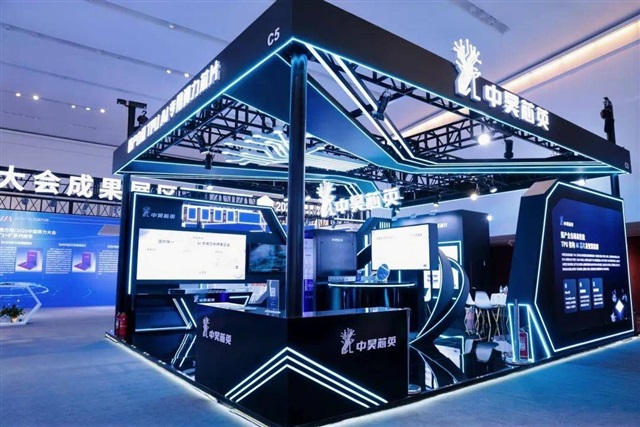
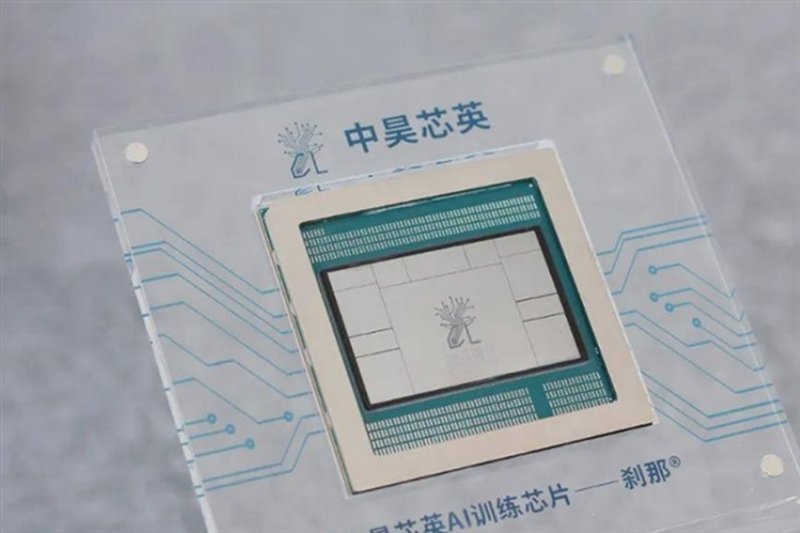
A growing number of signals in recent months point to China accelerating its push into custom AI chips, particularly for inference. The argument is familiar: while the rest of the world largely relies on NVIDIA’s GPUs, Beijing is betting on dedicated architectures — so-called TPUs — that promise drastically lower operational costs. If this path solidifies, it could reshape the global AI hardware balance.
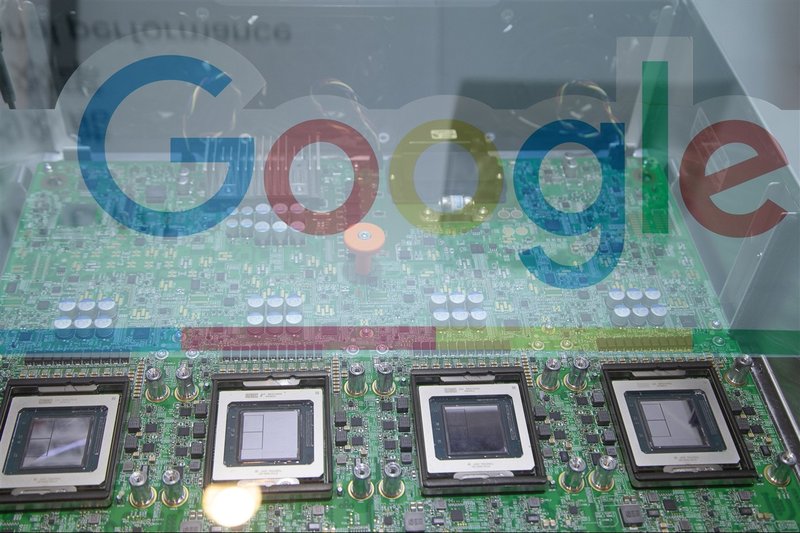
This is not entirely new. Google paved the way with its proprietary accelerators, proving that for massive inference workloads, purpose-built silicon can outperform general-purpose GPUs in energy efficiency and cost per token. What’s different now is that the Chinese supply chain is shifting this model from the hyperscaler niche to a broader audience of enterprises and data centers, with an explicit focus on cost containment.
The cost factor: when inference becomes a commodity
The thinking behind the Chinese strategy is straightforward: inference is a repetitive, compute-intensive task that doesn’t demand the flexible computation capabilities GPUs provide for training. Designing an accelerator that executes billions of multiply-accumulate operations with minimal memory overhead responds to an industrial logic before a technical one. In this scenario, cost per token becomes the key metric, and TPUs, by reducing cost per query, push the Total Cost of Ownership (TCO) bar to levels that GPUs struggle to match.
For organizations evaluating on-premise deployment, this becomes concrete. Fewer watts per token and fewer dollars per watt mean wider margins for inference service providers and downward price pressure that could make large language models accessible even to mid-sized entities, without fully outsourcing to the cloud. Unsurprisingly, “low-cost AI inference” is being discussed as a competitive lever.
Who wins and who loses with Chinese TPUs
The first impact is on supply chains. For years, the AI GPU market has been dominated by NVIDIA, which holds an advantage not just in technology but also in its CUDA ecosystem. Chinese TPUs, often driven by vendors like Biren Technology or the rising constellation of companies around Huawei, target precisely this weak spot: an alternative software ecosystem, coupled with lower access costs, can persuade Asian buyers — and beyond — to diversify. The risk for the incumbent is that inference, likely the largest slice of future consumption, turns into a low-margin market, eroding the revenues that fund today’s research.
On the geopolitical front, the rise of domestic inference hardware reinforces China’s tech sovereignty. While U.S. sanctions limit access to top-tier GPUs, Beijing responds with a parallel ecosystem that reduces dependence on external suppliers. For Europe and other regions attentive to data sovereignty, the signal is twofold: it shows that breaking free from a single vendor is possible, but it also introduces the dilemma of choosing between a Western monopoly and a technological reliance on another bloc. It’s no coincidence that European AI chip projects are getting renewed attention.
Beyond GPUs: a structural signal
The traction of Chinese TPUs shouldn’t be read as a simple episode of industrial competition. It signals that AI hardware is entering a phase of maturity where specialization prevails over generality, at least for inference. Just as graphics processors have historically coexisted with dedicated chips for specific domains (from networking to encryption), the AI workload is fragmenting: high-precision training remains the domain of GPUs and supercomputers, while low-cost inference becomes the realm of accelerators.
For those designing on-premise infrastructure today, the message is clear: the choice is no longer binary between CPU and GPU, and any TCO calculation must include specialized accelerators as a variable. The deepest effect will be greater architectural elasticity, with data centers assembling silicon mixes based on workload, bringing AI closer to the heterogeneous model already established in the IT world.





💬 Comments (0)
🔒 Log in or register to comment on articles.
No comments yet. Be the first to comment!