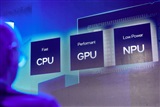
The news that Perplexity plans to adopt Nvidia Vera, combined with the observation that CPUs are returning to the AI spotlight, is not just a hardware catalog update. It is a strong signal that the maturing phase of generative AI is redrawing the map of bottlenecks, and that the GPU monologue is becoming a multi-voice dialogue. Agentic workloads — AI systems that go beyond answering prompts to orchestrate actions, API calls, and complex decision loops — shift the center of gravity from pure matrix computation to state management, memory, and system latency.
For those observing the industry through the lens of data sovereignty and on-premise deployment, this news has a different flavor: it means that the hardware already present in enterprise servers, often rich in CPU cores and memory, could become much more relevant for AI workloads. It’s not about replacing GPUs for heavy inference or training, but complementing them with a robust CPU component without which “agents” cannot function reliably. This changes the TCO calculation: investing in balanced servers instead of expensive GPU-only clusters becomes a viable path for many organizations that cannot or do not want to send data to the cloud.
What the Choice of Nvidia Vera Signals
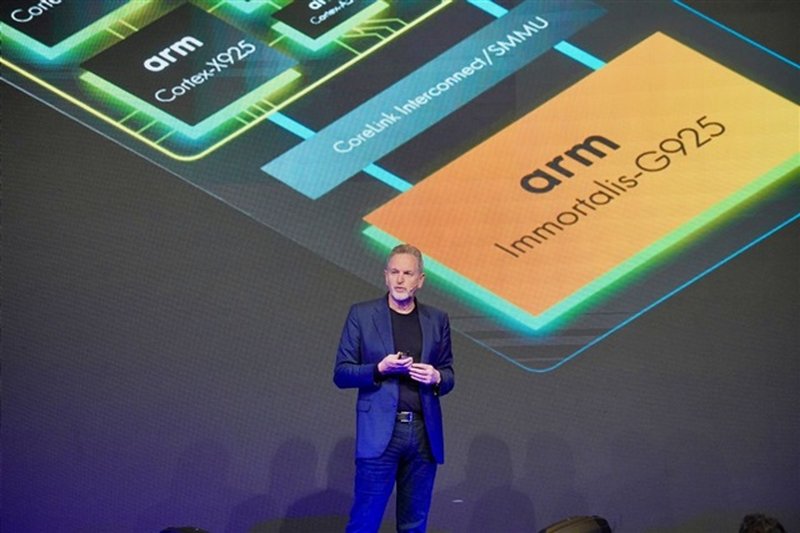
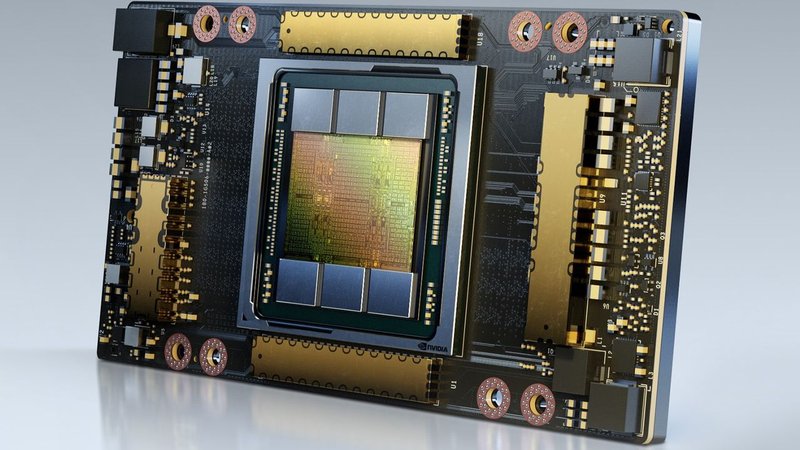
Nvidia Vera is the company's answer to a market that can no longer be dominated by graphics silicon alone. It is an ARM-architecture CPU designed to integrate with Blackwell GPUs and the NVLink-C2C fabric, creating a "superchip" where CPU and GPU share coherent memory and extremely high bandwidth. Adoption by Perplexity — an AI-native company that lives on speed and inference costs — is an early indicator of a broader trend: the best AI workloads of the future will not be purely GPU-bound. They will require close proximity between general-purpose compute and parallel acceleration, and the CPU returns as the director coordinating the whole.
This has structural implications. First, it weakens the narrative that only more GPU teraflops count: balanced architectures with strong CPUs can offer lower latencies for multi-step pipelines. Second, it opens competitive spaces for Intel and AMD, which have processors with large memory endowments and AI instructions, but also for ARM chips ready to enter data centers. Third, it makes the idea of distributed inference on heterogeneous nodes more concrete, where on-premise deployment can be split between existing servers and dedicated accelerators without having to rethink the entire infrastructure.
Who Wins and Who Loses
The winners are organizations that have already invested in robust on-premise infrastructure based on CPUs and are seeking to adopt LLMs without depending entirely on the cloud. Standard server providers can also integrate AI acceleration without upending projects, reducing lock-in risk. Losers include those who bet everything on a purely GPU-driven AI market, now forced to integrate greater system complexity. For IT teams, this means that skills in system architecture, interconnection networks, and memory sizing become as crucial as knowledge of deep learning frameworks.
The phenomenon should not be mistaken for a sunset of GPUs, which remain essential for large models and training. Rather, it indicates that the ecosystem is specializing, and the CPU is emerging from a phase of marginalization to become a first-class component in agentic AI pipelines. For those evaluating on-premise deployment, AI-RADAR offers analytical frameworks on /llm-onpremise to assess these trade-offs: there is no universal architecture, but the underlying message is that hardware diversity is no longer an obstacle but a strategic lever for those who want control and independence.






💬 Comments (0)
🔒 Log in or register to comment on articles.
No comments yet. Be the first to comment!