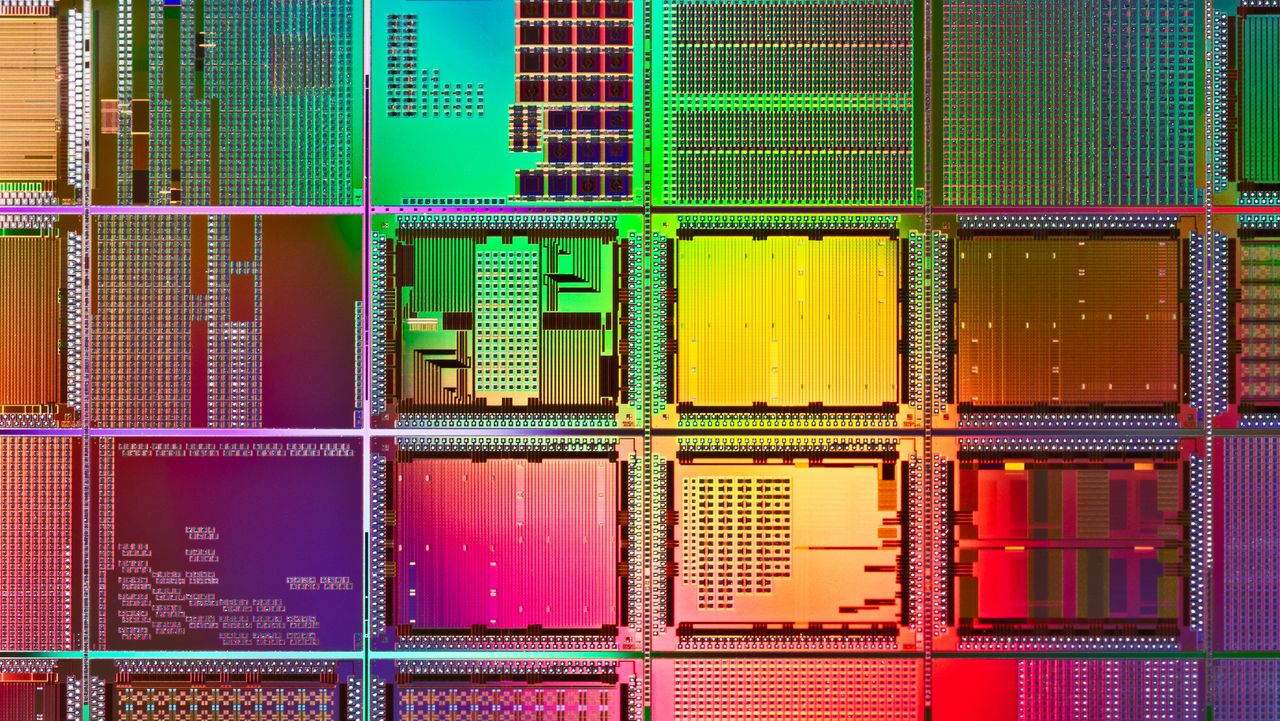
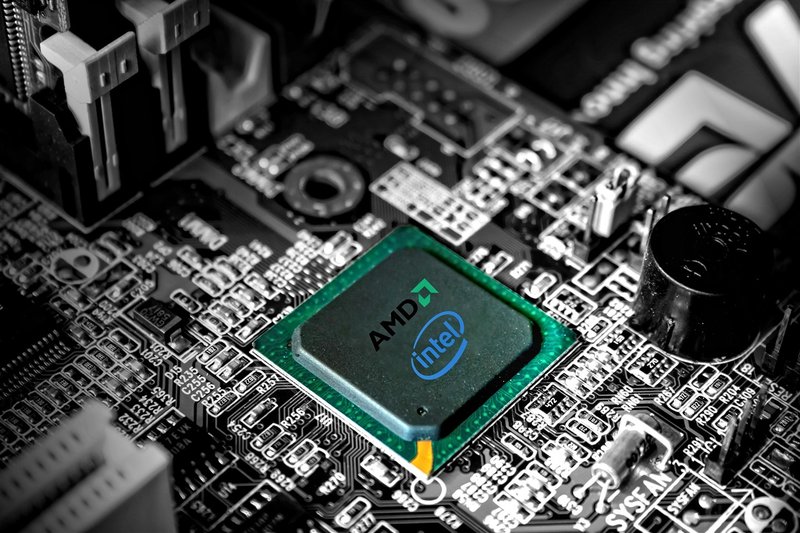
It's not every day that Intel and AMD set aside their rivalry to push a joint extension to the x86 ISA. Yet the new ACE instruction set, designed to accelerate artificial intelligence workloads, comes straight from a collaboration between the two companies. The stated goal: making matrix multiplication – the core operation in every neural network – more power‑ and density‑efficient.
Inside ACE: low‑power matrix math
Teased through a leaked roadmap, ACE is described as a set of instructions dedicated to linear algebra, with a focus on mixed precision and parallel computation. Unlike earlier efforts such as AVX‑512 VNNI or even Intel's Advanced Matrix Extensions (AMX), ACE would be the first set jointly developed by the Santa Clara and Sunnyvale giants. That detail matters: a common ISA base avoids the fragmentation that has often slowed the adoption of heterogeneous accelerators in data centers.
Precise technical details remain under embargo, but the direction is clear. Matrix multiplication gets new compressed data types, optimized pipelines, and finer‑grained register management, delivering simultaneous gains in throughput and performance per watt. In practical terms, an x86 server equipped with ACE‑enabled CPUs could handle inference on quantized models – say, LLMs reduced to INT8 or FP16 – while consuming less power and taking up less rack space.
Why ACE matters for on‑premise deployments
For organizations evaluating local LLM deployment, CPU acceleration carries precise strategic value. Compared to GPUs, x86 processors are easier to source, don't require special power delivery, and slot into existing virtualization environments. The bottleneck, until now, has been the modest latency and throughput on sustained AI workloads. With ACE, that gap could shrink significantly, shifting the TCO break‑even point in favor of CPU‑only architectures for mid‑sized model inference.
Moreover, higher compute density lets you pack more processing capacity into the same physical space, trimming operational costs in an on‑premise setup. In air‑gapped scenarios – where data sovereignty is non‑negotiable – being able to rely on standard but enhanced CPUs avoids dependency on external accelerators that are often subject to licensing or export control restrictions.
The bigger picture: x86, ARM, and the AI acceleration race
Intel and AMD's initiative arrives as ARM pushes its own ISA with SVE and SME extensions, already found in Apple's M4 chips and upcoming Neoverse server cores. The architectural competition is therefore fought not only on general‑purpose cores but on the ability to handle matrix math with low overhead. With ACE, the x86 ecosystem signals its determination to remain relevant in a space traditionally dominated by GPUs and NPUs.
Time is a critical factor. It will take at least one processor generation before the instructions appear in commercial silicon, and the maturation of the software stack (compilers, frameworks like PyTorch and TensorFlow) won't happen overnight. In the short term, the impact for on‑premise inference remains theoretical, but the market signal is unmistakable: AI is becoming a first‑class workload even for general‑purpose CPUs.
Beyond the hype: what it means for deployment choices
The real question isn't whether ACE will beat a GPU on training – it won't – but whether it can deliver enough efficiency for LLM inference in contexts where budget, space, and compliance constraints make a homogeneous infrastructure desirable. Multi‑year Total Cost of Ownership analyses, weighing CapEx and OpEx, could tilt toward dual‑socket servers with hundreds of cores if they can approach the token‑per‑second figures of small GPUs without the power draw of discrete cards.
Meanwhile, the collaboration between the two historic rivals on a common ISA hints that the real competitor lies elsewhere: cloud providers and their custom accelerators (TPU, Trainium, Inferentia) that erode the merchant chip base. For those deciding today to keep AI workloads within their own boundaries, ACE adds an important card to play – provided nobody expects instant miracles.







💬 Comments (0)
🔒 Log in or register to comment on articles.
No comments yet. Be the first to comment!