The Energy Impact of AI: US Utilities Plan Massive Investments
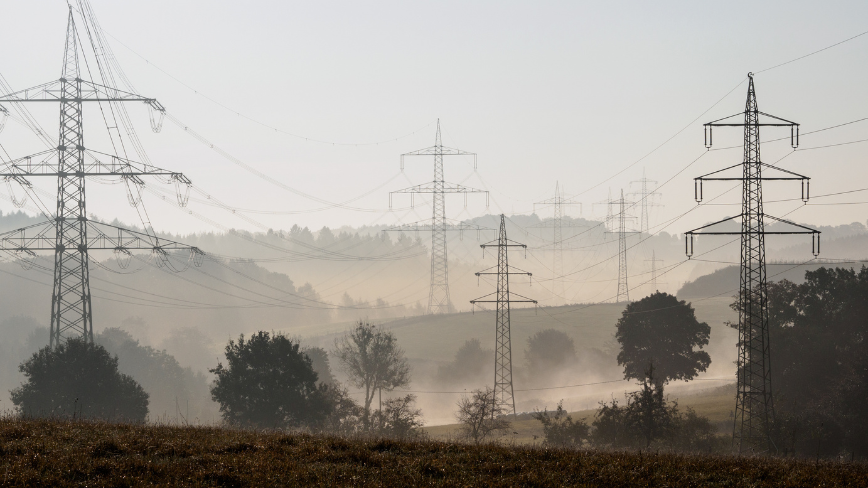
The growing energy demand generated by the expansion of artificial intelligence is pushing US utilities towards unprecedented infrastructure investments. According to a recent report analyzing the capital spending plans of 51 investor-owned electric companies, a total outlay of $1.4 trillion is expected by 2030. This figure represents double the amount invested in the previous decade, highlighting the scale of the transformation underway.
The main driver behind these investments is the proliferation of data centers, essential for powering the AI boom. More than 30 utilities have explicitly identified data centers as the primary growth engine for energy demand. This scenario underscores a critical challenge for the technology sector: the availability and reliability of energy have become limiting factors as much as computing power itself.
The Infrastructure Race and Its Costs
The exponential increase in energy demand for Large Language Models (LLM) workloads and other AI applications requires a robust and resilient electrical grid infrastructure. The investments planned by utilities aim to modernize and expand generation and distribution capacities, a complex and costly operation. The doubling of spending compared to the previous decade is a clear indicator of the pressure the AI industry is exerting on the energy sector.
This infrastructure expansion is not without consequences for consumers. Projections indicate that average residential electricity prices in the United States could rise by 5.1% this year. For CTOs and infrastructure architects evaluating LLM deployments, this data is significant. The Total Cost of Ownership (TCO) of an on-premise AI infrastructure includes not only the cost of silicio and cooling but also an increasingly relevant energy component, which can deeply impact the operational budget.
Implications for On-Premise LLM Deployments
For organizations choosing a self-hosted approach for their AI workloads, energy availability and the management of associated costs become primary considerations. A large-scale on-premise LLM deployment, employing dozens or hundreds of high-power GPUs like A100s or H100s, can require megawatts of energy. This imposes stringent requirements not only on the capacity of the local electrical grid but also on internal distribution, transformation, and cooling systems.
The choice to keep data and models within air-gapped environments or for data sovereignty reasons implies directly taking on these infrastructural challenges. Unlike cloud services, where energy complexity is abstracted and included in the service cost, bare metal infrastructure requires meticulous planning to ensure that the energy supply is adequate and sustainable over time. Evaluating the trade-offs between the energy efficiency of different hardware architectures and their throughput capacity therefore becomes fundamental.
Future Outlook and Energy Challenges
The interdependence between the growth of artificial intelligence and the capacity of energy grids is set to intensify. Utility investments reflect an awareness of this reality, but the speed at which AI demand evolves poses a continuous challenge. For technology decision-makers, integrating energy planning into the LLM deployment strategy is no longer an option but a necessity.
The search for more energy-efficient solutions, both at the hardware (silicio) level and through model optimization (e.g., via advanced quantization), will be crucial to mitigate the impact. Ultimately, the success of future AI deployments, particularly those prioritizing control and data sovereignty through on-premise solutions, will largely depend on the ability to address and resolve the complex challenges posed by energy demand.








💬 Comments (0)
🔒 Log in or register to comment on articles.
No comments yet. Be the first to comment!