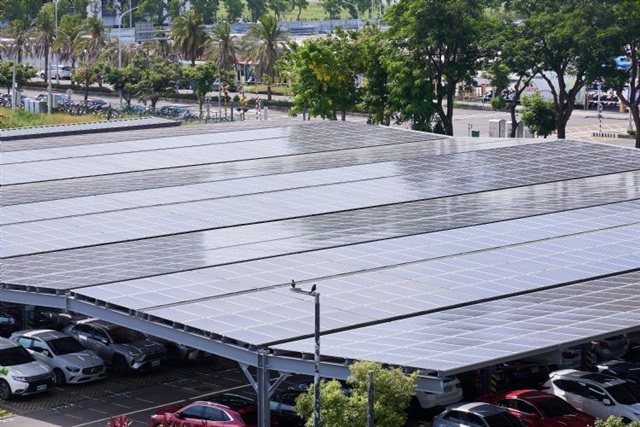
Taiwan's energy sector is a battleground often overlooked by AI professionals, but two names are starting to appear on the radar of those designing on-premise infrastructure: Leadsun and Xiangyin. The former is weaving strategic alliances, while the latter aims squarely for top-tier power retail status. For a nation that hosts the manufacturing backbone of semiconductors and a growing number of private data centers, the reorganization of electricity sales is not niche news.
A superficial reading would reduce this to a corporate reshuffle. Instead, it must be read against the backdrop of the watt-hunger that characterizes inference and fine-tuning of language models on self-managed hardware. Two high-end GPUs running at full tilt consume as much as a small office; a training cluster multiplies that need by hundreds of nodes. In an on-premise scenario, the energy bill is not an accessory item: it's a structural component of TCO, often underestimated when relying on convenient cloud estimates.
Why should these moves matter to those evaluating local deployments? Because a more fragmented and contestable retail energy market tends to compress margins and increase price transparency. Industrial companies that host servers in-house can negotiate long-term contracts with new players, breaking away from monopolistic dynamics. In a territory like Taiwan, where grid stability is already a competitive advantage for hardware manufacturing, the arrival of energy retailers with top-tier ambitions adds an extra layer of predictability to operational costs.
Those who self-host LLMs know that raw GPU efficiency only goes so far: if electricity costs 20% less because a supplier won a competitive tender, the yearly spending delta on a fleet of tens of kilowatts can match the savings from moving to a next-generation accelerator. This is not a promise but a portfolio logic: competition in energy retail is a silent ally of data sovereignty, because it reduces one of the financial disincentives to keep workloads inside one's own fence.
Granted, there are no public figures yet on contracts or tariffs. But the direction is clear. When a company like Xiangyin sets out to climb the energy retail rankings, the on-premise AI ecosystem receives a signal: the energy game is shifting from a passive cost to a negotiable lever. And for those planning self-hosted deployments over a five-year horizon, ignoring these dynamics means handing over a slice of TCO to variables beyond one's control.



💬 Comments (0)
🔒 Log in or register to comment on articles.
No comments yet. Be the first to comment!