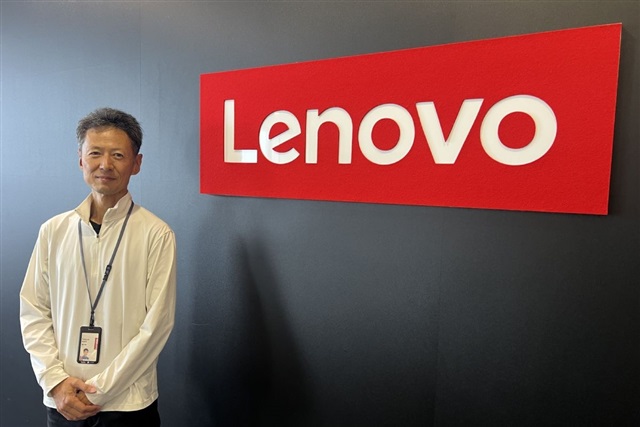
Lenovo's Bet on On-Device AI
Lenovo, a leading player in the personal computer market, is making a decisive move towards artificial intelligence executed directly on devices, or "on-device AI." This strategy aims to trigger a new upgrade cycle for PCs targeting the business segment, by offering advanced AI functionalities that require local processing. Lenovo's move is part of a broader technological evolution where the ability to process AI workloads without constant reliance on the cloud is becoming a crucial differentiating factor.
The integration of AI capabilities directly into business PC hardware could redefine user expectations and enterprise infrastructure requirements. This is not just about enhancing user experience with more responsive virtual assistants or intelligent productivity tools, but also about addressing challenges related to data sovereignty and compliance, which are increasingly central for modern organizations.
On-Device AI: Advantages and Technical Requirements
On-device AI refers to the execution of artificial intelligence models, including smaller Large Language Models (LLM), directly on the end-device hardware, such as a PC, without the need for a constant connection to remote servers or the cloud. The primary advantages of this approach include reduced latency, as data does not need to travel back and forth across the network, and enhanced privacy, as sensitive data can remain within the device's perimeter.
However, effective on-device AI implementation requires advanced technical specifications. Next-generation PCs need dedicated Neural Processing Units (NPUs), more powerful processors, and, crucially, increased VRAM and system memory to host and run LLMs and other complex models. Model Quantization becomes essential to adapt them to the limited resources of devices, balancing performance and memory requirements. For businesses, this translates into the need to carefully evaluate hardware during procurement, considering not only general computing power but also specific AI capabilities.
Enterprise Context, TCO, and Data Sovereignty
For businesses, adopting PCs with on-device AI capabilities presents several strategic implications. On the data sovereignty front, local processing reduces reliance on external cloud services, ensuring that sensitive information remains under the organization's direct control. This is particularly relevant for regulated industries or air-gapped environments, where security and compliance are absolute priorities.
From a Total Cost of Ownership (TCO) perspective, while the initial investment in more powerful hardware might be higher, local execution of AI workloads can lead to significant long-term savings by reducing operational costs associated with cloud Inference. This shifts part of the expenditure from an OpEx (operational expenditure) model to a CapEx (capital expenditure) model, offering greater predictability and cost control. For those evaluating on-premise deployments, AI-RADAR offers analytical frameworks on /llm-onpremise to assess these trade-offs, considering factors like desired throughput and model usage frequency.
Future Prospects and Trade-offs in AI Deployment
Lenovo's push towards on-device AI highlights a clear trend: artificial intelligence is becoming pervasive and spreading beyond data centers and the cloud. However, it is crucial to understand that on-device AI does not entirely replace cloud solutions but rather complements them. Significant trade-offs exist: larger and more complex models, or those requiring intensive training, will continue to benefit from the scalable resources and computing power offered by the cloud.
The choice between on-device AI, cloud, or a hybrid approach will depend on specific business needs, budget constraints, security policies, and the nature of the workloads. Companies will need to balance the demand for high performance and scalability with requirements for privacy, control, and TCO. The evolution of PC hardware, with the integration of increasingly powerful NPUs, will open new possibilities for innovative use cases but will require careful planning of infrastructure and deployment pipelines.










💬 Comments (0)
🔒 Log in or register to comment on articles.
No comments yet. Be the first to comment!