
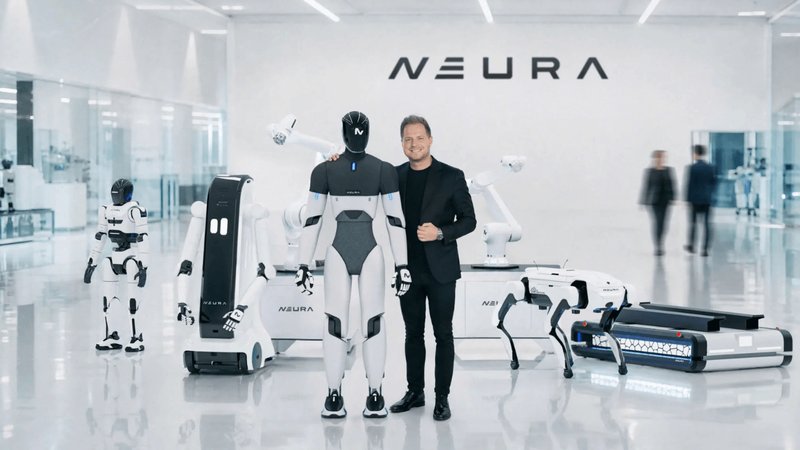
The number thrown out by LimX Dynamics – $200 billion in a single funding round – belongs more to financial sci-fi than to venture capital textbooks. Even taking it with a grain of salt, the message is unmistakable: humanoid robotics is no longer a side bet; it is the arena where the next wave of computational autonomy is being fought.
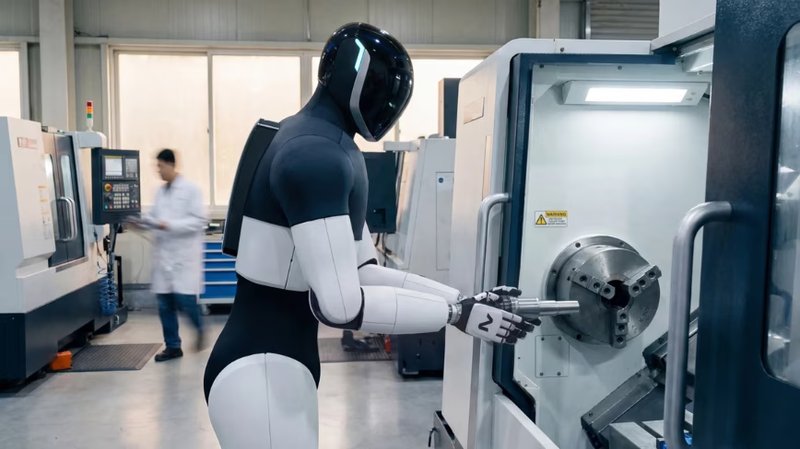
Behind every android that walks, grasps, and decides is a silicon brain burning inferences onboard. There is no room for the cloud: a robot interacting with the physical world cannot afford the milliseconds of latency from an API call, nor can it upload sensitive data to remote servers. Here, data sovereignty is imposed by physics, not by regulation.
The on-device compute paradox
The monstrous round fits into an arms race whose protagonists are not just startup balance sheets, but the hardware for inference of language and multimodal models. A humanoid must process voice commands, interpret scenes, plan movements – all in real time. This workload cannot be satisfied with a trivial edge TPU; it requires chips with memory bandwidth and compute capacity comparable to those of a server, compressed into a thermally constrained form factor.
This is where the narrative of self-hosted and on-premise computing – pillars of the enterprise LLM debate – naturally extends to robotics. Companies that today evaluate private deployments of Llama or Mistral for reasons of control and TCO will tomorrow have to manage robot fleets with similar needs: fine-tuning and quantization pipelines to adapt models to available hardware resources, workload orchestration among fleet nodes, cloud-free updates.
Winners and losers
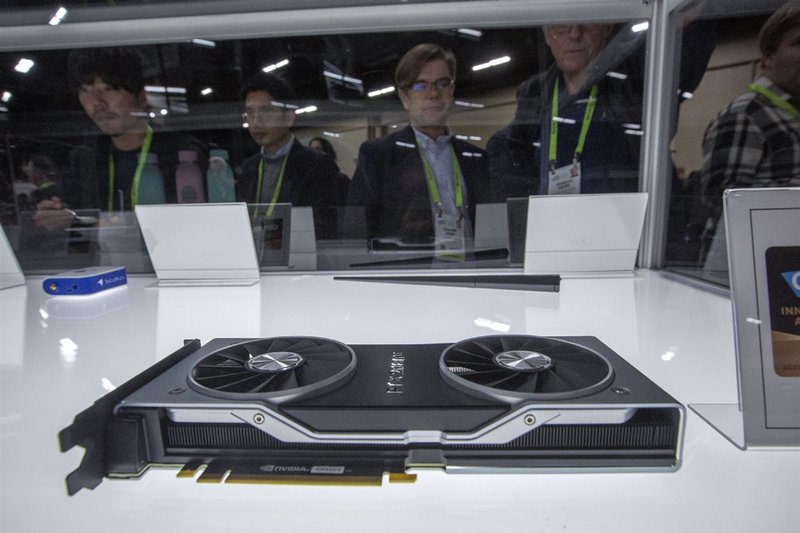
The most immediate beneficiary is the ecosystem of GPU and specialized AI chip manufacturers – Nvidia, but also providers of NPUs and FPGAs that enable low-power inference. Conversely, the big cloud providers see their market perimeter shrink as workloads move entirely to the device. It is no coincidence that hybrid architectures – where the cloud serves only for periodic training – become the forced compromise.
For those choosing on-premise stacks with traditional LLMs, the story offers a perfect metaphor. The pressure to compress models (INT8, INT4) and maintain long context windows without blowing up VRAM is not just a data center quirk: it is the exact same problem faced by a service robot on a factory floor. Technical solutions – from aggressive quantization to model sharding – circulate between the two worlds and feed each other.
The $200 billion raise, real or inflated as it may be, reiterates that the AI frontier is no longer fought only on screens. And that hardware for local inference, today a niche for enthusiasts and small enterprises, is poised to become critical infrastructure for an automated physical economy.







💬 Comments (0)
🔒 Log in or register to comment on articles.
No comments yet. Be the first to comment!