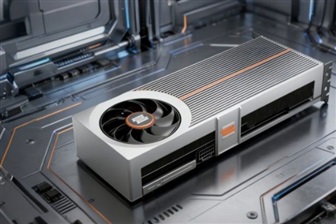
Lisuan Secures WHQL Certification for its 6nm GPU Chip
The global landscape of Graphics Processing Units (GPUs) continues to evolve, with new players emerging and seeking to establish themselves in a market dominated by a few giants. In this context, Lisuan, a Chinese GPU manufacturer, has announced a significant milestone: obtaining Microsoft Windows Hardware Quality Labs (WHQL) certification for its 6-nanometer chip. This certification is not merely a technical detail but represents a fundamental step for hardware credibility and adoption in enterprise environments.
WHQL certification is a rigorous process that validates the compatibility and stability of hardware drivers with Windows operating systems. For IT decision-makers, such as CTOs and infrastructure architects, WHQL-certified hardware means a greater guarantee of smooth operation, reducing the risks of incompatibility and operational costs associated with resolving software-hardware issues. This is particularly relevant for on-premise deployments, where stability and reliability are absolute priorities for critical workloads.
The 6nm Chip and the Importance of WHQL Certification
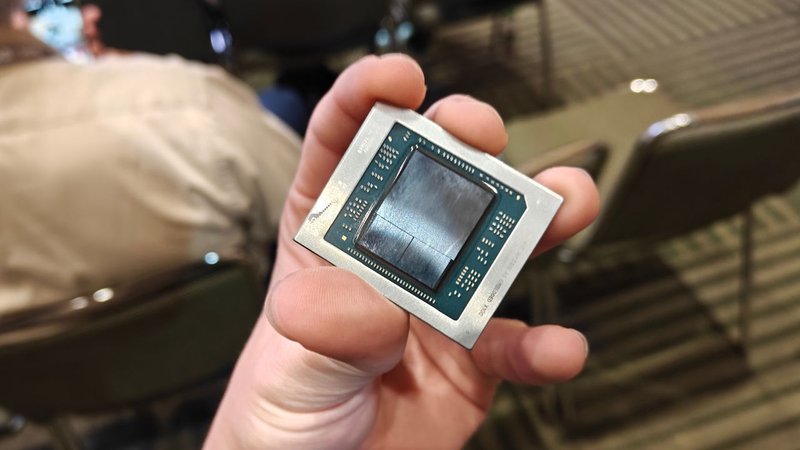
Lisuan's chip, manufactured using a 6-nanometer process, positions itself in a modern technological bracket, indicating a commitment to efficiency and performance. While specific details on its processing capabilities for LLMs or other AI applications have not been disclosed, the choice of a 6nm node suggests a focus on optimizing power consumption and transistor density, crucial factors for AI model inference and training.
WHQL certification, in particular, is a seal of quality that attests that the chip's drivers have been tested and approved by Microsoft. This process ensures that the hardware component and its supporting software function reliably with supported Windows versions, minimizing crashes, bugs, and performance issues. For companies considering integrating new GPUs into their infrastructures, the presence of this certification significantly simplifies the evaluation and deployment process, reducing uncertainty and accelerating time-to-market for new AI-based solutions.
Market Implications and On-Premise Deployments
For Lisuan, obtaining WHQL certification can open new market opportunities, especially in contexts where Windows compatibility is a non-negotiable requirement. This strengthens its position in the Chinese market and could facilitate international expansion, offering a credible alternative to products from more established vendors. The availability of diversified hardware options is an advantage for companies seeking to optimize TCO and mitigate risks associated with single-vendor reliance.
For professionals evaluating on-premise deployments of LLMs and other AI applications, the WHQL certification of a chip like Lisuan's is a factor to consider carefully. Self-hosted infrastructures require robust and well-supported hardware components to ensure data sovereignty, compliance, and consistent performance. Certified hardware reduces integration complexity and long-term maintenance costs, fundamental elements in Total Cost of Ownership analysis. AI-RADAR offers analytical frameworks on /llm-onpremise to evaluate these trade-offs, highlighting how hardware choice directly impacts the stability and security of local deployments, even in air-gapped environments.
Future Prospects and Challenges in the GPU Sector
The GPU market for AI is rapidly expanding, and the demand for high-performance, reliable hardware solutions is constantly growing. The entry of new players with certified products like Lisuan's helps stimulate innovation and offer more choices to enterprise customers. However, competition remains intense, with industry giants continuing to invest heavily in research and development for their chips and software frameworks.
The challenge for Lisuan and other emerging manufacturers will be not only to produce competitive hardware but also to build a robust support ecosystem, including updated drivers, development tools, and broad compatibility with major machine learning frameworks. WHQL certification is an excellent starting point for trust and adoption, but long-term success will depend on the ability to offer a complete package that meets the increasingly sophisticated demands of AI workloads, especially for those prioritizing the control and security offered by self-hosted deployments.





💬 Comments (0)
🔒 Log in or register to comment on articles.
No comments yet. Be the first to comment!