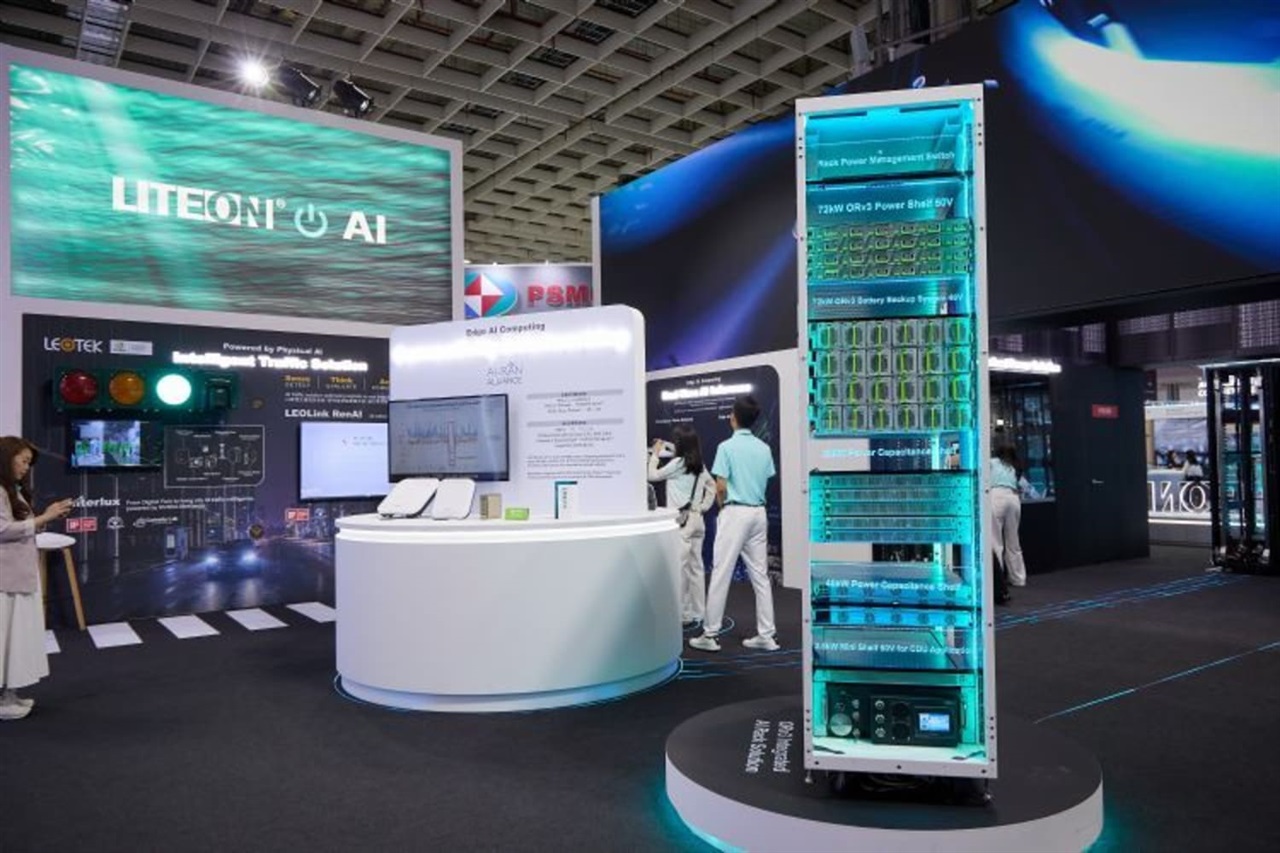
The thermometer of AI growth sometimes hides in the most overlooked components. Last June, the revenue of Liteon Technology, a Taiwanese manufacturer specializing in server power supplies, recorded a 37% year-on-year leap, driven precisely by demand for units serving data centers that host AI workloads. A signal that, read in the right context, says much more than a simple commercial exploit.
Those planning on-premise deployments of Large Language Models know that computing power is only part of the equation. Servers running training and inference on large models consume disproportionate amounts of energy compared to traditional systems: a single multi-GPU high-end configuration can draw several kilowatts, forcing power supplies to operate near their design limits for hours or days on end. In this scenario, the PSU ceases to be a commodity component and becomes a primary risk – and cost – factor.
Liteon Technology’s data confirms that the supply chain is already reallocating resources to meet this new hunger for energy. It’s not just about volume: AI servers require ultra-high efficiency power supplies (typically certified 80 Plus Titanium or above), built-in redundancy, and extreme density to avoid collapsing under dynamic loads. Those ordering racks for a local cluster today are facing lengthening lead times and constrained availability of the highest-performing units, exactly as with GPUs. It’s the long tail of a market that rewards early movers.
For organizations pushing for data sovereignty and operational autonomy – banks, public bodies, manufacturing firms with air-gapped lines – this trend carries a dual reading. On one hand, it confirms that self-hosting is shifting from exception to structural reality, because without solid demand for local infrastructure, Liteon Technology’s numbers would not be exploding. On the other, it serves as a warning: electrical supply and the associated heat dissipation are often the weak link in on-premise projects, and underestimating them today means facing costly retrofits or, worse, bottlenecks that nullify the latency and control gains promised by internal infrastructure.
The signal coming from Taipei is unequivocal: the AI hardware battle is not fought solely on teraflops or VRAM, but also on the ability to stably and efficiently power workloads. For those still drawing up their deployment strategy, Liteon Technology’s growth is proof that others have already started buying.






💬 Comments (0)
🔒 Log in or register to comment on articles.
No comments yet. Be the first to comment!