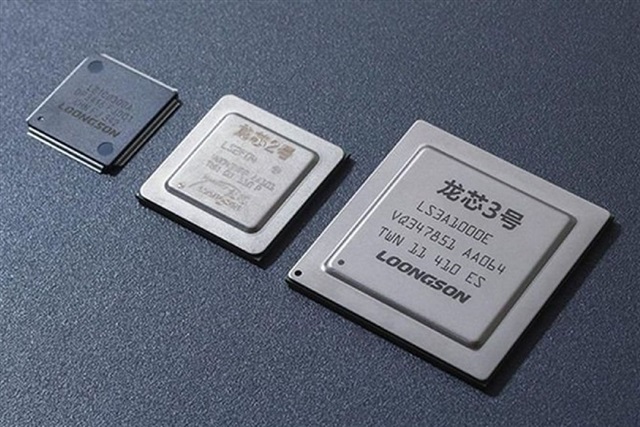
That inference, more than training, is reshaping chipmakers' priorities is not exactly new. But when Loongson makes a move, the signal becomes more specific: China's domestic silicon race is shifting its center of gravity from data-center acceleration to the ability to serve inference workloads with CPUs and GPUs developed in-house. The news that the company is raising funds to expand CPU and GPU development, with inference indicated as the driver of its plans, carries no financial figures or detailed roadmap. It does carry an underlying thesis: for a meaningful part of the market, inference is the first real proving ground for architectures alternative to the American giants.
The point is not just financial. Historically, training the largest models has concentrated attention on accelerators with large amounts of VRAM and high-bandwidth interconnects. Inference changes the constraints: workloads are often more distributed, more sensitive to local latency and operating cost, and can be served by less specialized hardware as long as optimized frameworks and runtimes are available. That is where the CPU-GPU combination returns to the center. A domestic CPU with a sufficiently mature software ecosystem can manage preprocessing, scheduling, and orchestration pipelines, while the GPU handles parallel computation. In many self-hosted scenarios, this division of labor reduces dependence on external cloud platforms and keeps data within the corporate perimeter.
For Loongson, the message is strategic. The company is not competing in large-scale training, but it can preside over an area where technological sovereignty has immediate value: on-premise deployment, edge, and regulated environments. Chinese demand for LLMs and inference services is growing, while restrictions on importing advanced silicon push public agencies, banks, and industry to look for domestic alternatives. Investing in CPUs and GPUs in parallel means building a platform that does not depend on a single external component and can be integrated into local servers without drastically changing data-center architectures.
There is a second-order effect: joint CPU and GPU development also pushes the creation of tooling and frameworks adapted to domestic architectures. Silicon alone is not enough: compilers, inference runtimes, and support for quantization are needed for models that must run with limited resources. If the software ecosystem follows the hardware, the advantage for local vendors will not only be about price but about control over the entire stack, from driver to orchestration. Those who currently dominate thanks to a software ecosystem tied to a single GPU maker could see their advantage erode in markets that choose the domestic path for regulatory or data-sovereignty reasons.
A triumphalist reading should be avoided. The source provides no details on compute capabilities, manufacturing process, or volumes. Loongson's path remains tied to its ability to offer competitive performance and a reliable ecosystem, not just political will. Yet the fact that a CPU maker with national ambitions explicitly links fundraising to inference signals a structural shift: inference is no longer seen as a minor problem compared with training, but as the field where the standard for local and regulated workloads will be decided. For those evaluating on-premise deployment, trade-offs exist between specialized silicon and general-purpose platforms: AI-RADAR offers analytical frameworks at /llm-onpremise to explore them. The game, however, is not played only on benchmarks: it is played on the ability to turn inference into ordinary, manageable, and controllable infrastructure.




💬 Comments (0)
🔒 Log in or register to comment on articles.
No comments yet. Be the first to comment!