An Escalation in Space
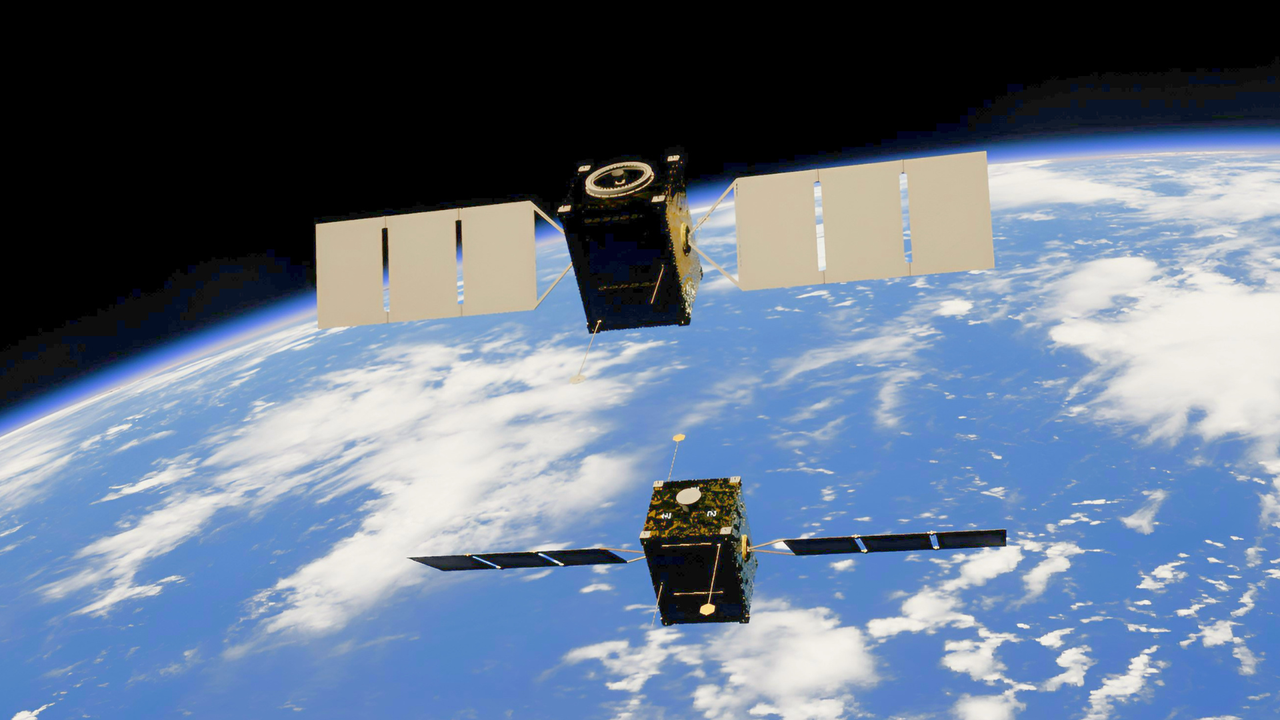
US officials have reported recent movements of four Russian satellites, and a fifth performing a similar maneuver, in Earth's orbit. These movements have been observed in proximity to a commercial radar satellite that provides intelligence to Ukraine. The situation has brought the increasing tension in space and the vulnerability of satellite infrastructure into sharp focus.
American authorities believe that some of these Russian satellites may be part of an anti-satellite weapons program. This scenario highlights the risks not only for communications and navigation but also for the collection and processing of sensitive data, a critical aspect for organizations operating with geospatial and intelligence information.
The Strategic Role of Satellite Data
The incident underscores the strategic relevance of commercial satellites, which have become fundamental players in global data collection. These systems offer monitoring and intelligence capabilities that were previously the exclusive domain of government agencies. The sheer volume of information generated, ranging from Earth observation to meteorology, demands increasingly sophisticated processing infrastructures.
For companies and institutions that rely on these data streams, the protection and integrity of information are absolute priorities. The analysis of satellite imagery, for example, often employs Large Language Models (LLM) or other machine learning models to extract critical insights. The choice of where and how to process this data therefore becomes a strategic decision with direct implications for security and sovereignty.
Data Sovereignty and On-Premise Deployment
The management of sensitive data, such as intelligence or geospatial information, imposes stringent requirements in terms of security, compliance, and control. In this context, on-premise or self-hosted deployment solutions emerge as robust alternatives to public cloud services. A local infrastructure offers direct control over hardware, software, and the operating environment, reducing the attack surface and ensuring data sovereignty.
For organizations evaluating AI/LLM workloads with critical data, the on-premise option allows information to be kept within their physical and jurisdictional boundaries, an essential factor for complying with regulations like GDPR or for operating in air-gapped environments. This approach also enables more precise management of the Total Cost of Ownership (TCO), balancing initial investments (CapEx) with long-term operational costs.
Future Prospects and Decision Trade-offs
The Russian satellite incident serves as a warning to the entire tech community, highlighting the need for resilient strategies for managing space data. The choice between on-premise and cloud deployment for processing sensitive data is not trivial and involves a careful evaluation of trade-offs. While the cloud offers scalability and flexibility, self-hosted solutions provide a superior level of control, security, and sovereignty.
For those evaluating on-premise deployment for AI/LLM workloads, analytical frameworks exist that can help compare costs, performance, and security requirements. The ability to keep critical data under direct control, especially in an increasingly complex geopolitical landscape, is a factor that drives many organizations to seriously consider investing in dedicated local infrastructures.








💬 Comments (0)
🔒 Log in or register to comment on articles.
No comments yet. Be the first to comment!