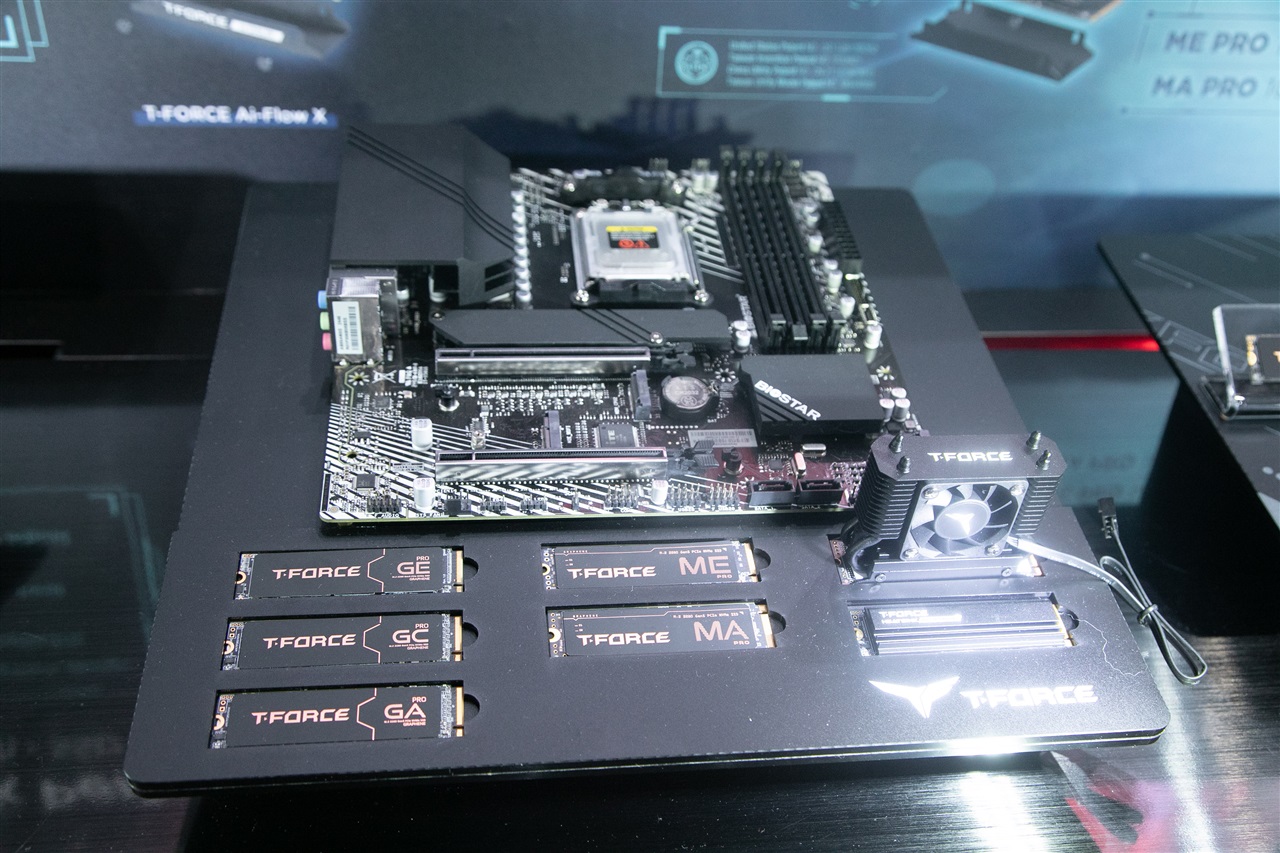
AI Server Demand Tightens Memory Supply
The artificial intelligence sector is experiencing unprecedented expansion, largely driven by the adoption and development of Large Language Models (LLMs). This rapid growth has a direct and profound impact on the global supply chain, particularly concerning essential hardware components. According to recent analyses by DIGITIMES, the demand for AI-specific servers is so high that it is locking up memory supply, a phenomenon expected to persist until at least 2027.
This tightening in the memory market does not lead to a decrease in prices but rather to their stabilization at high levels. For companies evaluating investments in AI infrastructure, this market dynamic represents a critical factor to consider in strategic and financial planning. The availability and cost of memory are indeed key elements for the scalability and efficiency of systems dedicated to inference and training of complex models.
The Technical Details of Memory Demand
The nature of AI workloads, especially those related to LLMs, requires vast amounts of high-speed memory. Models with billions of parameters need significant VRAM (Video RAM) to be loaded and to perform inference efficiently. For example, a large LLM can require tens or hundreds of gigabytes of VRAM just for model loading, not to mention the space needed for embeddings, intermediate states, and activations during the process.
High Bandwidth Memory (HBM) has become a de facto standard for high-end GPUs dedicated to AI, offering significantly higher bandwidth compared to traditional GDDR. This technology, while performant, is complex to manufacture and its availability is limited, contributing to the overall supply crunch. The need to equip an increasing number of AI servers with multi-GPU configurations, each with ample VRAM, further amplifies the pressure on the supply chain.
Implications for On-Premise Deployment and TCO
For CTOs, DevOps leads, and infrastructure architects considering on-premise LLM deployments, the current memory market situation presents significant challenges. Acquiring hardware with desired specifications, particularly GPUs with sufficient VRAM, can lead to extended delivery times and high initial costs (CapEx). This directly impacts the Total Cost of Ownership (TCO) of AI infrastructure, making long-term planning even more crucial.
Data sovereignty, regulatory compliance, and the need for air-gapped environments are often the primary drivers behind choosing a self-hosted deployment. However, these advantages must be balanced with the reality of a volatile hardware market. Difficulty in procuring key components can delay projects, limit scalability, and force companies to revise their investment strategies. For those evaluating on-premise deployments, AI-RADAR offers analytical frameworks on /llm-onpremise to assess the trade-offs between costs, performance, and hardware availability.
Outlook and Strategies for Enterprises
Facing a memory market expected to remain tight until 2027, companies must adopt proactive strategies. This includes early purchase planning, supplier diversification, and evaluating alternative solutions to optimize existing memory utilization. Techniques such as Quantization, which reduces model precision to lower memory requirements without excessively sacrificing performance, may become increasingly relevant.
Furthermore, optimizing inference Frameworks and deployment pipelines can help maximize throughput and reduce latency even with limited hardware resources. The ability to adapt to a constrained supply environment will be a distinguishing factor for organizations aiming to maintain a competitive edge in AI adoption. The market will continue to evolve, but strategic hardware management will remain a fundamental pillar for the success of AI projects.







💬 Comments (0)
🔒 Log in or register to comment on articles.
No comments yet. Be the first to comment!