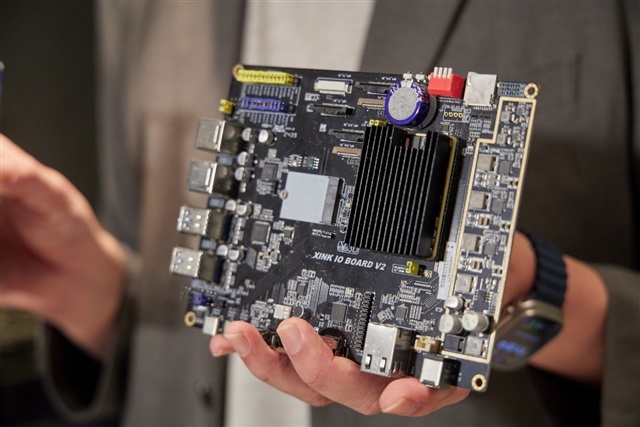
The Chip Market in Turmoil: Rising Costs and Uncertain Prospects
The Integrated Circuit (IC) design sector is facing a period of increasing uncertainty, with companies preparing for what promises to be a complex peak season. According to DIGITIMES, the market is characterized by rising prices, a factor that adds pressure to an already scrutinized supply chain. This situation is not an isolated phenomenon but reflects broader dynamics affecting the entire semiconductor industry, with significant repercussions for all players dependent on these essential components.
The Impact on On-Premise AI Deployments
For organizations investing in or evaluating Large Language Model (LLM) deployments on self-hosted infrastructures, the increase in chip prices represents a critical variable. Dedicated AI hardware, particularly high-performance GPUs and specialized accelerators, constitutes a substantial portion of the initial Capital Expenditure (CapEx). An increase in silicon costs directly translates into a higher Total Cost of Ownership (TCO) for on-premise solutions. This scenario demands even more meticulous planning from CTOs, DevOps leads, and infrastructure architects, who must balance performance requirements with budget constraints in a volatile market context.
The availability and cost of silicon directly influence the ability to scale LLM training and inference operations. For those opting for an on-premise approach, data sovereignty, regulatory compliance, and the need for air-gapped environments are often absolute priorities. However, these choices entail direct exposure to hardware market fluctuations. The ability to acquire GPUs with sufficient VRAM and adequate throughput, for example, becomes a risk management exercise that goes beyond simply evaluating technical specifications, including an analysis of price trends and supply chain stability.
Mitigation Strategies and Decision Trade-offs
Facing an uncertain chip market and rising prices, companies must refine their procurement and optimization strategies. Exploring hardware alternatives, evaluating different chip architectures, and adopting software optimization techniques like quantization can help mitigate cost impacts. For instance, optimizing LLMs to operate with less VRAM or reduced precision (e.g., INT8 instead of FP16) can extend the lifespan of existing hardware or reduce the need to acquire the most expensive and latest GPUs.
The decision between on-premise and cloud deployment for AI workloads becomes even more complex. While the cloud offers flexibility and an OpEx model, self-hosted solutions provide unparalleled control over data and infrastructure. The current market scenario prompts an even deeper evaluation of trade-offs, considering not only performance and security but also supply chain resilience and long-term cost predictability. For those evaluating on-premise deployments, AI-RADAR offers analytical frameworks on /llm-onpremise to assess these trade-offs in a structured manner, providing the tools to make informed decisions in a constantly evolving technological landscape.







💬 Comments (0)
🔒 Log in or register to comment on articles.
No comments yet. Be the first to comment!