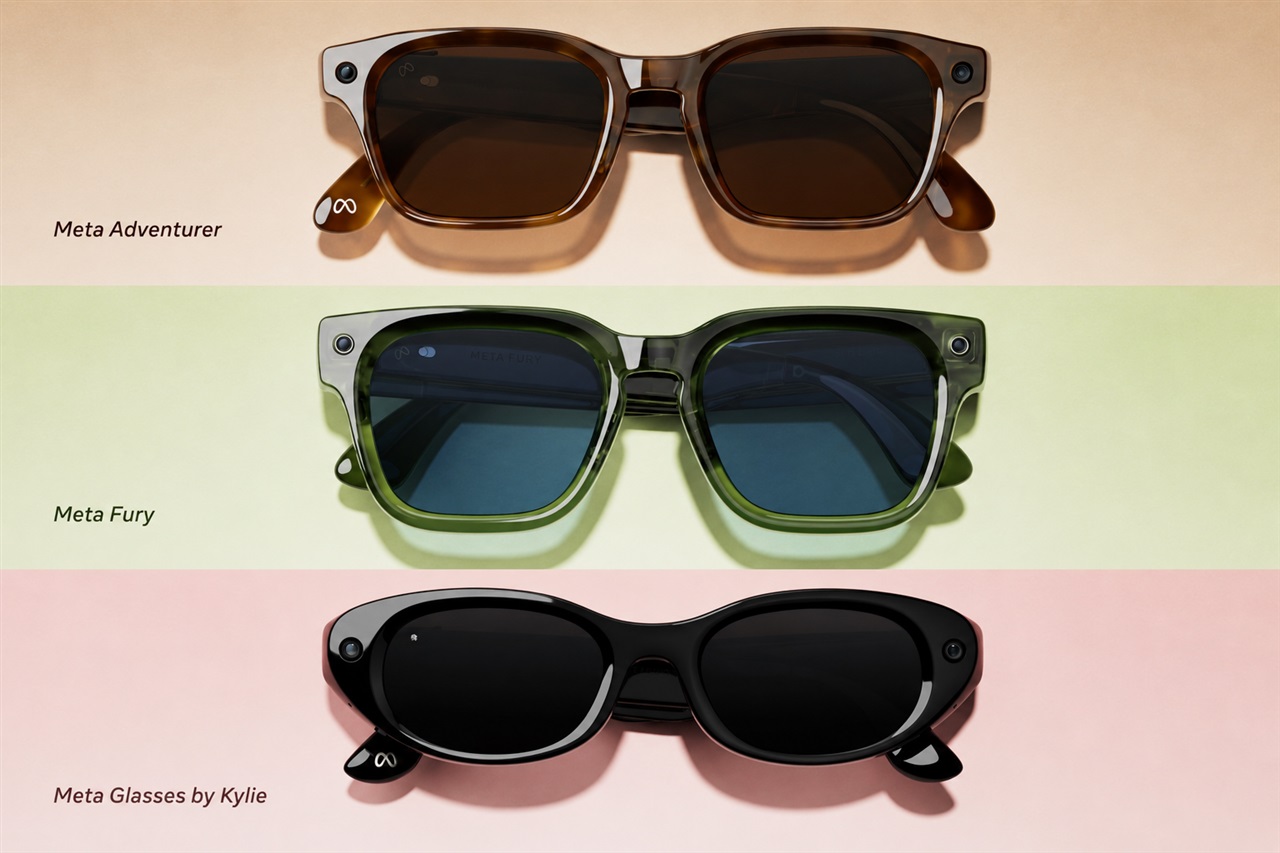
The wearable intelligence race is accelerating. Meta and EssilorLuxottica have announced a new budget line of AI glasses, bringing their smart eyewear portfolio to four products. The move follows the Ray-Ban Stories playbook and confirms the ambition to make AI an everyday companion, literally in your line of sight.
Technical specifics remain scarce, but launching a lower-cost variant speaks volumes about the strategy: lowering the entry barrier for a broader audience while retaining core AI features like voice commands, real-time translation, and contextual suggestions. For a wearable, the game is played on a razor’s edge between battery life, latency, and compute power – every millisecond counts, and every watt drained erodes the user experience.
Edge AI: where does inference happen?
The key question for AI-RADAR readers is: where does inference actually run? While simple tasks (alarm, photo capture, voice triggers) can be handled by a low-power local processor, more complex functions – such as semantic scene analysis – demand the compute muscle typically found in the cloud. The hybrid approach, now standard in mobile devices, presents a familiar trade-off: low latency and data privacy on one side, against raw computational capacity and continuous model updates on the other.
A budget line sharpens these dilemmas. The hardware is likely optimized to run compressed models, using aggressive quantization (INT8 or even INT4) and dedicated NPUs baked into the SoC. Such choices directly affect output quality: a real-time image recognition model running on a 2 W chip cannot compete with a server-grade LLM, but for many everyday tasks it may be good enough.
Data sovereignty in a pair of glasses
A device that sees the world and listens to conversations inevitably raises privacy and compliance flags. If collected data is processed locally, the risk of exfiltration drops dramatically, and the wearable becomes far easier to align with regulations like GDPR. AI-RADAR has consistently highlighted how a self-hosted approach is often the only viable path in regulated settings. A wearable that promises to keep data “at the edge” could serve as a compelling case study. On the flip side, without a robust cloud backend, updating models and features becomes more cumbersome, and the user experience risks being frozen in time.
Implications for enterprise deployers
For organizations already weighing on-premise or edge scenarios – from factory floors to logistics hubs – the arrival of a low-cost consumer device with embedded AI points to a broader trend: the components needed for local inference are becoming commoditized. This could accelerate the development of custom industrial wearables, where Total Cost of Ownership (TCO) is driven more by integration and security than by the unit price of the device. Meta’s budget line might therefore serve as a testbed for an entire category of intermediate products, straddling the line between gadget and professional tool.
The road, however, remains long. Without hard data on battery life, memory capacity, and real-world performance, any assessment stays speculative. What is clear is that the multiplication of models and form factors is turning AI glasses from an experiment into a market segment, with all the attendant expectations – and technical challenges – that entails.





💬 Comments (0)
🔒 Log in or register to comment on articles.
No comments yet. Be the first to comment!