Meta Accelerates AI Hardware Push with New Form Factors
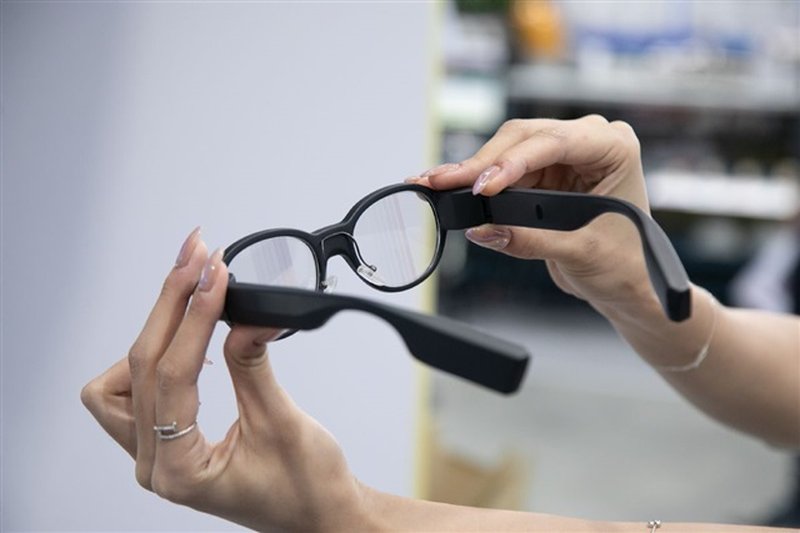
According to recent reports, Meta is poised to intensify its push into dedicated artificial intelligence hardware. The strategy reportedly includes the introduction of a pendant and a well-defined roadmap for smart glasses, signaling a clear intent to bring AI capabilities directly to users' hands and persons through wearable devices.
This strategic direction highlights Meta's desire to explore new interfaces and interaction modalities with artificial intelligence, moving beyond traditional screens. The goal is to integrate AI more pervasively into daily life, offering innovative and potentially more intuitive user experiences.
The Challenges of AI on Edge Devices
Integrating advanced AI functionalities, such as Large Language Models (LLMs), into small form factor devices like pendants and smart glasses presents significant technical challenges. These devices operate under strict constraints regarding power consumption, size, and computational capacity. To enable complex model inference directly on the hardware, optimization techniques such as Quantization, which reduces data precision to lower memory footprint and accelerate calculations, or the use of more efficient and compact model architectures, are often necessary.
The design of specialized silicon, optimized for low-power AI workloads, becomes crucial. This includes the development of NPUs (Neural Processing Units) or dedicated accelerators that can handle machine learning operations with energy efficiency and high throughput, while maintaining limited VRAM. The objective is to balance performance and battery life, ensuring a smooth user experience without compromising device autonomy.
Implications for Data Sovereignty and Deployment
The expansion of AI to edge devices, such as those Meta intends to develop, has profound implications for data sovereignty and deployment strategies. Local data processing, directly on the device, reduces reliance on the cloud for inference, enhancing privacy and security. This approach is particularly relevant for scenarios requiring air-gapped environments or for sectors with stringent compliance requirements, where sensitive data cannot leave the user's or organization's control perimeter.
For companies evaluating self-hosted or hybrid alternatives for AI workloads, the emergence of increasingly capable edge hardware offers new opportunities. While Meta's wearable devices are consumer-oriented, the underlying technology for on-device AI can inspire enterprise solutions for edge computing, where minimal latency and data protection are priorities. AI-RADAR offers analytical frameworks on /llm-onpremise to evaluate the trade-offs between on-premise, cloud, and edge deployments, considering factors such as TCO and data sovereignty.
Future Prospects of Pervasive AI
Meta's move to invest in wearable AI hardware marks a significant step towards a future where artificial intelligence will be increasingly integrated into our physical environment and daily interactions. This vision of pervasive AI, with processing capabilities distributed across a multitude of devices, could radically transform how we access and utilize information and intelligent services.
The success of this strategy will depend on Meta's ability to overcome the technical challenges related to hardware, software, and user experience, delivering products that are not only technologically advanced but also practical and desirable. The evolution of AI hardware, particularly for the edge, will continue to be a key factor in unlocking the full potential of artificial intelligence in every aspect of our lives.







💬 Comments (0)
🔒 Log in or register to comment on articles.
No comments yet. Be the first to comment!