
Micron’s outlook and AI’s impact on the memory industry
Micron has raised its expectations for AI-driven growth, with strategic agreements now reshaping the entire memory market. As one of the largest semiconductor makers, the company is signaling a structural shift: the demand for high-performance components, especially HBM and fast NAND, is forcing the entire supply chain to rethink priorities and investments. This is not just a sales forecast but a redefinition of how memory fits into the AI ecosystem.
Memory technology at the heart of the AI revolution
Large Language Models and training workloads create an insatiable need for bandwidth and capacity. The latest GPUs, critical for inference and fine-tuning, rely on VRAM to hold parameters and intermediate data without bottlenecks. HBM (High Bandwidth Memory) has become the gold standard for advanced computing, while traditional DRAM and NAND solutions address storage and caching demands. In this landscape, improvements in density and energy efficiency determine not only peak performance but also the economic and operational sustainability of data centers.
Impact on on-premise LLM deployments
Micron’s message is particularly relevant for those managing self-hosted infrastructure. The choice between high-bandwidth memory and more conservative options influences TCO, inference latency, and the ability to run complex models entirely on local hardware. An on-premise architecture aiming for data sovereignty and low latency must balance VRAM capacity with power and cooling expenses. As AI accelerates, the strategic agreements mentioned by Micron could stabilize the supply of critical components, reducing the risk of shortages that often delay private deployment projects.
Strategic agreements and shifting market dynamics
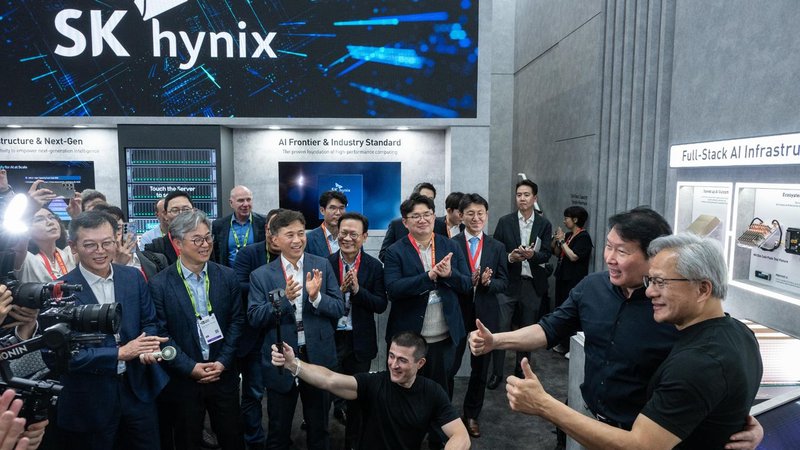
Technology is only part of the story: commercial deals between memory makers and large integrators are redrawing supply chains. With sustained demand on the horizon, competition among Micron, Samsung, and SK Hynix may move beyond sheer output to the ability to deliver AI-optimized memory tailored to specific workloads. This reshaping affects not just cloud providers but anyone building on-premise clusters, as it makes advanced components more accessible beyond the traditional hyperscaler circle.
AI-RADAR perspective: key factors for local deployment
Micron’s announcement confirms that the memory market is increasingly molded by AI requirements. For organizations evaluating on-premise architectures, it is no longer enough to focus only on GPU specs. Bandwidth, VRAM sizing, and the type of memory (HBM, GDDR, NAND) become strategic variables for efficient inference with quantized or full-precision LLMs. The growth forecasts and strategic agreements suggest that supply will diversify, but price pressure may ease only gradually. For those prioritizing data sovereignty, staying attuned to these dynamics is essential to plan infrastructure investments without being left behind on component availability.








💬 Comments (0)
🔒 Log in or register to comment on articles.
No comments yet. Be the first to comment!