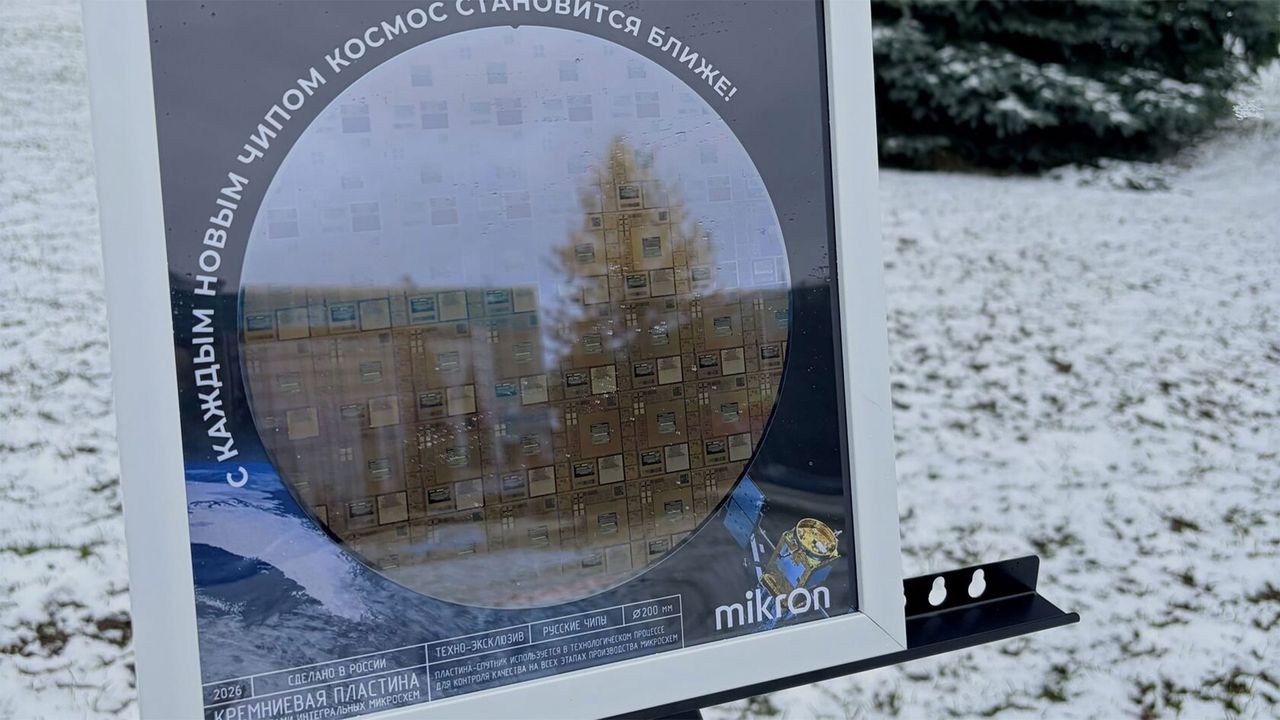
Mikron: When Silicon Becomes Collectible Art
Mikron, Russia's leading semiconductor manufacturer, has recently captured the industry's attention with an unusual initiative: the sale of framed silicon wafers, presented as genuine wall art. These collector's items, containing up to 120,000 test processors, bridge high technology and design, offering microelectronics enthusiasts a tangible way to celebrate chip engineering.
Mikron's offering stands out for its originality, featuring twelve different wafer designs, each sold for approximately $170. To complete the experience, the company also offers vials containing cleanroom air, at a symbolic cost of $2. This move not only highlights the silicon production process but transforms it into a decorative element and a symbol of the technological complexity underlying every modern device.
The Wafer: From Fab to Wall
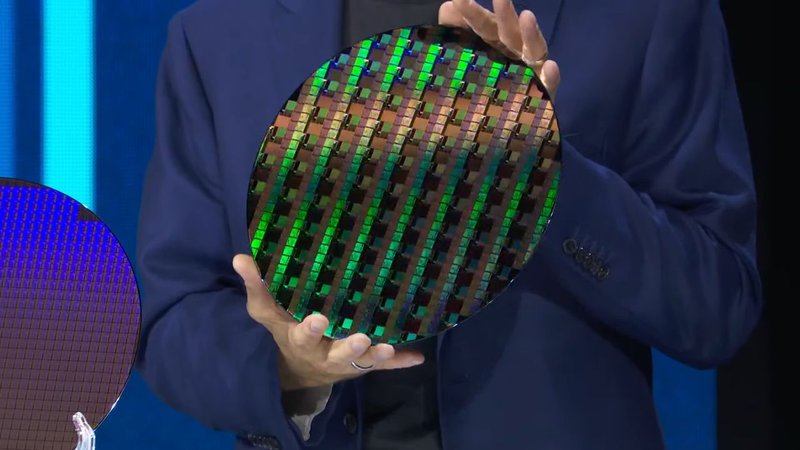
A silicon wafer is the fundamental base upon which integrated circuits are built, including the processors and memory that power Large Language Models (LLM) and other artificial intelligence applications. These thin discs of monocrystalline silicon undergo hundreds of manufacturing steps, including photolithography, doping, and deposition, to create millions of transistors. The wafers offered by Mikron, while containing a very high number of "processors," are specifically referred to as "test wafers," implying they are not intended for functional use but serve verification and calibration purposes during the production process.
The presence of "up to 120,000 processors" on a single test wafer underscores the density and miniaturization achieved in the semiconductor industry. Although these are not chips ready for deployment in an inference or training infrastructure, they represent the raw material and the result of an extremely sophisticated engineering process. For system architects and DevOps leads evaluating hardware for AI workloads, understanding this technological foundation, from raw silicon to the finished chip, is crucial for appreciating the constraints and opportunities in TCO and data sovereignty.
An Initiative Between Marketing and Symbolism
Mikron's initiative can be interpreted on multiple levels. On one hand, it is a creative marketing strategy aimed at generating interest and showcasing the company's production capabilities in an unconventional way. On the other hand, it has strong symbolic value, transforming an industrial component into a collector's item that celebrates human ingenuity in microelectronics. The sale of cleanroom air vials further accentuates the "technological curiosity" aspect, recalling the sterile and controlled environment where chips are born.
For an audience accustomed to discussing VRAM, throughput, and latency for LLM inference, a framed wafer might seem an abstraction. However, it serves as a reminder that every GPU, every CPU, and every memory unit powering our on-premise or hybrid AI stacks originates from these silicon discs. This perspective is particularly relevant for those concerned with data sovereignty and air-gapped deployments, where reliance on a reliable supply chain and understanding hardware provenance are fundamental aspects.
Industry and Collector Perspectives
The introduction of these souvenirs by Mikron highlights how even the most technical sectors can find innovative ways to connect with a broader audience or celebrate their industrial heritage. While these wafers do not directly impact LLM deployment decisions or the choice of a particular framework, they offer a unique perspective on the raw material that makes the entire AI infrastructure possible.
For professionals working in artificial intelligence who daily face the challenges of on-premise deployment, TCO management, and ensuring data sovereignty, these items can serve as a visual reminder of the incredible complexity and intrinsic value of silicon. AI-RADAR, for example, offers in-depth resources and analysis on /llm-onpremise to help evaluate trade-offs between different hardware architectures and deployment strategies, emphasizing the importance of every component, from raw material to finished system. Ultimately, Mikron's initiative is a tribute to the science and engineering that define the digital age.






💬 Comments (0)
🔒 Log in or register to comment on articles.
No comments yet. Be the first to comment!