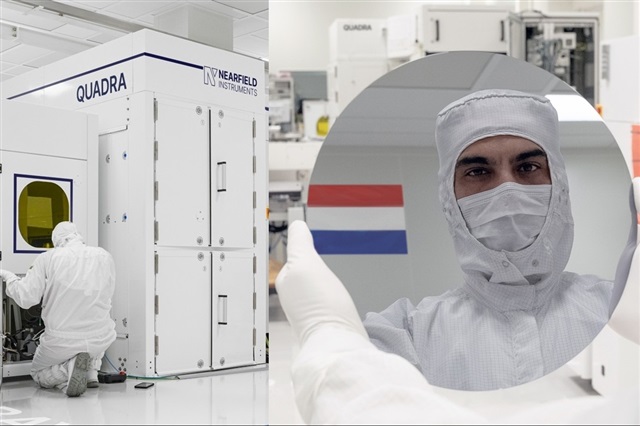
The race for AI hardware begins long before data centers: it starts in metrology labs measuring structures at the atomic scale. Nearfield Instruments, a Dutch company specializing in measurement systems for semiconductor manufacturing, has just closed a $380 million funding round, the largest ever for a deep-tech firm in the Netherlands. The figure signals just how strategic the industry considers quality control in next-generation chip production.
Why metrology is the hidden bottleneck
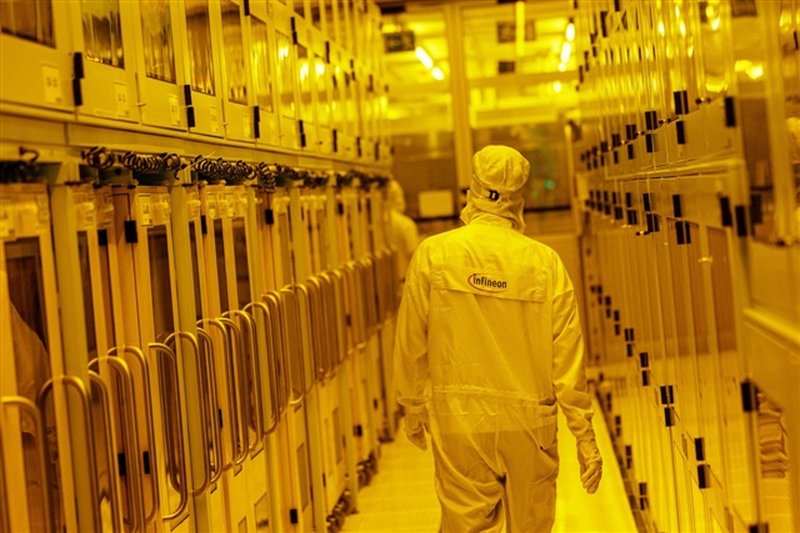
Building chips with ever-shrinking geometries – such as 3 nanometer or upcoming 2 nm nodes – demands obsessive precision in measuring structures during lithography. Nearfield Instruments’ tools detect defects and dimensional variations that traditional techniques would miss. Without this level of control, production yields plummet and costs soar. In a market where demand for GPUs and AI accelerators is growing exponentially, the ability to manufacture chips at volume with consistent quality is a decisive competitive factor.
Impact on the on-premise ecosystem
Those managing on-premise infrastructure for LLMs know how hard it is to balance performance and TCO. Latest-generation models need hardware with generous VRAM and high bandwidth, features that depend on silicon quality. If chipmakers struggle to meet roadmaps because of metrology bottlenecks, the entire inference and fine-tuning sector suffers. Investments like that in Nearfield Instruments are therefore an indirect but clear signal: the supply chain is strengthening to support the next wave of models, including those that will run locally, away from public cloud.
A round that rewrites European deep-tech rules
The $380 million funding is not just a record for the Netherlands: it’s an indicator of European venture capital maturity in the deep-tech space. While generative AI investments grab headlines, the real battle is fought over enabling technologies like metrology, advanced lithography, and materials. Without these pieces, on-premise workloads – from edge computing to internal clusters – would remain stuck on today’s hardware, with no path to scale.
Ultimately, Nearfield Instruments’ round reminds us that technological sovereignty also hinges on the ability to measure what we produce. For organizations evaluating self-hosted deployment of ever-larger models, this capital injection promises a more robust supply chain and higher-performing chips, reducing trade-offs between computational power and economic sustainability.



💬 Comments (0)
🔒 Log in or register to comment on articles.
No comments yet. Be the first to comment!