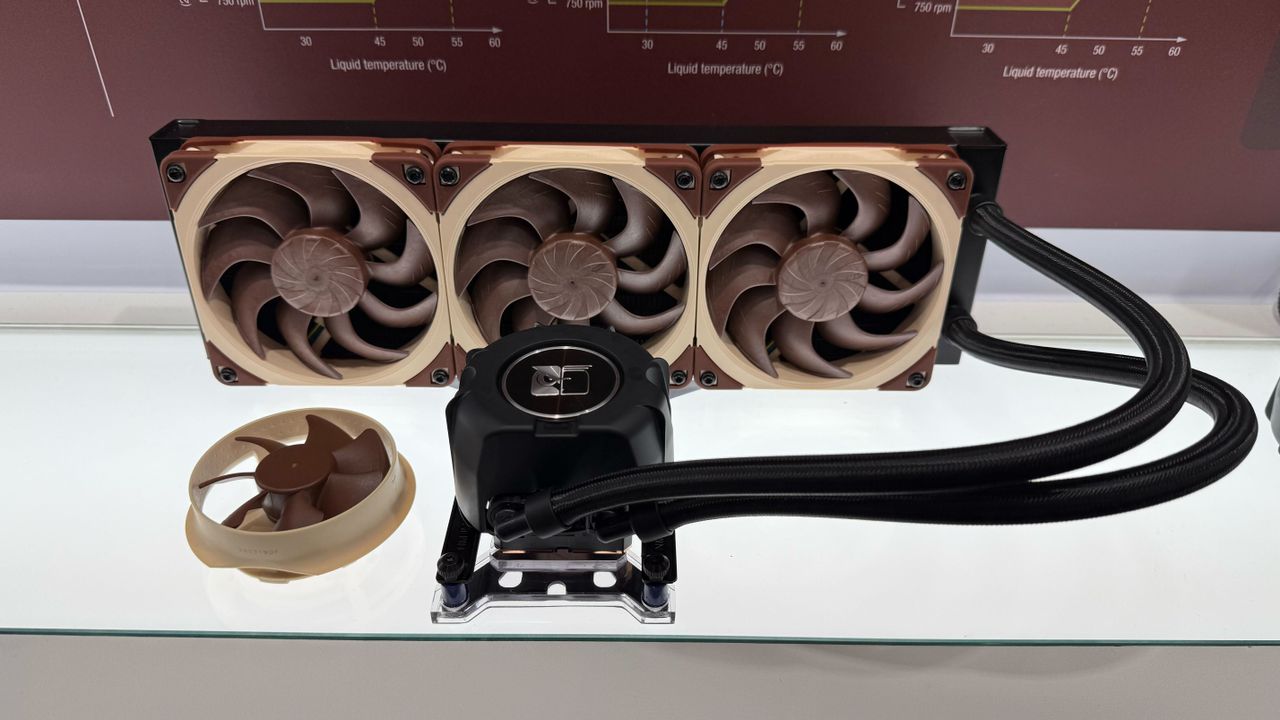
Noctua Debuts in the All-in-One Cooling Segment
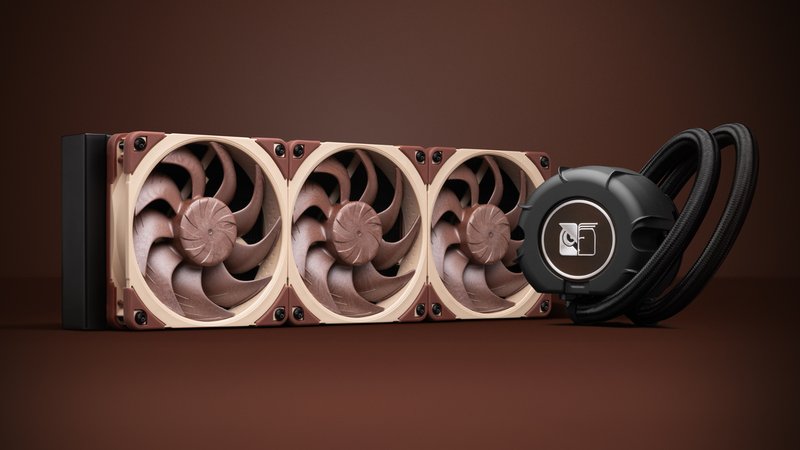
Noctua, a well-established name in the PC cooling solutions industry, has officially announced its entry into the All-in-One (AIO) CPU cooler market. This move marks a significant expansion for the company, traditionally recognized for its air coolers and high-performance fans. Noctua's first AIO, named NL-LC1, aims to combine thermal efficiency with the characteristic quiet operation that has made the brand famous.
The launch includes several configurations, with the base 240mm model priced at approximately $250. For those requiring higher cooling capacity, a 420mm variant will also be available, potentially costing up to $325. These prices reflect the premium positioning Noctua typically adopts for its products, focusing on build quality and performance.
Technical Details and the Commitment to Silence
At the core of Noctua's new AIO is a silenced Asetek Emma V2 pump. The choice of this pump underscores Noctua's focus not only on cooling performance but also on user experience, by minimizing system noise. Acoustic management is a critical factor, especially in environments where comfort is a priority.
The system is complemented by NF-A12 and NF-A14 fans, models already praised for their efficiency and quiet operation. These fans, integrated into the 240mm and 420mm radiators, are designed to maximize airflow and static pressure, essential elements for effectively dissipating heat generated by demanding CPUs. The combination of an optimized pump and high-quality fans promises robust and reliable cooling.
The Importance of Cooling in On-Premise AI Infrastructure
While the Noctua NL-LC1 is a product aimed at the consumer segment, its debut offers an opportunity to reflect on the fundamental importance of cooling in broader contexts, including on-premise deployments of AI workloads and Large Language Models (LLM). Servers dedicated to LLM inference and training, equipped with high-performance GPUs, generate significant amounts of heat. Inadequate thermal management can lead to performance throttling, system instability, and, in the long term, hardware failures.
For CTOs, DevOps leads, and infrastructure architects evaluating self-hosted solutions, the Total Cost of Ownership (TCO) of a deployment includes not only hardware and software but also energy and cooling costs. Efficient cooling solutions can reduce overall energy consumption and improve infrastructure reliability, helping to keep critical systems operational for data sovereignty and compliance. The pursuit of quietness, while less critical in a data center, translates into efficiency and less stress on components, which are always desirable aspects.
Future Prospects and Challenges in Thermal Management for AI
The evolution of AI chips, with constantly increasing transistor density and power consumption, poses ever-greater challenges for thermal management. Liquid cooling solutions, such as AIOs, are gaining traction in enterprise environments as well, complementing or replacing traditional air cooling systems due to their higher heat dissipation capacity in more confined spaces. This is particularly relevant for on-premise deployments, where space and energy efficiency are often stringent constraints.
The ability to maintain optimal operating temperatures is crucial for ensuring the throughput and low latency required by demanding LLM applications. While the Noctua NL-LC1 targets a different audience, its launch highlights a broader trend: innovation in cooling is an enabler for high-performance technologies, whether it's a gaming PC or an AI server cluster. The pursuit of increasingly efficient and reliable solutions remains a priority for the entire technology sector.






💬 Comments (0)
🔒 Log in or register to comment on articles.
No comments yet. Be the first to comment!