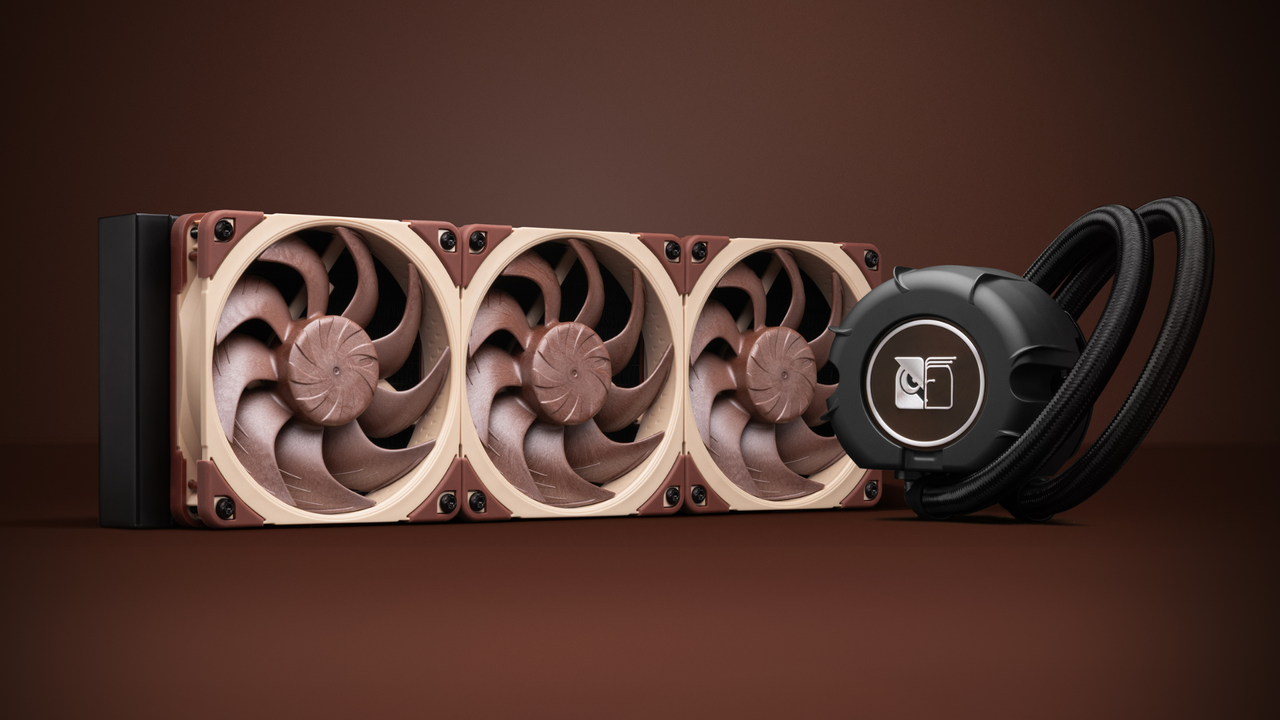
Noctua's Entry into the AIO Segment
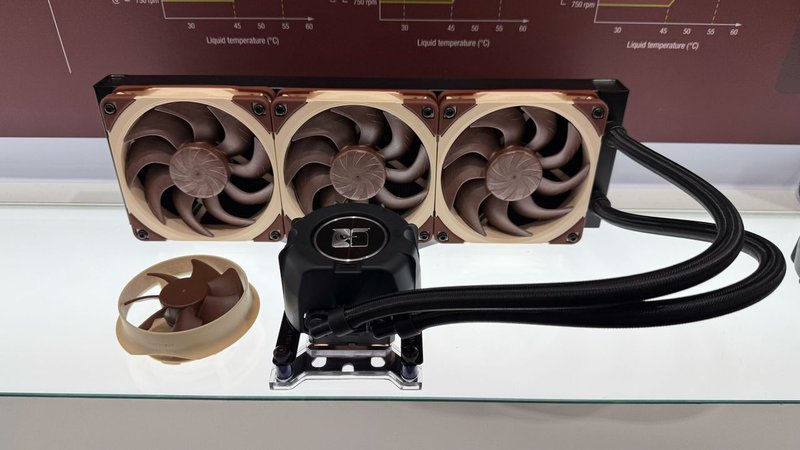
Noctua, a name long synonymous with high-quality, quiet air cooling solutions in the computing landscape, has finally announced its entry into the All-in-One (AIO) cooler market. This move marks a significant expansion for the company, bringing its renowned engineering to the liquid cooling sector. The first models introduced include a 240mm variant, with a starting price of $220, and integrate Noctua's celebrated A-series fans, known for their performance and low noise levels.
Noctua's introduction of these AIOs is not just news for PC enthusiasts; it also raises questions and offers insights for professionals managing high-performance computing infrastructures, particularly those dedicated to artificial intelligence and Large Language Models (LLM). In on-premise contexts, where total control over hardware and operational efficiency are priorities, selecting a reliable and high-performing cooling system becomes a critical factor.
The Crucial Role of Cooling in AI Infrastructures
LLM training and inference operations generate a considerable amount of heat, especially when utilizing latest-generation GPUs like NVIDIA H100 or A100, which can consume hundreds of watts each. Thermal management is not a secondary aspect; it is fundamental to ensure these components operate at their maximum efficiency without encountering thermal throttling, which would drastically reduce overall system performance and throughput. Inadequate cooling can lead not only to suboptimal performance but also to a reduction in hardware lifespan, resulting in increased maintenance and replacement costs.
For companies opting for on-premise deployments, the cooling challenge is amplified by the need to manage high compute densities in often limited spaces, while simultaneously controlling Total Cost of Ownership (TCO). Efficient solutions not only preserve hardware but also contribute to reducing overall energy consumption, an increasingly relevant factor in TCO calculations for data centers and self-hosted infrastructures. The ability of a cooling system to maintain optimal temperatures directly impacts the stability and reliability of the entire AI pipeline.
AIOs and On-Premise Deployment: Trade-offs and Advantages
AIO coolers, while traditionally associated with CPU cooling in desktop systems, represent a category of liquid cooling solutions that offer specific advantages. Compared to air cooling systems, they can often provide greater thermal efficiency in a more compact footprint, freeing up space around the CPU socket and improving overall airflow within the server chassis. For on-premise configurations, where every millimeter and every Celsius degree counts, these characteristics can be decisive.
Noctua's reputation for build quality and reliability translates into a potential advantage for infrastructure architects. Although Noctua's AIOs are primarily intended for CPUs, their entry into the liquid cooling market suggests a technological maturity that could, in the future, extend to more specific solutions for GPUs or entire racks. Choosing a quality AIO can reduce the risk of failures and the need for maintenance interventions, contributing to a more favorable TCO in the long term for self-hosted installations. Data sovereignty and control over the physical environment, typical of on-premise deployments, also extend to thermal management, where robust and reliable solutions are an asset.
Future Prospects and Final Considerations
Noctua's entry into the AIO market signals the continuous evolution in the cooling sector, also driven by the growing demands of high-performance computing. While these initial products are aimed at the consumer/prosumer segment, their existence underscores the importance of advanced thermal solutions for any workload generating significant heat. For CTOs, DevOps leads, and infrastructure architects evaluating self-hosted vs cloud alternatives for AI/LLM workloads, the choice of a cooling system is a fundamental element of design.
An on-premise AI infrastructure requires a holistic approach, where every component, from the silicon of the GPUs to the cooling system, must be optimized to maximize efficiency and minimize risks. The availability of reliable and high-performance cooling options, such as those Noctua aims to offer, is crucial for building robust and scalable environments. For those evaluating on-premise deployments, AI-RADAR offers analytical frameworks on /llm-onpremise to understand the trade-offs between different infrastructural solutions, including aspects related to cooling and TCO.





💬 Comments (0)
🔒 Log in or register to comment on articles.
No comments yet. Be the first to comment!