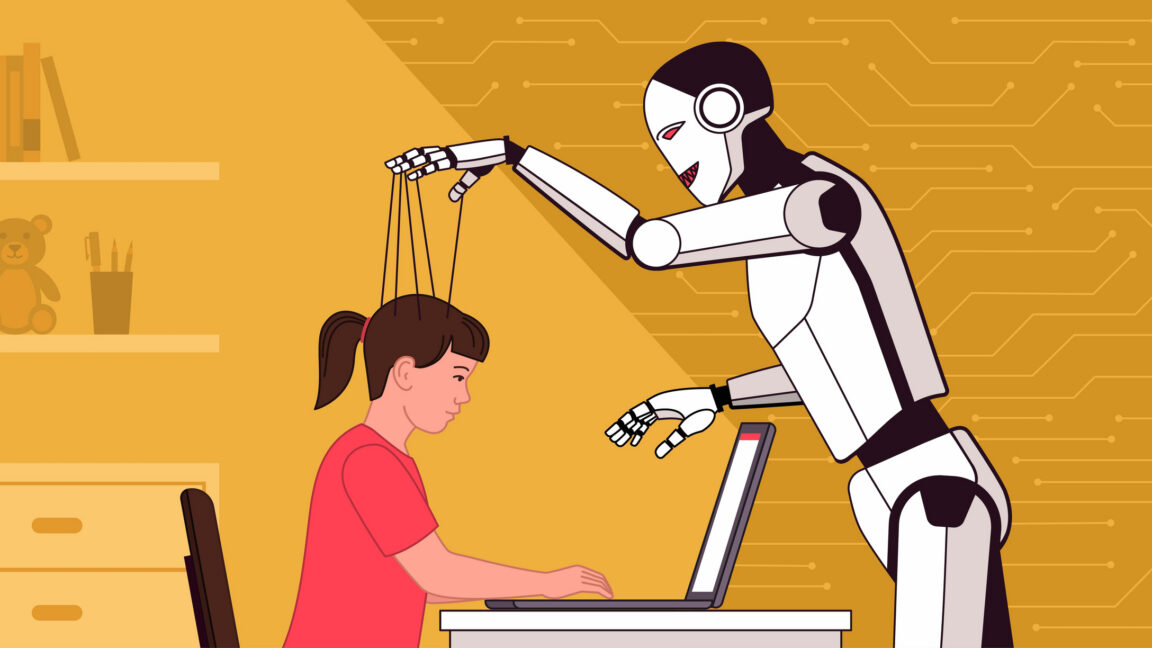
Say Brown and you think of excellence, merit, brains accustomed to competing without shortcuts. Yet the latest scandal rocking the Providence campus tells a different story: hundreds of students ready to use generative AI to pass exams without studying. The one who opened Pandora’s box is Roberto Serrano, a blind economics professor who noticed anomalies in the assignments and decided not to turn a blind eye. ‘We cannot choose to become idiots,’ he said, referring to the temptation to delegate thinking to a chatbot.
Numbers back up the concern. A survey of Princeton students found that 29.9% admitted to using AI to cheat on at least one exam or assignment. At Brown, the situation erupted in a specific course, where abuse of tools like ChatGPT skewed results and threatened the credibility of assessment. Serrano did not let go, and the case has become a point of no return.
Brown’s crisis is not an isolated incident but the symptom of a structural problem. Generative AI in the cloud is everywhere: a browser and a smartphone are all you need to access models capable of producing essays, solving math problems, and writing code. Blocking access to these platforms is technically nearly impossible on an open university network. The only viable path to restore exam integrity is to flip the perspective: don’t try to stop external AI, but bring AI inside the institution, under control.
This is where on-premise deployment of LLMs changes the game. A university could set up its own server running an open-source model, administering exams in an air-gapped environment where every interaction is logged, every text generation is traceable, and no request leaves the premises for the public cloud. Students could use AI as an assisted tool—not to cheat, but to learn—knowing that the system is designed to detect abuse. Data sovereignty for student records, GDPR compliance, and auditability become requirements, not options.
Brown therefore sends a second-order signal that goes beyond the classroom. Growing distrust of cloud services for sensitive tasks is pushing organizations to rethink their AI infrastructure. Universities that choose to build local stacks, with dedicated GPUs for inference and controlled storage, will be the ones able to offer fair, certifiable exams. The winners are those investing in on-premise hardware and orchestration tooling, while cloud AI providers risk losing an entire market segment in education. A lesson that, from Brown, resonates far beyond the Ivy League gates.








💬 Comments (0)
🔒 Log in or register to comment on articles.
No comments yet. Be the first to comment!