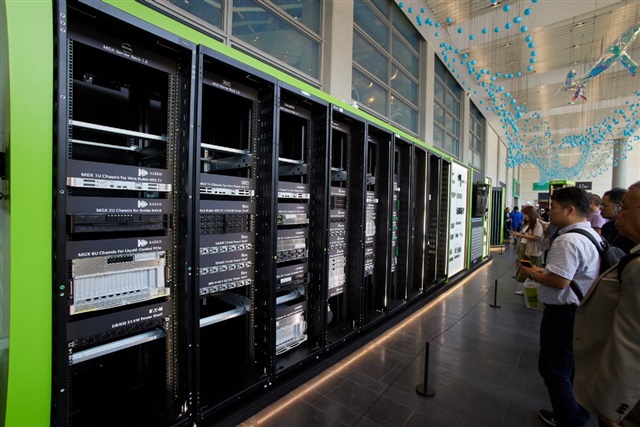
The Long Wave of New Hardware Platforms
The server market is set to receive a significant boost in the second half of 2026, thanks to the introduction of new platforms based on GPUs (Graphics Processing Units) and ASICs (Application-Specific Integrated Circuits). According to DIGITIMES analysis, this wave of hardware innovation is poised to stimulate an increase in server shipments, a key signal for the evolution of infrastructures dedicated to artificial intelligence and Large Language Models (LLM). For companies evaluating on-premise deployment strategies, understanding the impact of these new architectures is fundamental for long-term planning.
GPUs and ASICs: Engines of On-Premise AI
The importance of GPUs and ASICs in the AI landscape cannot be overstated. GPUs, with their parallel architecture, have long been the workhorse for training and inference of complex models, including LLMs. New generations promise improvements in terms of VRAM, memory bandwidth, and compute capability, all critical elements for managing increasingly larger models and more intense workloads. ASICs, on the other hand, are designed to optimize energy efficiency and throughput for specific inference operations, offering a competitive advantage in scenarios where cost per inference and latency are priorities.
For self-hosted infrastructures, the arrival of these platforms means the possibility of deploying LLMs with superior performance and improved energy efficiency. This is particularly relevant for organizations that need to maintain full control over their data and models, operating in air-gapped environments or with stringent data sovereignty requirements. The choice between general-purpose GPUs and specialized ASICs will depend on specific workloads and TCO objectives.
Implications for TCO and Deployment Strategies
The timeframe of the second half of 2026 suggests that companies have a period to plan the integration of these new technologies. Investment in new hardware platforms represents a significant CapEx cost, but it can translate into long-term OpEx savings due to greater energy efficiency and higher inference throughput. This is a key factor in calculating the Total Cost of Ownership (TCO) of an on-premise AI infrastructure compared to cloud-based solutions.
The availability of more performant and specialized hardware can also reduce the need for extreme Quantization techniques, allowing for greater model precision while optimizing VRAM utilization. For CTOs and infrastructure architects, the challenge will be to balance performance needs with budget constraints and growth strategies, carefully evaluating the trade-offs between early adoption of new technologies and market maturity.
Future Outlook and Strategic Decisions
Innovation in silicon continues to be the primary driver of artificial intelligence advancement. The anticipation for these new GPU and ASIC platforms in 2H26 underscores a trend of continuous improvement in computing capabilities, essential for unlocking new applications and making LLMs more accessible and performant even in on-premise contexts. Monitoring these developments is crucial for anyone making strategic decisions about AI infrastructure. The ability to deploy and manage LLMs efficiently, securely, and in compliance with local regulations will increasingly depend on choosing the right hardware and integrating it into a robust local stack. AI-RADAR continues to provide analyses and frameworks to support these complex evaluations, highlighting the constraints and trade-offs that define the AI deployment landscape.






💬 Comments (0)
🔒 Log in or register to comment on articles.
No comments yet. Be the first to comment!