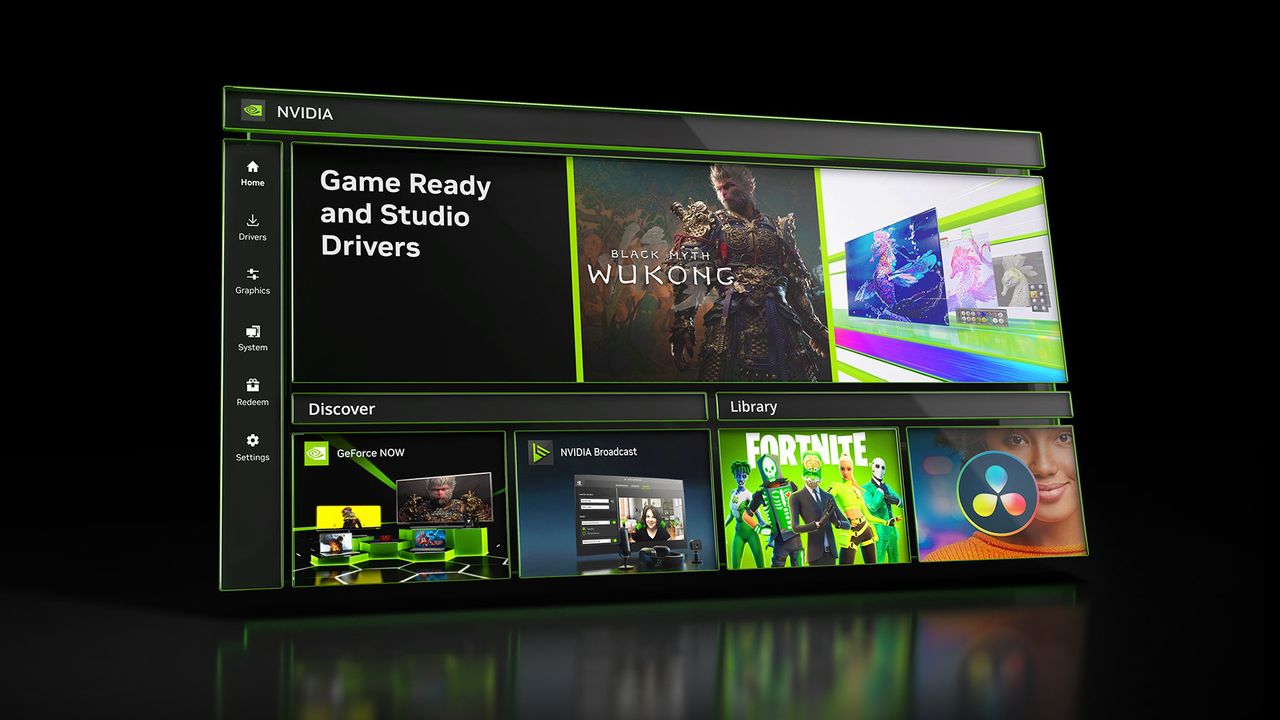
Nvidia Retires Control Panel: A New Era for Driver Management
Nvidia has announced a significant shift in its software management strategy, opting to retire the long-standing Control Panel after twenty years of service. This move marks the transition to a single, unified platform, the "Nvidia App," which will become the exclusive hub for all driver updates and configuration functionalities. For end-users, and particularly for IT professionals managing complex GPU-based infrastructures, this evolution promises a more streamlined and centralized management experience.
The Control Panel, introduced two decades ago, has long been the default tool for optimizing graphics settings and managing drivers. Its deprecation and migration to the Nvidia App reflect a broader trend in the tech industry towards integrated software ecosystems, designed to offer a more cohesive and functional user experience.
Implications for Hardware Management and On-Premise Deployments
For enterprises investing in self-hosted and on-premise AI infrastructures, efficient GPU driver management is a critical factor. The new Nvidia App, as a unified platform, could significantly simplify deployment and maintenance processes. A single interface for updating drivers and configuring GPUs can reduce operational complexity, ensuring that machines are always equipped with the latest and most optimized software versions.
This is particularly relevant in contexts where stability and performance are crucial, such as data centers running Inference or Fine-tuning workloads for Large Language Models. The ability to consistently deploy updates across an extensive fleet of machines can directly impact system uptime, security, and ultimately, the Total Cost of Ownership (TCO) of the infrastructure. Centralized management can also facilitate compliance with security policies and data sovereignty requirements, which are fundamental for many organizations.
Towards an Integrated Software Ecosystem
Nvidia's decision to consolidate its utilities into a single application reflects a strategic vision aimed at improving the overall user experience, whether for a gamer or a system administrator. A unified app can offer faster access to essential features, such as performance optimization, hardware monitoring, and application-specific settings management.
This integrated approach aligns with the demands of a market that increasingly requires efficiency and ease of use. For DevOps teams and infrastructure architects, a more consistent software platform can translate into less time spent troubleshooting and more time maximizing throughput and reducing latency in AI workloads.
Future Prospects for AI Infrastructure
The shift to the Nvidia App represents more than just a software update; it signals the direction Nvidia intends to take for supporting its hardware. For organizations evaluating or managing on-premise LLM deployments, the availability of robust and integrated management tools is a key factor. The ability to keep GPUs, such as the A100 or H100 series, updated and optimized through a single interface can help unlock the full potential of the silicon.
As the industry continues to evolve, with a growing emphasis on data sovereignty and the need for locally controlled AI infrastructures, tools like the Nvidia App become essential components for ensuring that hardware investments are fully leveraged. AI-RADAR offers analytical frameworks on /llm-onpremise to evaluate the trade-offs between different deployment architectures, and this evolution from Nvidia fits perfectly into that context, highlighting the importance of effective software management for AI-dedicated hardware.




💬 Comments (0)
🔒 Log in or register to comment on articles.
No comments yet. Be the first to comment!