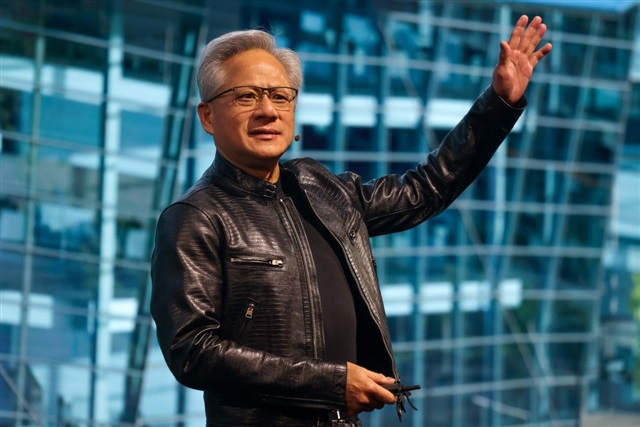
The Strategic Alliance Between Nvidia and Hyundai for AI
Nvidia and Hyundai have announced a strengthening of their strategic partnership, focusing on advancing artificial intelligence in the robotics and mobility sectors. This expanded collaboration highlights the increasing interdependence between AI technology providers and companies implementing these solutions in real-world applications, often with stringent performance and reliability requirements.
The context of this partnership is particularly relevant to the current technological landscape, where AI is becoming a fundamental pillar for innovation. For companies like Hyundai, integrating advanced AI capabilities into autonomous vehicles, driver-assistance systems, and robotic platforms is no longer an option but a strategic necessity to maintain competitiveness and drive technological progress. Nvidia, with its leadership in AI silicon and software frameworks, positions itself as a key partner in this scenario.
The Challenges of AI in Robotics and Mobility: A Focus on Deployment
The robotics and mobility sectors present unique challenges for AI deployment. Real-time processing of large volumes of sensor data (Lidar, radar, cameras), the need for low-latency responses, and reliability in complex operating environments are non-negotiable requirements. This often prompts companies to carefully evaluate deployment options, balancing the advantages of the cloud with the control and performance needs offered by on-premise or edge solutions.
For critical AI workloads, such as those driving a robot or an autonomous vehicle, the ability to perform inference directly on the device (edge computing) or on self-hosted infrastructure close to the data collection point is often preferred. This approach minimizes network latency, ensures data sovereignty, and allows for more granular control over hardware and software. The choice between a cloud and an on-premise or hybrid deployment depends on a thorough analysis of TCO, security requirements, and technical specifications, such as available GPU VRAM and the throughput needed for AI models.
Technological and Strategic Implications for the AI Ecosystem
The partnership between Nvidia and Hyundai is not just a commercial agreement but an indicator of broader trends in the AI ecosystem. Vertical integration, where hardware and software are co-optimized for specific applications, is crucial. Nvidia offers a comprehensive platform that includes high-performance GPUs, such as the A100 and H100 series, and software stacks like CUDA and TensorRT, essential for accelerating Large Language Models (LLM) workloads and other perception and control models.
For companies operating in regulated sectors or with sensitive data, such as automotive, the ability to keep data and AI models within their own infrastructure boundaries is fundamental. This strengthens the argument for on-premise or air-gapped deployments, where compliance and security can be managed internally. The choice of hardware, from GPU memory to networking capacity, becomes a determining factor for the scalability and efficiency of these local AI infrastructures.
Future Prospects and Deployment Decisions
The strengthened collaboration between Nvidia and Hyundai highlights a clear direction for the future of AI: greater integration and optimization for specific applications. As AI models become more complex and performance requirements more stringent, the ability to deploy and manage these solutions efficiently will become a key differentiator. This includes not only the training phase but especially the inference phase, which demands robust and scalable infrastructure.
For those evaluating on-premise deployments for AI and LLM workloads, it is essential to consider all trade-offs, from initial CapEx to ongoing OpEx, including energy and cooling costs. AI-RADAR offers analytical frameworks on /llm-onpremise to evaluate these complex decisions, providing tools to compare hardware architectures, VRAM requirements, and expected performance. The partnership between Nvidia and Hyundai is a concrete example of how leading companies are investing in these capabilities to shape the future of AI technology.






💬 Comments (0)
🔒 Log in or register to comment on articles.
No comments yet. Be the first to comment!