
NVIDIA and the Vera Rubin Push
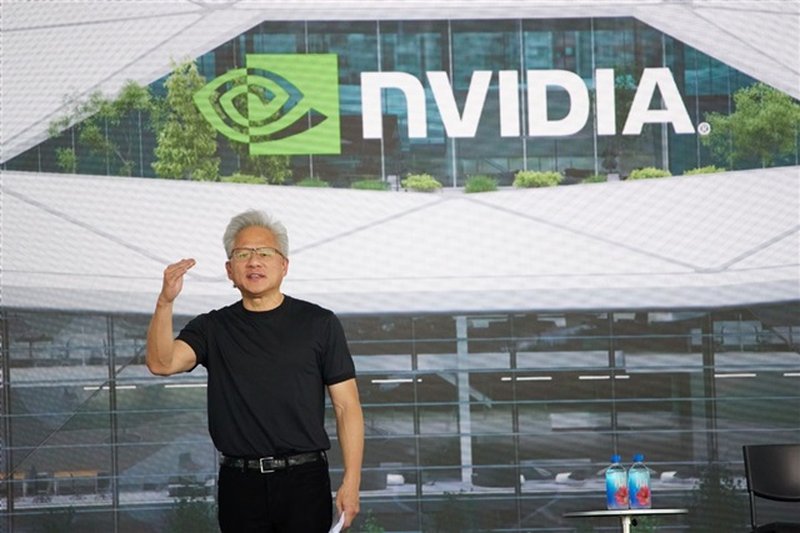
Jensen Huang, CEO of NVIDIA, recently expressed his appreciation for Taiwanese supply chain partners, highlighting their fundamental role in the company's success. The comment, which underscored the significant economic benefit for these partners, comes at a key moment: the start of the intensive production phase, or 'ramp-up,' for the 'Vera Rubin' GPU architecture. This development is particularly relevant for the artificial intelligence industry, which increasingly relies on cutting-edge hardware to support the exponential growth of Large Language Models (LLMs) and other computationally intensive applications.
The initiation of Vera Rubin production is not just news for NVIDIA, but an indicator of the direction the entire AI ecosystem is taking. The ability to scale the production of such complex chips is a decisive factor for the availability and accessibility of the computational resources needed for innovation and the deployment of AI solutions globally. For companies evaluating self-hosting strategies, the availability of these new generations of silicon is a key element in investment decisions.
The Strategic Role of the Taiwanese Supply Chain
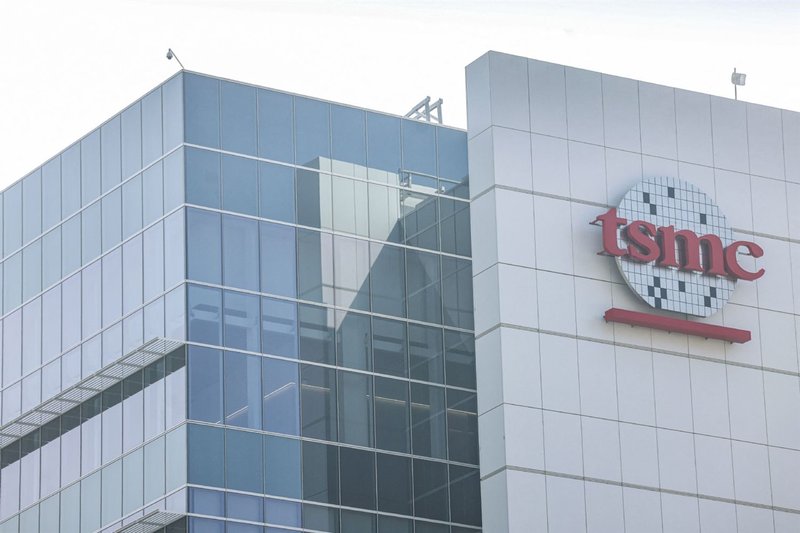
Taiwan's supply chain has long been an irreplaceable pillar for the semiconductor industry, particularly for high-performance chips like NVIDIA's GPUs. Companies such as TSMC, a world leader in semiconductor manufacturing, are at the heart of this ecosystem, providing the most advanced fabrication technologies needed to produce complex processors with billions of transistors. Their expertise is crucial not only in silicon production but also in the packaging and testing phases, which have become increasingly sophisticated to handle the densities and interconnections required by modern AI accelerators.
The close collaboration between NVIDIA and its Taiwanese partners ensures that architectural innovations can quickly translate into physical products at scale. This symbiotic relationship is what allows NVIDIA to maintain its leadership position in the AI accelerator market, providing the necessary hardware for LLM training and inference. For CTOs and infrastructure architects, understanding the robustness and capacity of this supply chain is fundamental for planning long-term investments in on-premise AI infrastructures.
Vera Rubin and the Evolution of AI Hardware
The Vera Rubin architecture is positioned as the next generation of NVIDIA GPUs, following in the footsteps of Hopper (H100) and Blackwell (B100/GB200). Each new iteration brings significant improvements in terms of computing power, VRAM bandwidth, and energy efficiency—all critical factors for AI workloads. The demand for computational capacity for training increasingly large LLMs and for low-latency inference continues to grow, driving the need for ever more performant hardware.
These technological advancements have a direct impact on deployment decisions. More powerful hardware can reduce the number of GPUs required for a given workload, optimizing the Total Cost of Ownership (TCO) and reducing space, power, and cooling requirements in a self-hosted datacenter. However, adopting new architectures also requires investments in updated infrastructure and careful planning to integrate new capabilities into an existing technology stack.
Implications for On-Premise Deployments
For organizations prioritizing data sovereignty, regulatory compliance, and direct control over their computational resources, the arrival of new architectures like Vera Rubin is an event of great importance. The availability of latest-generation GPUs allows for building and maintaining competitive on-premise AI infrastructures, capable of handling complex workloads such as fine-tuning proprietary LLMs or performing inference for critical models in air-gapped environments. The choice between an on-premise deployment and using cloud services is often dictated by a thorough analysis of the trade-offs between CapEx and OpEx, flexibility, and control.
AI-RADAR focuses precisely on these dynamics, offering analytical frameworks to evaluate the implications of on-premise and hybrid deployments. Investing in cutting-edge hardware like Vera Rubin can offer long-term strategic advantages but requires a clear understanding of the infrastructural requirements, operational costs, and internal expertise needed to manage such systems. The ability to fully leverage the potential of these new architectures is a distinguishing factor for companies aiming to maintain a competitive edge in the AI era.





💬 Comments (0)
🔒 Log in or register to comment on articles.
No comments yet. Be the first to comment!