
Nvidia and SK Hynix: A Strategic Partnership for the Future of AI Memory
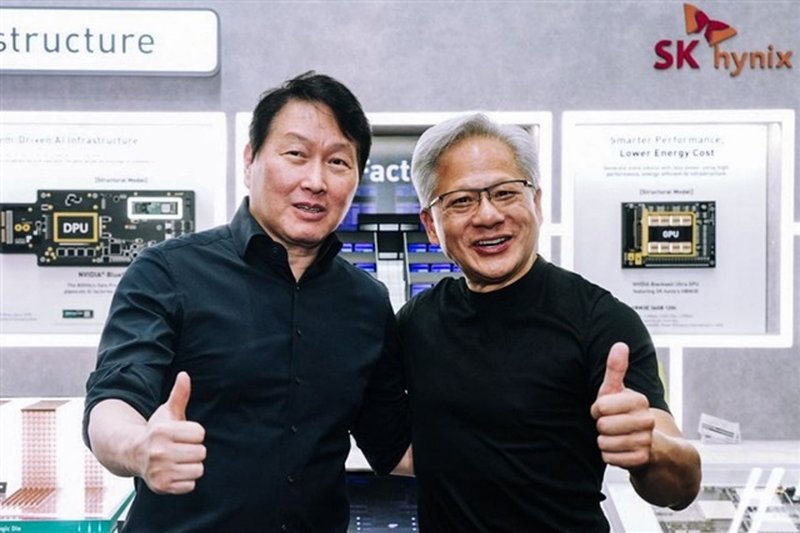
Nvidia and SK Hynix, two giants in the fields of graphics processing units (GPUs) and memory semiconductors respectively, have signed a multiyear partnership that promises to strengthen the supply chain and innovation in the high-performance memory sector. This strategic collaboration extends to several crucial technological areas, including artificial intelligence servers, personal computers, and the burgeoning robotics industry. The announcement underscores the growing interdependence between chip manufacturers and memory providers, an increasingly critical factor for the development of advanced AI systems.
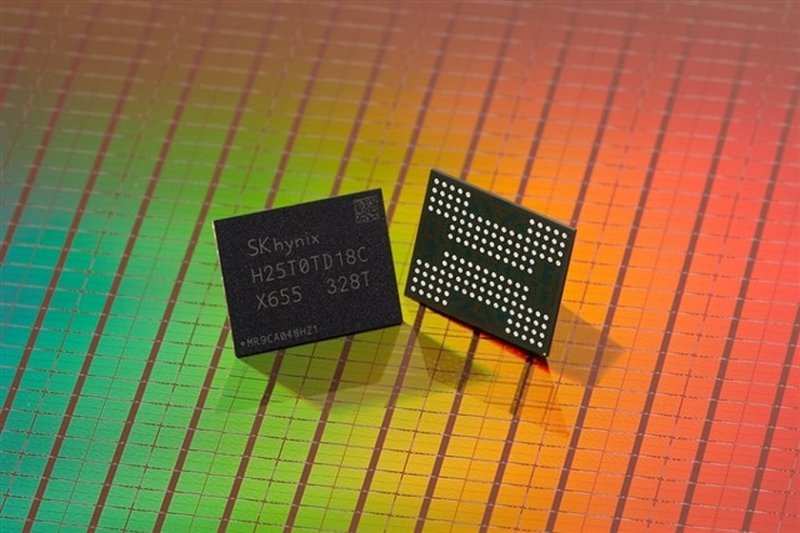
The multiyear nature of the agreement suggests a long-term commitment to addressing the challenges and opportunities presented by the rapid evolution of AI. For companies operating with intensive Large Language Models (LLM) workloads, memory availability and performance are decisive factors. This partnership aims to ensure that future generations of Nvidia hardware can rely on cutting-edge memory solutions supplied by SK Hynix, a key player in the High Bandwidth Memory (HBM) market.
The Crucial Role of High-Performance Memory in AI Workloads
In the context of artificial intelligence deployments, particularly for LLM training and Inference, memory is not just a component but a fundamental enabler. The amount of VRAM available on a GPU, along with its bandwidth, directly determines the size of models that can be loaded, the manageable batch size, and consequently, the overall system throughput. Models like Large Language Models require tens or hundreds of gigabytes of VRAM to operate effectively, making HBM solutions indispensable for high-end GPUs such as the Nvidia A100 and H100 series.
For organizations opting for a self-hosted or on-premise approach for their AI workloads, the availability of hardware with adequate memory is an absolute priority. The ability to run complex LLMs locally, without relying on external cloud services, offers significant advantages in terms of data sovereignty, reduced latency, and control over operational costs. A partnership like that between Nvidia and SK Hynix is therefore vital to ensure that memory innovation continues to support the ever-increasing computational power and memory capacity demands of next-generation AI systems.
Implications for On-Premise Deployments and Data Sovereignty
The stability of the supply chain for critical components like memory is a fundamental aspect for companies investing in on-premise AI infrastructures. A multiyear agreement between two market leaders can help mitigate risks related to the availability and costs of memory modules, directly influencing the Total Cost of Ownership (TCO) of self-hosted AI solutions. For CTOs and infrastructure architects, the certainty of being able to access high-performance memory is essential for planning long-term investments in AI servers and GPU clusters.
The adoption of LLMs in air-gapped environments or those with stringent compliance requirements, such as banking or government sectors, makes on-premise hardware a mandatory choice. In these scenarios, the ability to manage the entire AI stack locally, from GPU to memory, is crucial for maintaining data sovereignty and adhering to current regulations. The collaboration between Nvidia and SK Hynix, also focused on AI servers, strengthens the hardware ecosystem necessary for such deployments, offering greater confidence in the availability of key components to build and scale private AI infrastructures. For those evaluating the trade-offs between on-premise deployments and cloud solutions, AI-RADAR offers analytical frameworks on /llm-onpremise to delve deeper into these considerations.
Future Prospects for Innovation in AI Memory
This partnership not only consolidates current market needs but also lays the groundwork for future generations of AI technologies. With the increasing complexity of models and the demand for greater energy efficiency and throughput, memory innovation, such as the evolution of HBM, will become increasingly decisive. The collaboration between a leading GPU manufacturer and a memory innovator can accelerate the development of optimized solutions capable of unlocking new capabilities for artificial intelligence.
The extension of the partnership to sectors like PCs and robotics indicates a broader vision, where AI is not confined solely to data centers but spreads towards the edge and end devices. This requires scalable and high-performance memory solutions, suitable for various form factors and power requirements. The synergy between Nvidia and SK Hynix represents a significant step to ensure that the underlying hardware is ready to support this transition, providing the foundations for continuous innovation across the entire AI ecosystem.






💬 Comments (0)
🔒 Log in or register to comment on articles.
No comments yet. Be the first to comment!