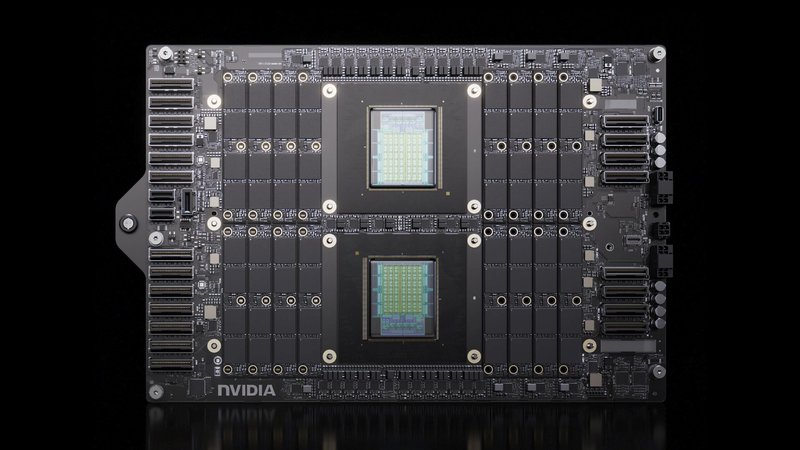
NVIDIA has never hidden its ambition to become the single computing powerhouse for modern data centers. The latest signal comes, almost quietly, from a company blog post touting the single-threaded prowess of its Vera CPU. In the text, an NVIDIA engineer confirms that the next generation, codenamed Rosa, will rest on a new core called Rigel. It's not just an incremental update. It's the shift from a design based on ARM Neoverse architectures (the current Olympus cores) to a fully custom design.
Why does this matter, especially for those evaluating on-premise adoption of AI workloads? The answer lies in the tight integration between CPU and GPU. The Grace chips, NVIDIA's current server offering, already demonstrate the benefits of an in-house designed duo: NVLink-C2C coherent memory, reduced latencies, optimized data pipelines. With Rigel, NVIDIA can push further, fine-tuning the core for the auxiliary operations that accompany large language model (LLM) inference: from rapid tokenization to batch preprocessing and efficient queue management. In an on-premise environment, where every watt and millisecond counts, this architectural control promises an efficiency leap that general-purpose processors can hardly match.
There's also a strategic dimension worth attention. Designing a proprietary CPU core is a colossal investment, and NVIDIA seems intent on building a fully integrated platform, from board to silicon. This puts it on a collision course with established vendors like Intel and AMD, but also with the standard ARM ecosystem. If Grace and the future Rosa with Rigel core will deliver, as is plausible, a marked performance differential in AI workloads, IT administrators will face a fork: accept technological lock-in in exchange for operational simplicity and potentially lower TCO, or maintain hardware heterogeneity at the cost of integration.
For entities managing self-hosted infrastructure, where data sovereignty and cost predictability are absolute priorities, the calculation becomes more concrete. A machine built around an NVIDIA CPU-GPU package could simplify validation, reduce compatibility surprises, and offer unified support. At the same time, entrusting the entire hardware stack to a single actor is not a neutral choice: vendor dependency can rigidify future options.
NVIDIA's move with Rigel is not isolated. It's part of a broader restructuring of the industry, where dominant workloads (inference and training) dictate silicon architecture, not the other way around. The CPU ceases to be the center of the system and becomes a specialized node in a heterogeneous compute network. For those following on-premise AI dynamics, this announcement, for now scant on technical details, is a reminder: the future of AI hardware will be increasingly vertically integrated. And NVIDIA just raised the stakes.






💬 Comments (0)
🔒 Log in or register to comment on articles.
No comments yet. Be the first to comment!