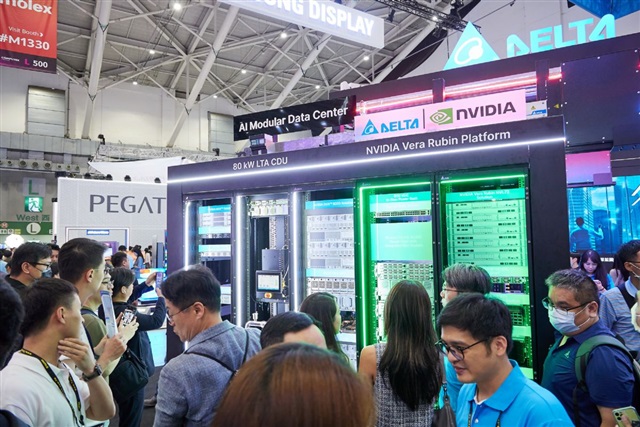
The news, first reported by DIGITIMES, feels like a turning point: Nvidia is reportedly preparing a decisive shift toward HVDC (High Voltage Direct Current) power distribution in its data centers. This is no minor technical tweak. It is an acknowledgment that the era of industrial-scale LLM workloads and inference demands an electrical architecture capable of handling power densities that traditional AC systems struggle to sustain without excessive waste and complexity.
HVDC—typically operating at 380V within racks—is not a new invention, but its adoption by a player like Nvidia could catalyze the entire ecosystem. Today, most data centers distribute AC power and then convert it multiple times: from the incoming transformer, through UPS systems, to the server power supplies that rectify it to DC for internal components. Each step introduces heat, losses, and cost. HVDC eliminates several conversion stages: equipment is fed directly from the grid (or from renewable sources, often already in DC), cutting energy losses by 10–15%. For GPU clusters that draw tens of kilowatts per rack, the TCO improvement is immediate.
The deeper signal, however, concerns the decoupling of load growth from electrical sustainability. Training runs for ever-larger models demand instantaneous and fluctuating power draws that clash with the inertia of AC systems. HVDC offers faster response, better integration with battery storage, and a smaller cooling footprint—all factors that, in an on-premise scenario, translate into fewer architectural constraints and higher effective density.
Winners and losers in the power chain
A move of this kind does not stay contained at the GPU supplier level. Nvidia’s adoption could push power supply, rack, and distribution vendors to redesign their lines for HVDC, accelerating the sunset of legacy 48V AC standards. Those who have already invested heavily in AC infrastructure may face earlier-than-expected obsolescence, while those betting on direct current—from modular data center providers to component manufacturers—stand to gain market share. At the same time, regulators and standards bodies will need to revise safety and electromagnetic compatibility rules, because bringing elevated DC voltages close to servers and storage introduces new risks, such as sustained arc faults that require specific protections.
On the sovereignty and self-hosting front, the game is equally open. Organizations that run sensitive workloads on-premise—from public administrations to medical research—could leverage HVDC to build more efficient AI clusters, reducing energy consumption and, by extension, reliance on external cloud infrastructure. However, the initial investment in a DC electrical architecture remains high and demands design expertise that not all internal teams possess. The analysis of trade-offs becomes crucial: the efficiency promised by HVDC can lower operational costs over the medium term, but upfront capex and supply-chain maturity are still brakes on adoption.
If confirmed, Nvidia’s move does more than signal a technological trend: it rebalances incentives for the entire industry. AI is no longer just about silicon and algorithms, but about how you handle the power that feeds them. And in a world where megawatts become the capacity metric for data centers, electrical efficiency stops being an engineering footnote and becomes a competitive advantage.





💬 Comments (0)
🔒 Log in or register to comment on articles.
No comments yet. Be the first to comment!