
Nvidia and Strategic Expansion in South Korea
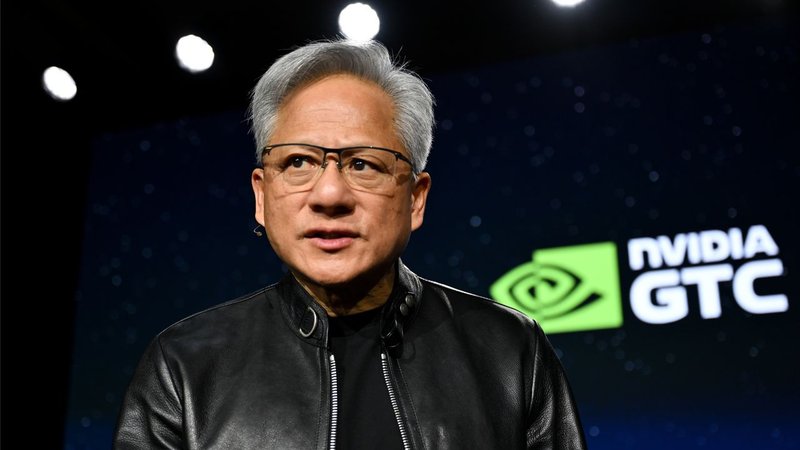
Nvidia, a leading company in the GPU and artificial intelligence platform sector, is consolidating its presence in the Asian market, with a particular focus on South Korea. The company has initiated a series of strategic meetings with key Korean industrial conglomerates, an effort that precedes the upcoming COMPUTEX trade show. This engagement underscores the increasing demand for artificial intelligence solutions from large enterprises and Nvidia's commitment to supporting the adoption of these technologies at an industrial level, positioning itself as a key partner for innovation.
Nvidia's direct approach to Korean industrial giants suggests a targeted strategy to integrate AI capabilities into these companies' core business operations. Such a move is particularly significant in a global context where AI is rapidly transforming sectors like manufacturing, logistics, and automation, making advanced computing infrastructures an indispensable strategic asset.
The Context of Enterprise AI and On-Premise Requirements
For large industrial entities, the adoption of AI, and specifically Large Language Models (LLMs), raises complex questions regarding data management and infrastructure. Many of these companies, with stringent requirements for security, compliance, and data sovereignty, tend to favor on-premise deployments or hybrid solutions. This choice allows for more granular control over the entire AI pipeline, from training to inference, and offers the ability to keep sensitive data within their corporate boundaries, avoiding the risks associated with public cloud.
Evaluating the Total Cost of Ownership (TCO) becomes a decisive factor for these enterprises, balancing initial hardware investment with long-term operational costs. On-premise solutions, while requiring higher CapEx, can offer advantages in terms of predictable operational costs and greater control over infrastructure customization, crucial aspects for intensive and industry-specific AI workloads.
Hardware and Infrastructure for Industrial LLMs
Implementing LLMs at an enterprise level requires robust and scalable hardware infrastructures. Nvidia's GPUs, with their high VRAM and computing capabilities, are key components for accelerating AI workloads, both for fine-tuning existing models and for large-scale inference. The choice between different GPU architectures, such as those optimized for intensive training or for low-latency inference, depends on specific application needs and budget constraints.
For on-premise deployments, it is crucial to consider not only the individual silicon units but also the entire data center architecture. This includes efficient cooling systems, adequate power supply, and high-speed network interconnections, such as NVLink, to ensure high throughput and reliability. The ability to handle large batch sizes and minimize latency is critical for industrial applications that demand rapid responses and the processing of massive data volumes.
Future Prospects and Deployment Implications
Nvidia's engagement with Korean industrial giants reflects a global trend: AI is becoming a strategic pillar for innovation and operational efficiency in key sectors. For companies evaluating their AI deployment strategies, direct interaction with technology providers like Nvidia can offer valuable insights into the trade-offs between cloud and on-premise solutions. The final decision will depend on a careful analysis of specific requirements in terms of performance, security, costs, and flexibility.
AI-RADAR continues to monitor these dynamics, providing in-depth analyses of the frameworks and infrastructures necessary for effective AI deployment that meets business needs. For those evaluating on-premise deployments, analytical frameworks are available on /llm-onpremise to assess the trade-offs between different options, considering aspects such as data sovereignty and overall TCO.








💬 Comments (0)
🔒 Log in or register to comment on articles.
No comments yet. Be the first to comment!