
Nvidia's latest announcement about water-use reduction in data centers feels like a half-full good news story. The manufacturer showcased a cooling system that dramatically cuts on-site water extraction, a step forward for an industry increasingly scrutinized for its environmental footprint. But stopping there would be like plugging a leak on a ship that is taking on water from another hole.
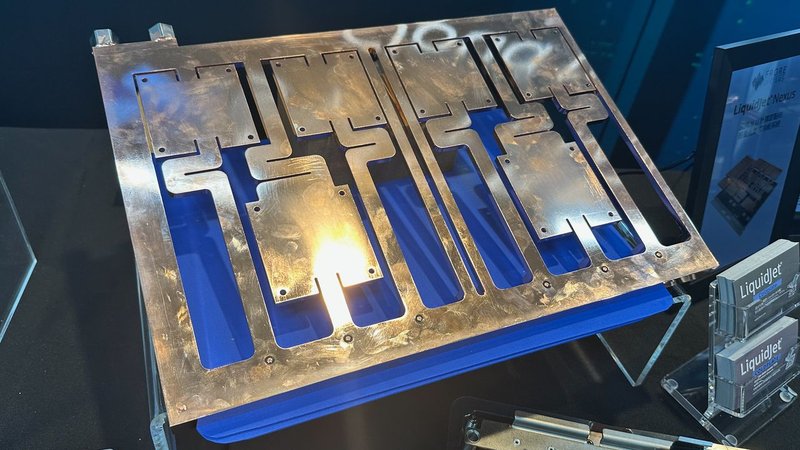
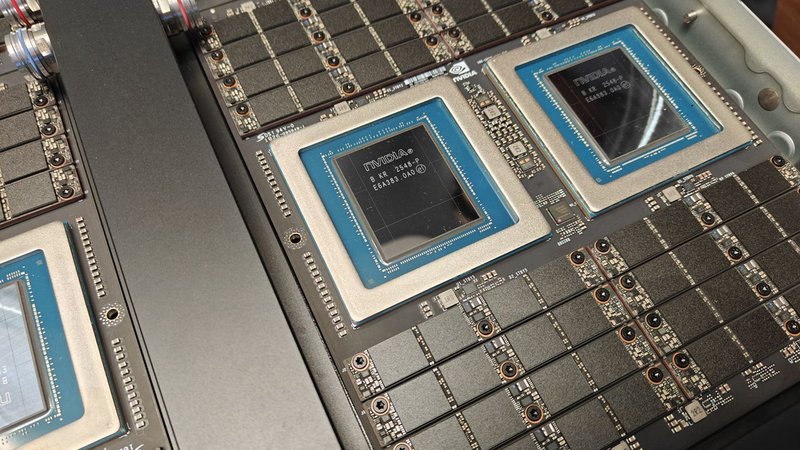
The core issue lies in the cooling method. Traditional data centers dissipate heat from CPUs and GPUs through evaporative towers that consume huge volumes of water, often potable, to lower temperatures. Nvidia's solution, described in general terms, relies on direct-to-chip liquid circuits that transfer heat in closed loops with negligible evaporation. In this way, the facility can almost eliminate direct water waste, while also trimming operational costs. For those running on-premise servers in water-stressed areas, such technology has immediate value: less reliance on local water grids and reduced risk of outages during droughts.
But the bigger picture now steps in. Artificial intelligence does not just drink inside the data center: it drinks upstream, in the thermal power plants that generate the electricity hungry GPUs and TPUs demand. Every kilowatt-hour from coal or gas requires massive amounts of water for turbine cooling and steam production. According to industry studies, the indirect water footprint of an AI workload can exceed the direct data center footprint by several times. Nvidia did not touch on this point in its announcement, and it could not do so alone: power generation is beyond its control. However, for an organization evaluating local infrastructure for LLM inference or training, ignoring the indirect component means making incomplete decisions.
Those who choose self-hosted setups often do so for data sovereignty, low latency, or predictable TCO. But adding the hidden water calculation shifts the perspective. A GPU cluster mounted in a liquid-cooled rack on-premises can zero out direct water use, yet if the energy comes from a fossil-heavy grid, the total water bill remains high—just elsewhere. In European contexts, with growing renewable penetration, the problem fades; in regions where the energy mix hinges on coal, the effect is the opposite. AI-RADAR has repeatedly analyzed the trade-offs between on-premise and cloud for LLM workloads, and the water variable is carving out a place alongside power draw, cooling, and space constraints.
Nvidia’s cooling advance thus represents a piece, not the solution. For technical decision-makers, the message is twofold. First, building nearly water-free data centers is achievable, and that’s a real milestone. Second, we must widen the scope of evaluation: the water saved in the server room must not obscure the water consumed to generate the watts flowing in. Only then can we talk about sustainability without falling into greenwashing. While the market still lacks integrated water-accounting tools, the responsibility for an honest balance remains with those who design and manage the infrastructure, whether on-premise or not.






💬 Comments (0)
🔒 Log in or register to comment on articles.
No comments yet. Be the first to comment!