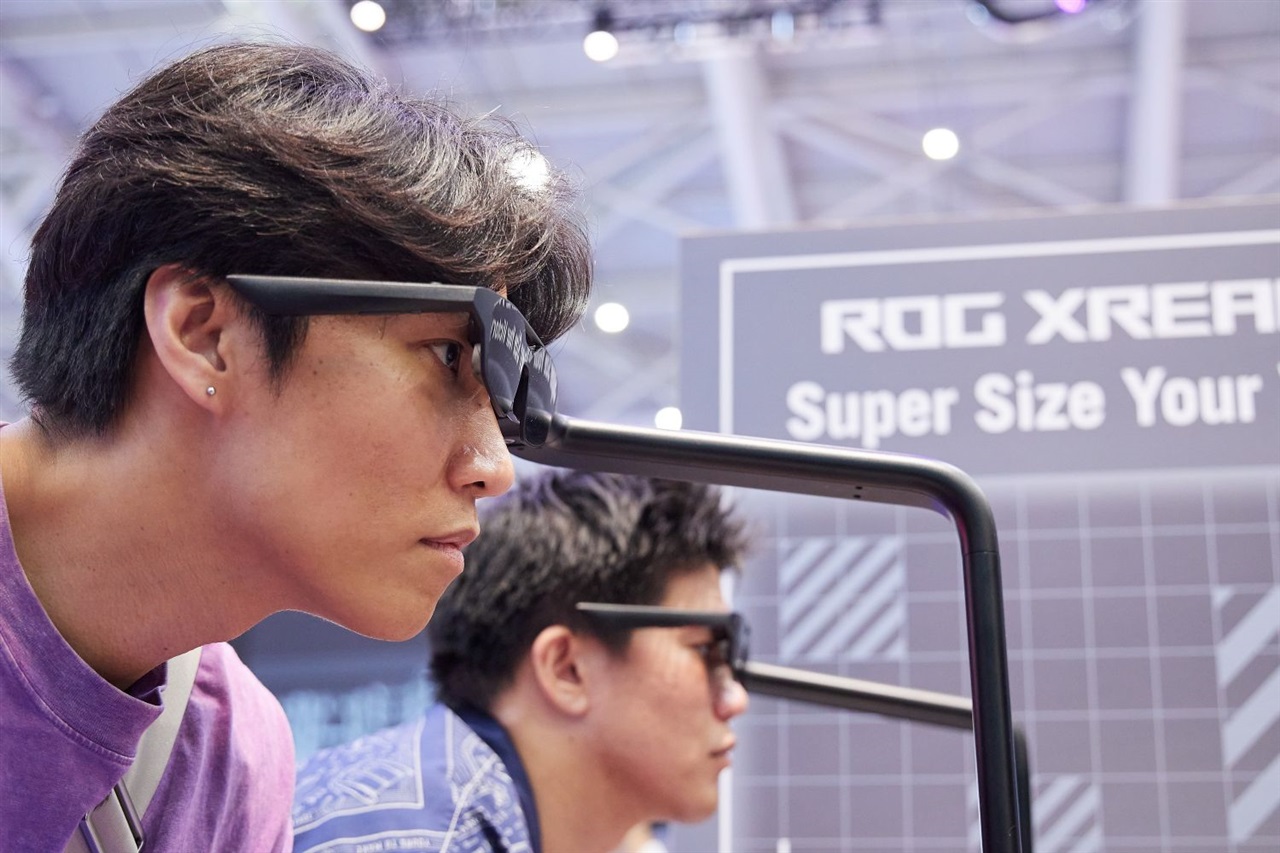
There is a number jolting the electronics supply chain: the global intelligent eyewear market is accelerating, driven by augmented reality and smart glasses that are increasingly looking like mass-market wearables. DIGITIMES reports the surge of a sector that spent years as a curiosity niche. It is no longer just hype: models are multiplying, chipmakers are dedicating entire product lines to the segment, and, above all, the demand for local inference is becoming the real turning point for those watching the industry from the self-hosted deployment angle.
The struggle to ditch the cloud
AR glasses overlaying real-time translations, navigation cues, or meeting transcriptions must decide in milliseconds. There is no room to stream audio and video to a remote server, wait for a Large Language Model to crunch the data, and return results with acceptable latency. The inference pipeline must move onto the device, or at most onto a companion smartphone, but far from the public cloud. This technical short circuit is why the eyewear market boom directly questions the strategies of those building on-premise and edge computing stacks.
The mobile frontier of artificial intelligence
Running LLMs on a pair of glasses means colliding with memory and power constraints that leave no compromise. We are not in the realm of server GPUs with hundreds of GB of VRAM: here the work happens on mobile-grade ARM chips, dedicated NPUs, and shared memory architectures that demand aggressive quantization techniques. Local inference frameworks end up optimizing models of just a few billion parameters, sometimes slashed to INT4, to preserve acceptable quality without melting the battery. It is the same set of trade-offs fueling the discussion around on-premise LLMs: data control, sovereignty, and Total Cost of Ownership, compressed into a form factor that recalls a Raspberry Pi more than a rack.
Privacy as the cornerstone
When a pair of glasses records, listens, and interprets, the privacy stakes are enormous. Companies evaluating rollouts to employees or customers cannot afford video streams and conversations ending up in third-party data centers. GDPR and similar regulations make on-device processing not a technological choice but a compliance requirement. That is why the smart eyewear market surge acts as an amplifier for sovereign AI architectures: every device becomes a hardened inference node, with data never leaving the physical perimeter. It is the paradigm AI-RADAR has been tracking for years in enterprise deployments, except played out at an entirely new scale.
The future on a dedicated chip
The wave of intelligent glasses will not stop with the first generation of consumer products. Semiconductor suppliers are already engineering silicon with dedicated accelerators for transformers and multimodal neural networks, targeting double-digit milliwatt power envelopes. Fine-tuning pipelines for compact models, combined with retrieval-augmented generation engines, are turning the idea of a personal assistant into something genuinely autonomous from the cloud. This is not a distant revolution: the first edge hardware implementations are already in labs, and the market momentum documented by DIGITIMES will literally bring these systems before the eyes of millions.









💬 Comments (0)
🔒 Log in or register to comment on articles.
No comments yet. Be the first to comment!