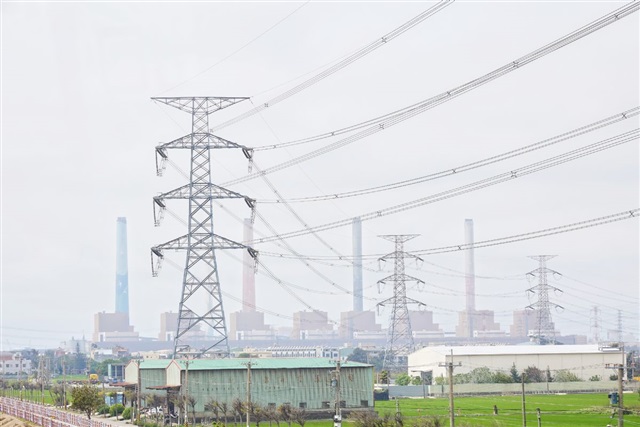
When news breaks from DIGITIMES and revolves around Taipower, the message is clear: Taiwan’s power grid is no longer enough. The explosion in demand for advanced silicon – GPUs for LLM inference and training, networking chips, specialized processors – is reshaping the island’s electromechanical supply chain into something far more complex than a traditional manufacturing pipeline. The original title, “Beyond Taipower,” signals a shift in the center of gravity: major players are now looking to overseas power grids and integrating them directly into their production strategy. It’s a signal that energy is no longer just a cost line item but the true structural bottleneck for the hardware that fuels artificial intelligence.
The thesis that emerges is both simple and disruptive: AI deployment, including on-premise, has a new systemic bottleneck, and that bottleneck is not VRAM, memory bandwidth, or serving frameworks, but the electrical grid’s ability to sustain fabs and data centers. Taiwanese foundries consume energy on an industrial scale comparable to entire cities, and every new manufacturing node (3 nm, 2 nm) demands more power, more stability, more redundancy. When local supply can’t keep pace, semiconductor producers shift capacity overseas or strike deals with foreign utilities. This redraws the geography of AI hardware production and, by extension, the procurement timelines and costs for those building on-premise inference stacks.
There’s a second-order consequence that directly affects IT decision makers: if fabs disperse, the hardware supply chain fragments, increasing logistical complexity and geopolitical risk. GPUs and accelerators no longer come from a single, controllable hub but from a distributed network that depends on energy contracts and grid stability in multiple jurisdictions. For an organization evaluating a self-hosted deployment, this introduces new variables into TCO planning: actual component availability may become less predictable, precisely as the demand for local inference grows for reasons of data sovereignty and latency.
And there’s a third, more subtle and structural implication: energy is becoming an asset of digital sovereignty. Just as data location is governed by GDPR and national regulations, the ability to guarantee dedicated electrical power for an inference cluster is emerging as a competitive factor. Companies operating in regulated sectors or handling sensitive data can no longer simply choose the cloud provider with the lowest price; they must ask where the energy is stable, where grids are redundant, where there is room for growth. This upends the typical “cloud first” perspective: in a world where models run on-premise or at the distributed edge, site selection for deployment also depends on the quality of the local power grid.
The reorganization of Taiwan’s electromechanical supply chain thus tells a story that must be read against the light by those designing AI architectures. Hardware is no longer decoupled from energy infrastructure: they are two sides of the same coin. And if Taiwanese companies, historically protective of their manufacturing know-how, are beginning to treat overseas grids as an extension of their operational perimeter, it means the closed, centralized model is giving way to a more distributed ecosystem where grid reliability constrains production capacity as much as lithographic precision does.
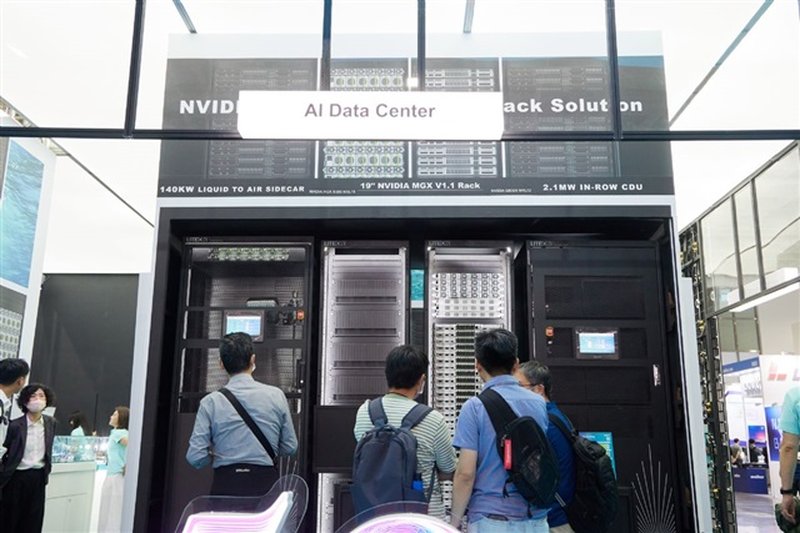
For those evaluating on-premise deployment, the message is stark: including the energy variable in TCO analysis is no longer an academic exercise but an operational necessity. It’s not just about calculating watts for cluster inference; it’s about asking whether the local grid will sustain projected growth, whether renewable alternatives or continuity agreements exist, and whether the dispersion of foundries will create bottlenecks in GPU deliveries. What’s at stake is not the marginal efficiency of a model, but the very feasibility of an in-house AI project.






💬 Comments (0)
🔒 Log in or register to comment on articles.
No comments yet. Be the first to comment!