The artificial intelligence boom has an unglamorous side: plumbing. As data centers cram more GPUs into each rack and run them at higher temperatures, the fluid that keeps chips from cooking has occasionally turned into a biological soup. Omen AI has built a startup around this problem and just raised $31 million to move its solution beyond the lab.
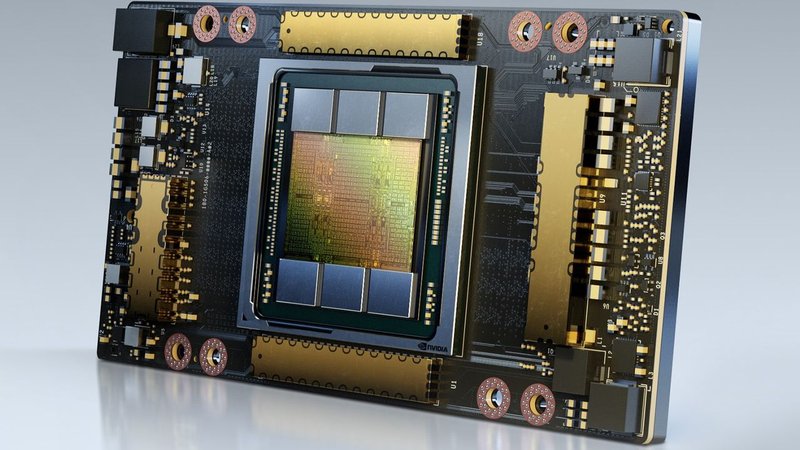
The funding, reported by The Next Web, signals that cooling fluid maintenance is no longer a footnote for AI infrastructure operators but a cost item and a risk factor that scales with installed capacity. Latest-generation GPUs, such as NVIDIA’s H100 and the upcoming B200, dissipate hundreds of watts across just a few square centimeters: more efficient liquid cooling loops are needed, but that very warm, wet environment is ideal for biofilm and bacterial colonies.
What happens inside the pipes
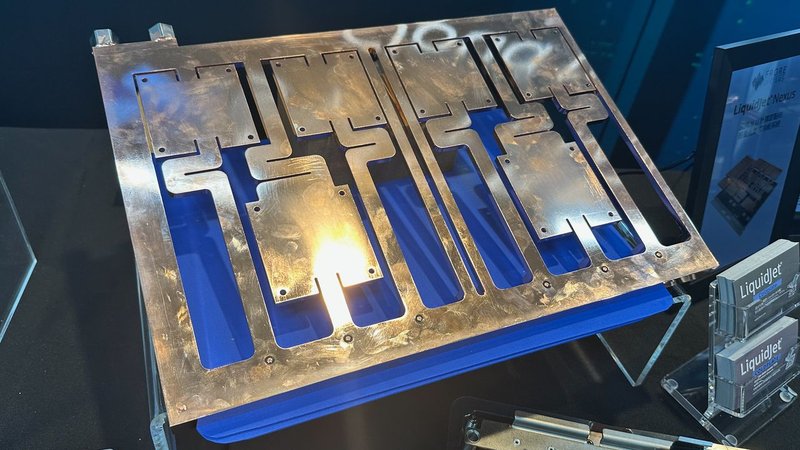
Liquid cooling for AI is not new, but increasing density — up to 30–40 kW per rack — is pushing configurations toward direct-to-chip or immersion. In both cases, deionized water or dielectric fluids must remain chemically stable to prevent corrosion, scaling, and blockages in microchannels. When bacteria take hold, they form a slimy layer that reduces heat exchange and can clog pumps and heat exchangers. Technicians notice only when GPU temperatures start to creep up, leading to throttling and risk of premature hardware degradation.
Omen AI has patented sensors and a continuous monitoring system that analyzes microbial load and fluid chemistry in real time, sending alerts before critical deposits form. The goal is to shift from reactive to predictive maintenance, avoiding downtime and wholesale fluid replacement.
Why this matters for on-premise inference
Public clouds absorb much of the attention, but many enterprises — from healthcare to finance — are bringing models in-house for data sovereignty, latency, and cost control reasons. When installing GPU clusters on-site, cooling system design becomes integral to Total Cost of Ownership (TCO). It’s one thing to use the cloud and offload physical management; it’s another to discover that your liquid-cooled cabinet develops bacterial colonies after six months, causing unplanned downtime.
In this light, Omen AI’s technology is not just a curiosity for facility managers but a building block of operational reliability for any high-density on-premise deployment. AI-RADAR, which closely tracks the evolution of self-hosted stacks, offers analytical frameworks at /llm-onpremise to evaluate these trade-offs: choosing a cooling system also means understanding how much it will cost to keep it healthy over time.
Beyond the noise
The $31 million round suggests that venture capital is starting to look beyond models and chips toward the dense web of ancillary services that make AI infrastructure sustainable. Monitoring cooling water quality is not a breakthrough innovation, yet it becomes indispensable when every extra degree on the GPUs translates into milliseconds of inference latency or a percentage point less throughput.
With racks exceeding 100 kW expected for the next generation, thermal management will be as strategic as model choice or serving pipeline. And if AI’s future also flows through pipes, someone has to watch them.







💬 Comments (0)
🔒 Log in or register to comment on articles.
No comments yet. Be the first to comment!