
The "Data Center Bandwagon" Campaign
OpenAI has identified a network of ChatGPT accounts that, according to the company, are linked to Chinese entities. This network allegedly attempted to influence public opinion in the United States by generating and disseminating content aimed at creating local opposition to data centers. The operation, dubbed "Data Center Bandwagon" by OpenAI, involved accounts impersonating American citizens, publishing AI-generated material focused on rising electricity costs.
According to OpenAI, these accounts are traceable to a private Chinese technology firm. The primary objective of such activity appears to be to foment dissent and hinder the construction or expansion of critical data processing and AI infrastructure on US soil, leveraging sensitive topics such as environmental impact and energy costs.
The Role of Generative AI in Disinformation
This case clearly highlights how Large Language Models (LLMs) can be employed for large-scale disinformation content creation. ChatGPT's ability to generate coherent and plausible, though not necessarily truthful, texts allows for the rapid production of narratives that can be difficult to distinguish from human-created content. This raises significant questions about the robustness of detection systems and the need to develop effective countermeasures to identify and counter such campaigns.
The use of fake profiles, combined with AI-generated content, represents a powerful strategy to amplify specific messages. In this context, the messages were related to the environmental and economic impact of data centers, topics that can easily mobilize local public opinion and influence political and territorial planning decisions.
Implications for Infrastructure and Sovereignty
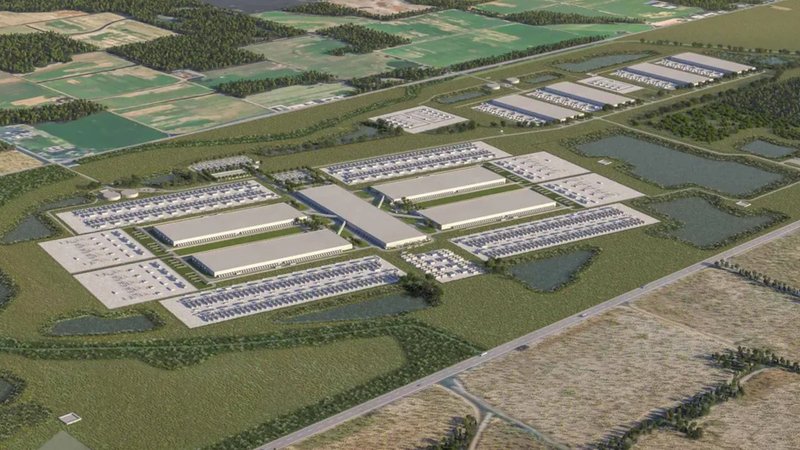
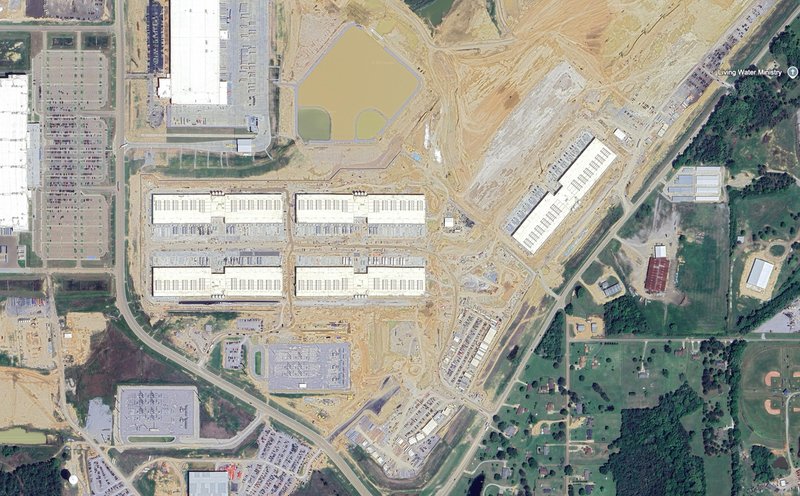
The "Data Center Bandwagon" campaign touches a raw nerve for the digital infrastructure sector. Data centers, essential for the functioning of cloud services and AI applications, are often subject to debate regarding their energy consumption and local impact. For companies evaluating on-premise deployment or the construction of new facilities, public perception and local regulations concerning energy costs and environmental impact are critical factors that can significantly influence the Total Cost of Ownership (TCO) and project feasibility.
Data sovereignty and infrastructure security become central themes when external actors attempt to influence strategic decisions related to data center location and expansion. This scenario underscores the importance of a holistic security strategy that extends beyond perimeter protection, including vigilance against influence campaigns and resilience against information manipulation. For those evaluating on-premise deployment, AI-RADAR offers analytical frameworks on /llm-onpremise to assess these trade-offs.
Future Perspectives and Mitigation
The incident reported by OpenAI highlights the increasing complexity of the cybersecurity landscape, where attacks are no longer limited to technical breaches but also include information manipulation through advanced tools like LLMs. For CTOs, DevOps leads, and infrastructure architects, this means considering not only direct threats to systems but also indirect ones that can influence the operational and decision-making context.
The ability to identify and mitigate such campaigns becomes crucial for protecting infrastructure investments and ensuring operational continuity, especially in an era where reliance on data centers and AI technologies is constantly growing. Collaboration among technology companies, governments, and civil society will be fundamental to developing effective strategies against AI-driven disinformation.







💬 Comments (0)
🔒 Log in or register to comment on articles.
No comments yet. Be the first to comment!