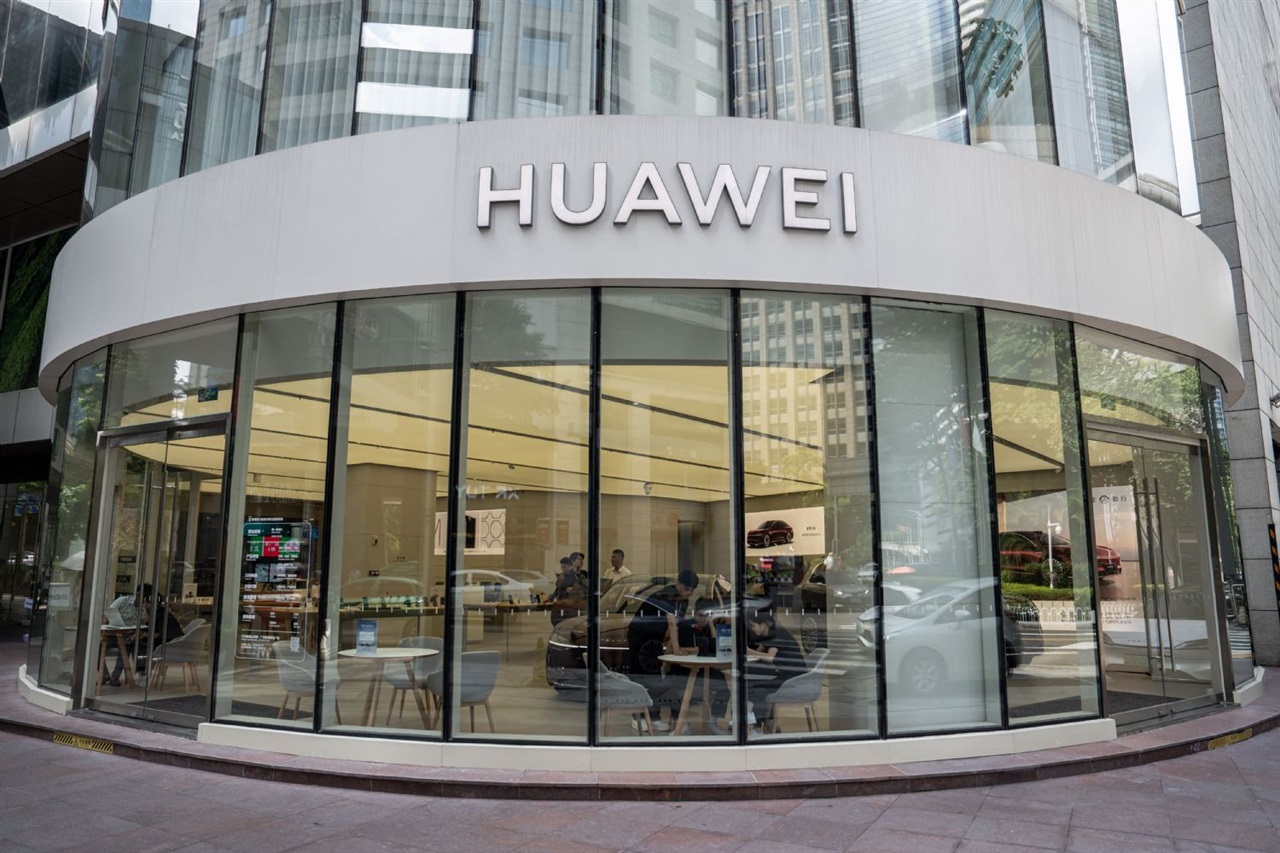
When a market shrinks but a single player accelerates, there's always a deeper story. That's the case in China, where PC shipments continue to fall while Huawei carves out a growing share. For those watching the evolution of local computing infrastructure, this shift is more than just traditional industry news: it’s a piece that says a lot about where hardware for on-premise AI workloads is heading.
The context: a contracting market and a vendor bucking the trend
The slowdown in China's PC sales is not isolated; it reflects a mix of economic uncertainty and saturation after the digital consumption boom. In this landscape, Huawei not only holds but gains ground. Despite international restrictions on access to key technologies, the company has built an increasingly autonomous supply chain, betting on proprietary processors like Kunpeng for computing and Ascend for AI tasks.
The decisive element for on-premise deployments is precisely this: the availability of hardware that does not depend on external supply chains and can be integrated into air-gapped environments or those with strict data sovereignty requirements. From an AI-RADAR perspective, Huawei's growth in PCs is not just about laptops or desktops; it's an indicator of the ability to provide complete platforms — from client to server — designed to keep data and compute under local control.
Local hardware for inference and training: what changes
Anyone developing or managing self-hosted LLMs knows that hardware choice impacts everything: TCO, latency, token throughput, and fine-tuning capabilities. Huawei’s Ascend chips, for instance, offer an alternative to traditional GPUs and are built to integrate with frameworks like MindSpore, attempting to replicate the software ecosystem developers expect. While the performance and maturity gap compared to more widespread solutions still exists, the increasing pervasiveness of this hardware stack makes it less risky to imagine on-premise deployments that do not rely on foreign vendors.
For technicians, the transition is non-trivial. VRAM specifications, memory bandwidth, and quantization support determine the size of models that can run locally. An ecosystem consolidating around local chips can spur adoption of models optimized for that architecture, reducing dependency on external drivers and libraries. But it also introduces a trade-off: tooling maturity is often lower, and the available talent pool is narrower. Those evaluating on-premise through a sovereignty lens must weigh the security of independence against the risks of a less battle-tested ecosystem.
The sovereignty knot and the role of a short supply chain
In sectors such as defense, healthcare, or public administration, the need to keep sensitive data within well-defined jurisdictional boundaries is pushing many toward self-hosted infrastructure. The availability of locally produced hardware from vendors like Huawei reduces the risk of export control clauses and ensures a more predictable supply chain. It’s not just about compliance: it means being able to update, expand, and maintain the fleet without negotiating with distant geopolitical actors.
From AI-RADAR’s standpoint, Huawei’s rise in a weak PC market is a wake-up call on the importance of monitoring local suppliers as a proxy for the ability to sustain on-premise AI workloads. For those designing data centers or edge computing, hardware diversification is no longer a niche choice but a strategic necessity.
Beyond the moment: what the Chinese case signals
The strengthening of a national vendor while the overall market retreats is not a new dynamic, but today it takes on broader contours. At stake is not just the consumer segment, but the possibility of building a parallel computing ecosystem, less exposed to global supply chain turbulence. For on-premise AI, this translates into a more fragmented but also more resilient market, where architecture choices become an integral part of the digital sovereignty strategy.
On AI-RADAR you’ll find deep dives on deployment frameworks and TCO analysis for those facing these decisions — not direct advice, but analytical tools to evaluate concrete trade-offs. The Chinese evolution reminds everyone that hardware is never neutral, and that the growth of a local player in a declining market can say a lot about the future direction of independent compute.






💬 Comments (0)
🔒 Log in or register to comment on articles.
No comments yet. Be the first to comment!