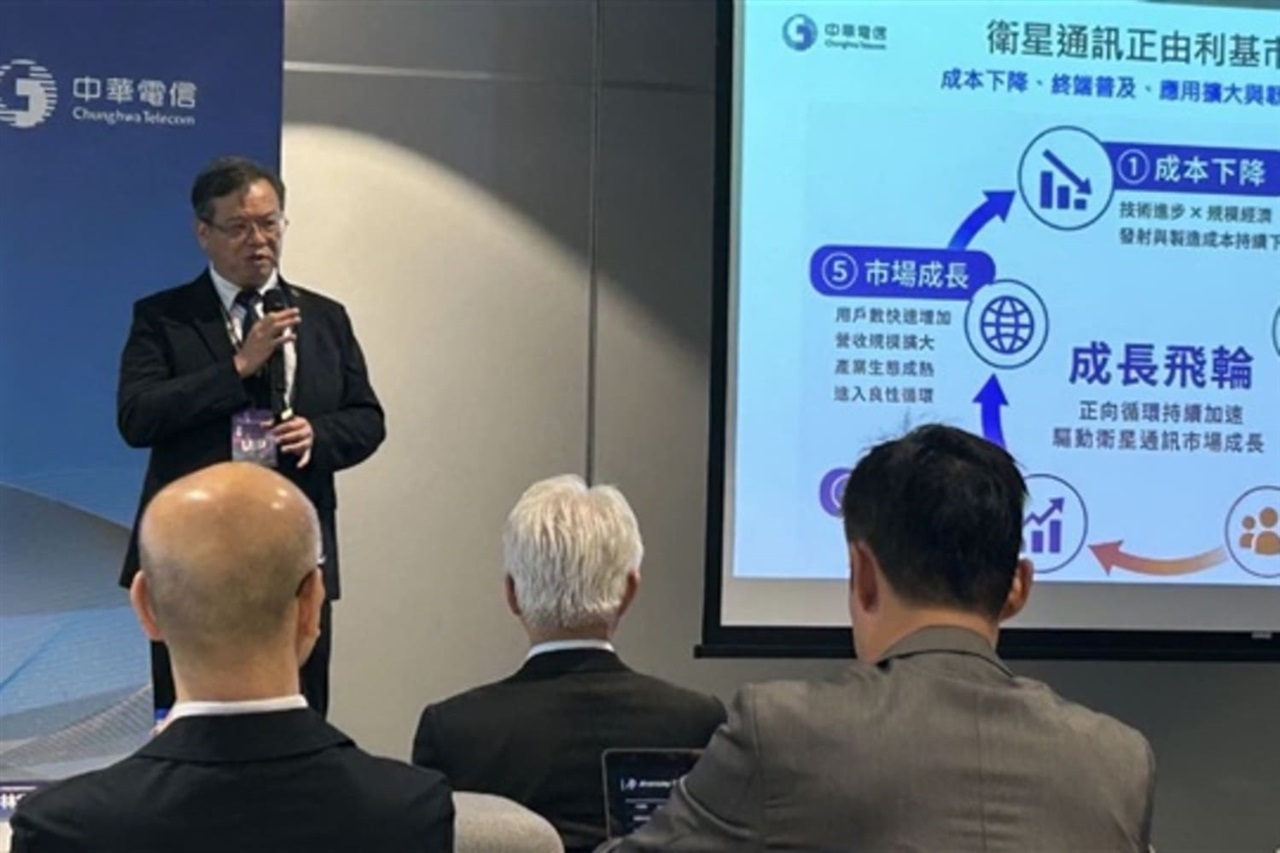
The announcement that Taiwan is pursuing a bigger role in the global low Earth orbit (LEO) satellite race comes at a time when network geopolitics has become as critical as semiconductor geopolitics. This is no coincidence: the island, which already dominates the chip supply chain, is realizing that controlling silicon isn't enough if data can't travel securely and independently.
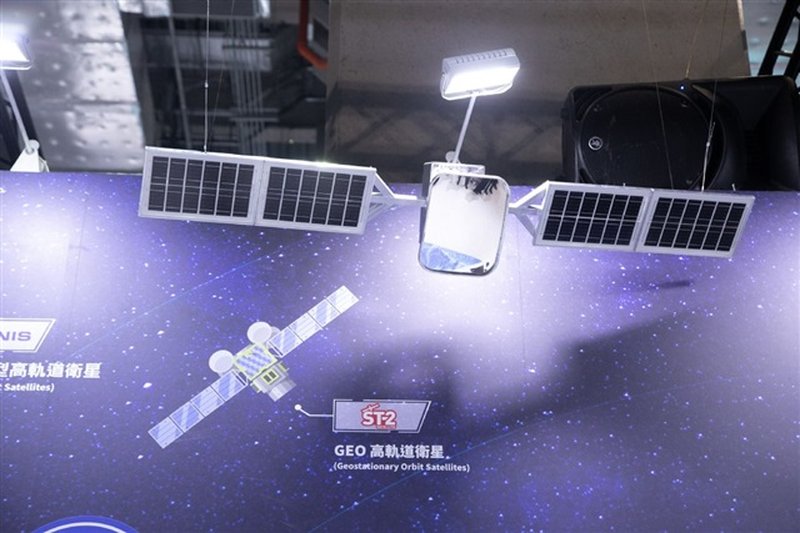
LEO constellations — from Starlink to OneWeb, plus Chinese and Russian projects — have rewritten the rules of global connectivity. Compared to geostationary satellites, they offer lower latency (20-50 ms versus 600+ ms) and blanket coverage, enabling previously unthinkable scenarios: from edge computing on offshore platforms to distributed model training in remote areas. These very scenarios explain why Taiwan's move should be read through the lens of AI infrastructure.
Connectivity as a multiplier for on-premise deployment
Anyone running self-hosted AI systems in industrial settings — a factory, a mine, a polar research base — often hits a backhaul bottleneck. Data collected locally can be processed by on-premise servers, but models need updating, inference feedback must be sent back to a central site for fine-tuning, and sometimes a redundant communication path is necessary when terrestrial or subsea backbones go down. In these environments, a LEO terminal becomes a strategic asset: it ensures the local compute node stays connected to the rest of the organization without depending on traditional carriers.
For Taiwan, this scenario is not abstract. The island relies on a limited number of submarine cables for all international communications. An outage — accidental or deliberate — would isolate not just consumer traffic but also industrial data flows and the update pipelines of AI models managed by local companies or data centers serving global clients. Deploying its own LEO capacity means building an alternative network that guarantees operational continuity even under extreme conditions.
Chips and satellites: a closing ecosystem
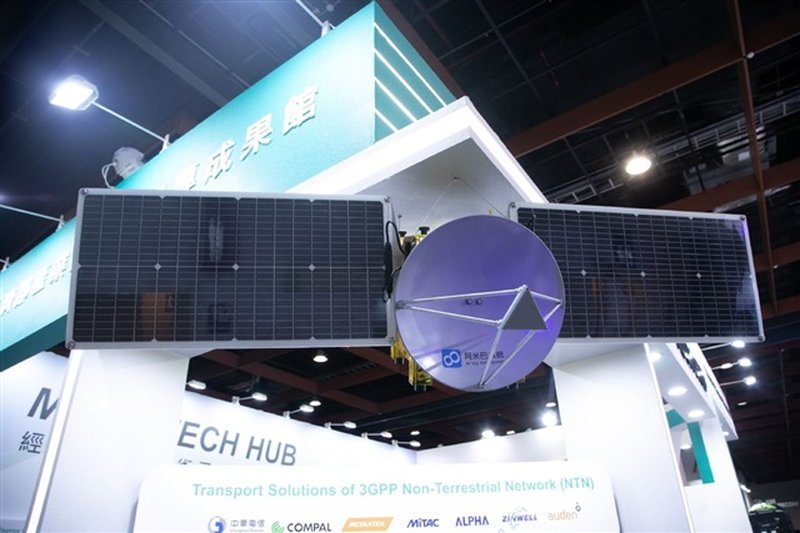
There's a second layer, less immediate but equally relevant for those tracking hardware dynamics. LEO satellites are full-fledged computing platforms: they integrate processors for onboard processing, FPGAs for signal processing, and increasingly purpose-built accelerators for inference tasks. Taiwan is the world's largest producer of advanced chips, and the push for a national constellation goes beyond service provision — it's a way to stimulate a local supply chain that designs and manufactures radiation-hardened components and low-power modules, expertise that also spills over into the edge AI market.
In practice, investing in LEO satellites creates aggregate demand for specialized chips that share many requirements with embedded systems for on-device LLMs. The experience gained in miniaturization, thermal management, and power reduction for space translates into applicable know-how for compact servers used in on-premise deployments in harsh environments — from precision agriculture to predictive maintenance at unwired industrial sites.
Data sovereignty at 500 km
Finally, Taiwan's move signals a structural shift in the concept of digital sovereignty. Until recently, the debate focused on the physical location of servers and regulatory compliance (GDPR foremost). Today it's becoming clear that sovereignty must extend to transport networks. If the data from an on-premise AI system are routed through infrastructure controlled by actors with opposing interests, the risk is not just surveillance but the possibility of selective service disruption. Taiwan, which lives with this threat acutely, is drawing a line: controlling satellites means controlling the last mile of its technological autonomy.
This lesson also applies to other countries and large organizations that handle sensitive workloads. The availability of independent LEO communications is becoming an evaluation factor in business continuity plans for distributed data centers and on-premise clusters. The goal is not to replace fiber but to complement it with a channel that cannot be easily disabled by a single geographic fault or political escalation.







💬 Comments (0)
🔒 Log in or register to comment on articles.
No comments yet. Be the first to comment!