
Phison's New Strategy for AI
Phison, an established player in memory solutions and NAND flash controllers, has announced a significant strategic reorientation. The company is shifting its focus towards "system AI solutions," an evolution that reflects the current and future dynamics of the artificial intelligence market. This move indicates a desire to more closely integrate memory capabilities with the specific requirements of AI workloads, moving beyond the mere supply of components.
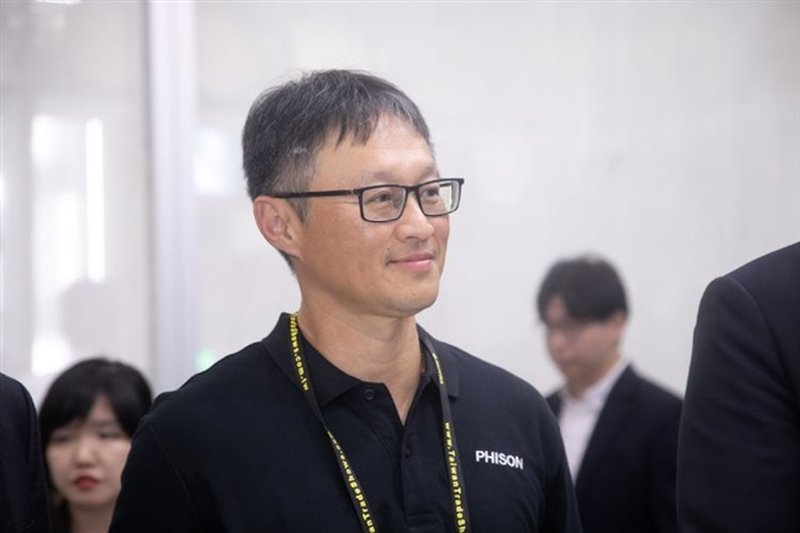
Phison's strategic decision comes at a time of increasing pressure on the memory market. CEO K.S. Pua emphasized that the demand for artificial intelligence is keeping memory supply extremely tight. This already critical situation is projected to worsen, with even more pronounced shortages expected by 2027. Such a scenario poses new challenges for technology decision-makers planning AI infrastructures.
The Context of AI Memory Shortages
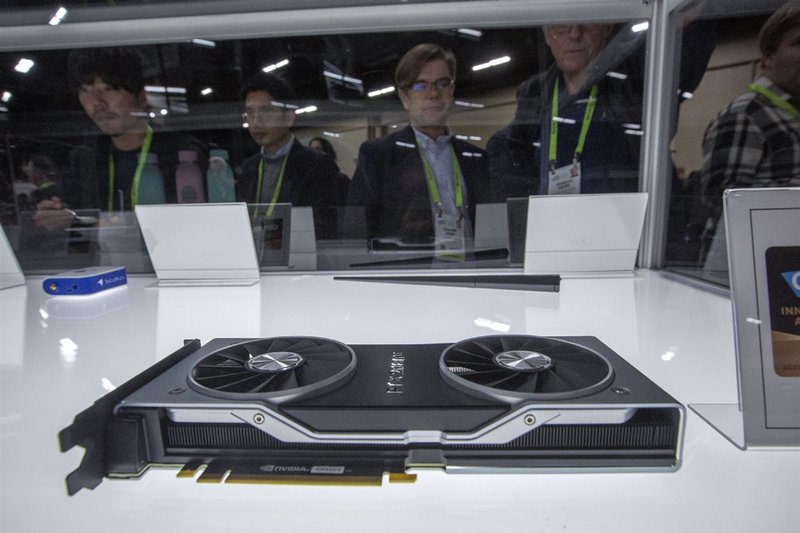
The growing adoption of Large Language Models (LLM) and other generative artificial intelligence applications has triggered unprecedented demand for specialized hardware, particularly Graphics Processing Units (GPUs) and the associated high-bandwidth memory (HBM). Training and Inference workloads for LLMs require massive amounts of VRAM to host models with billions of parameters and handle high batch sizes, directly impacting throughput and latency.
This pressure on the memory supply chain is not an isolated phenomenon but a direct consequence of AI's expansion into increasingly broad sectors. K.S. Pua's statement highlights how the industry is preparing for a prolonged period of scarcity, which could have significant repercussions on the costs and availability of fundamental hardware resources for the development and Deployment of AI solutions.
Implications for On-Premise Deployments
For CTOs, DevOps leads, and infrastructure architects evaluating on-premise Deployments for their AI/LLM workloads, the projected memory shortages by 2027 represent a significant constraint. Limited availability of key components can impact the overall Total Cost of Ownership (TCO), increasing acquisition costs and extending lead times for necessary hardware. This makes long-term planning and supply chain management even more critical.
Companies prioritizing data sovereignty, regulatory compliance, and air-gapped environments face the need to balance the demand for control and security with the reality of a volatile hardware market. The ability to procure and maintain a self-hosted AI infrastructure becomes a strategic factor, requiring careful evaluation of the trade-offs between initial investment (CapEx) and potential delays or cost increases. For those evaluating on-premise Deployments, AI-RADAR offers analytical frameworks on /llm-onpremise to assess these trade-offs.
Future Outlook and Mitigation Strategies
In light of this scenario, organizations must consider proactive mitigation strategies. These may include diversifying hardware suppliers, exploring more efficient system architectures that optimize memory usage, or adopting techniques like Quantization to reduce the memory footprint of models. Phison's move towards "system AI solutions" could, in this context, indicate the development of integrated offerings aimed at optimizing the interaction between memory and compute, providing more complete solutions and potentially greater resilience to fluctuations in the market for individual components.
The ability to anticipate and adapt to these market dynamics will be crucial for maintaining competitiveness. Strategic infrastructure planning, which takes into account memory shortage projections, will enable companies to build robust and scalable AI platforms while ensuring the necessary control and security for their critical operations.






💬 Comments (0)
🔒 Log in or register to comment on articles.
No comments yet. Be the first to comment!