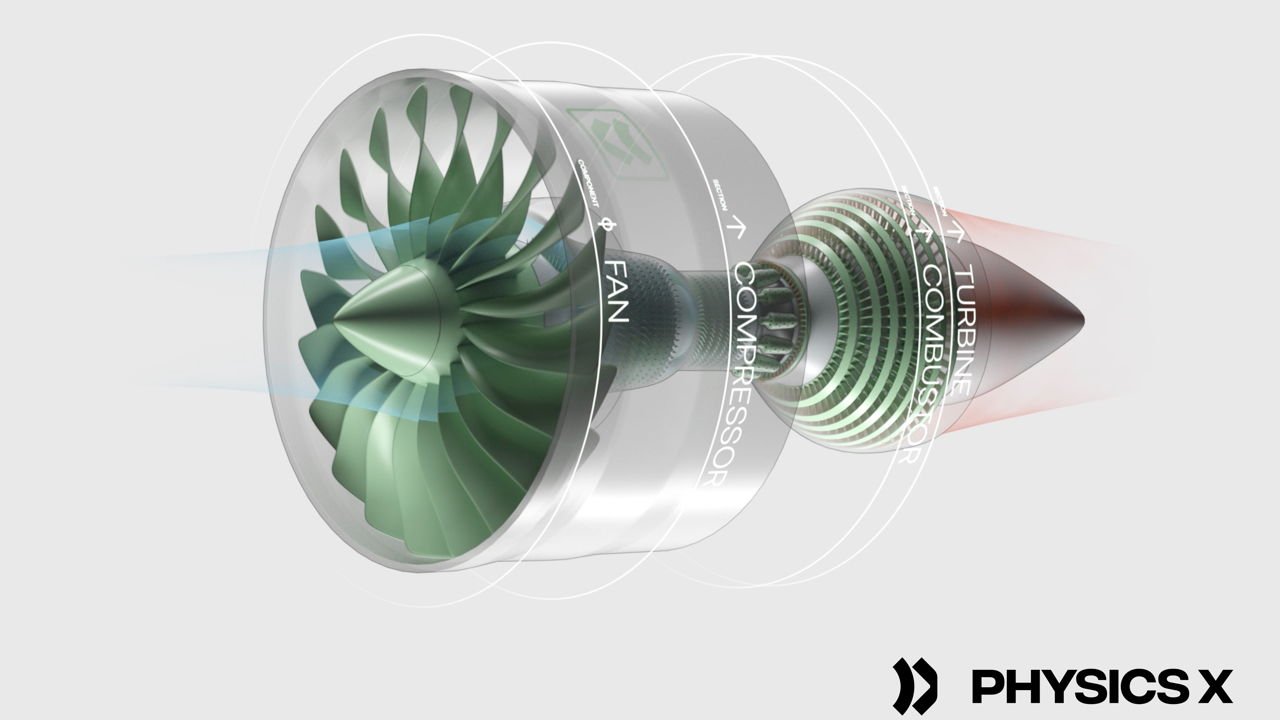
PhysicsX Raises $300M: AI Accelerates Hardware Innovation
PhysicsX, a London-based startup revolutionizing the engineering sector through artificial intelligence, has announced a new funding round of $300 million. This capital injection brings the company's valuation to $2.4 billion, more than double the nearly $1 billion it reached approximately twelve months ago when it closed its $170 million Series B round. In total, PhysicsX has raised around $500 million.
The latest funding round was led by existing investor Temasek, the Singaporean sovereign wealth fund, with support from existing investors Applied Materials, Nvidia, Atomico, General Catalyst, and Siemens. New investors include M&G and Intrepid Growth Partners. Founded by two former Formula 1 engineers, PhysicsX focuses on leveraging AI to improve product design in key sectors such as manufacturing and defense.
AI for Advanced Engineering
PhysicsX's mission is to transform complex design and simulation processes that once took months, compressing them into seconds thanks to AI. The company addresses a clear market need: engineering and advanced manufacturing are often hindered by resource and skill bottlenecks, struggling to keep pace with increasing complexity and the speed of technological change.
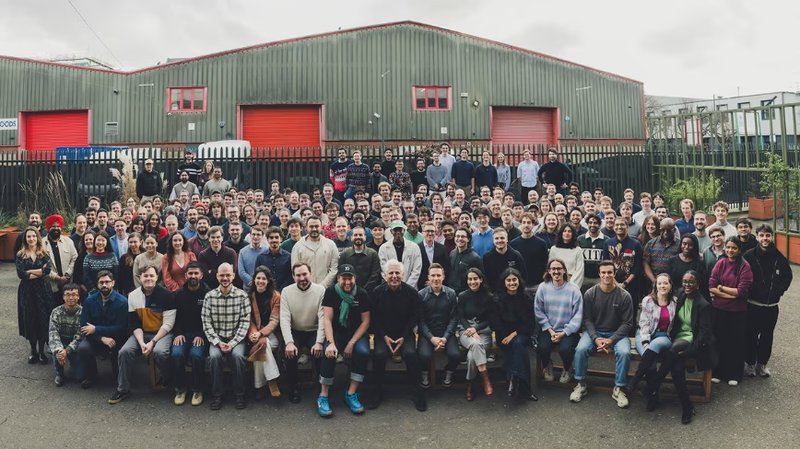
PhysicsX, which employs around 350 people, is building into this gap with the conviction that AI-native engineering software can solve many of the most fundamental challenges inherent to hardware innovation. Jacomo Corbo, co-founder and CEO of PhysicsX, emphasized how "almost every hard problem in the physical economy — better aircraft, better chips, better engines, better energy systems — comes down to how fast and how well engineers and machine operators can work through the underlying physics. For decades, that has been the binding constraint on hardware innovation. Physics AI removes it." This approach allows engineers to explore thousands of designs in seconds, where they once managed only a handful over weeks.
Implications for Infrastructure and Deployment
The adoption of AI solutions that drastically accelerate design and simulation processes, such as those offered by PhysicsX, carries significant infrastructural implications. The ability to process and analyze vast amounts of physical data and complex models in real-time requires considerable computing power. For companies in the manufacturing and defense sectors, which often operate with sensitive data and stringent data sovereignty requirements, the choice of deployment model becomes crucial.
Many of these entities might opt for self-hosted or hybrid solutions, where AI model inference and training occur on on-premise infrastructure. This allows for direct control over data, enhanced security, and compliance with specific regulations, which are fundamental in air-gapped environments or those with strict compliance policies. Evaluating the Total Cost of Ownership (TCO) for dedicated hardware, the VRAM required for models, and the latency of simulation pipelines are critical factors in these decisions. For those evaluating on-premise deployment for AI/LLM workloads, AI-RADAR offers analytical frameworks on /llm-onpremise to assess the trade-offs between performance, costs, and control.
Future Prospects and Market Impact
The funds raised will be used by PhysicsX to further enhance its platform, intensify AI research, and support geographical expansion. The company plans to strengthen its presence in the United States and open a new office in Singapore, solidifying its global reach.
This expansion aims to capitalize on the growing demand for tools that can overcome current limitations in engineering and advanced manufacturing. The significant investment from prominent players like Temasek and Nvidia underscores confidence in PhysicsX's AI potential to unlock new frontiers in hardware innovation, providing engineers with the tools to tackle the most complex challenges with unprecedented speed and efficiency.





💬 Comments (0)
🔒 Log in or register to comment on articles.
No comments yet. Be the first to comment!