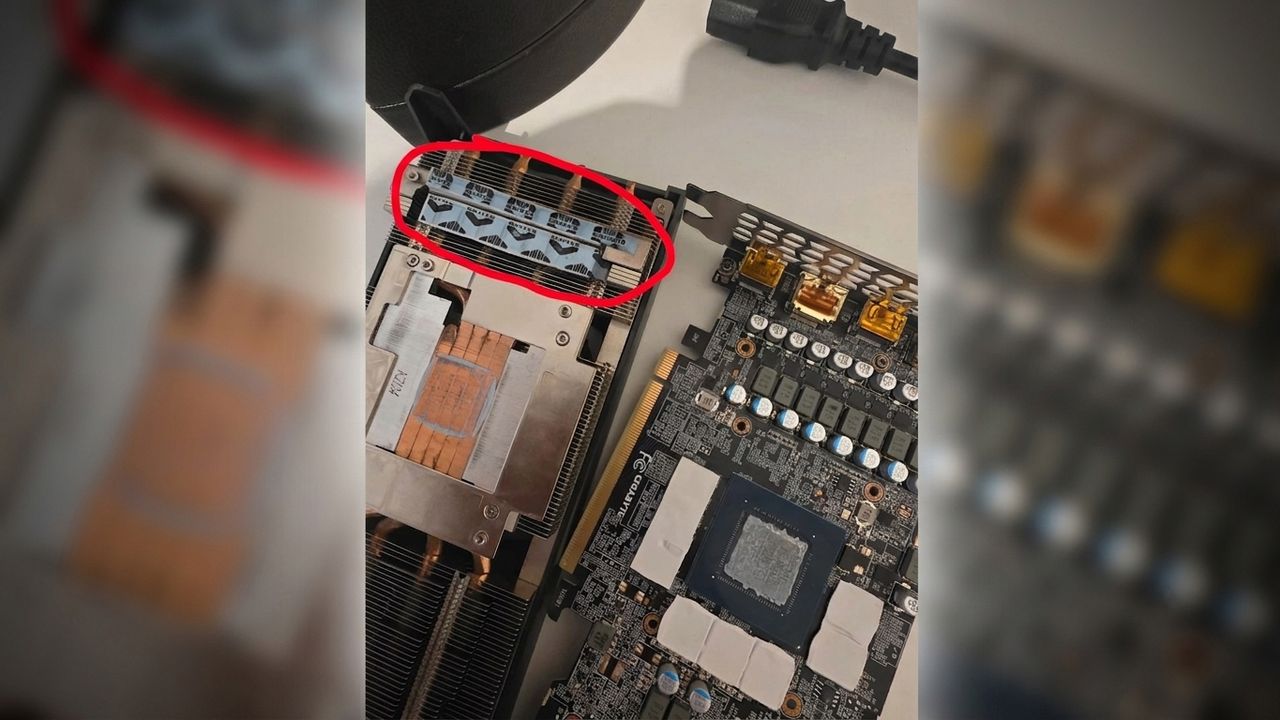
A user disassembled a GeForce RTX 3070 after five years of use and found the factory protective film still attached to the VRM thermal pads. The discovery explains the chronic overheating: the plastic blocked heat transfer between the voltage regulation modules and the cooling system. After removing it and reapplying thermal paste, the GPU hotspot temperature dropped by 30°C according to the user's report.
The detail is not just a curiosity for hardware enthusiasts. For those using consumer cards in self-hosted setups for LLM inference, thermal management is a cost and reliability parameter. VRMs work under continuous load when a GPU runs prolonged inference: a forgotten film in production prevents contact between components and pads, creating hot spots that general sensors may not show immediately. Throttling, when it kicks in, reduces throughput and increases request completion times, a direct problem in a serving pipeline.
The case highlights a weak point in quality control that can only emerge after years. In gaming workloads, peaks are intermittent and the plastic may not cause immediate failures; in an always-on server, thermal stress is cumulative and shortens the life of power delivery components. This changes the TCO calculation for those assembling low-cost GPU nodes from consumer or refurbished cards: physical inspection and preventive maintenance become non-negligible items, alongside purchase price and power consumption.
The news also touches the secondary market. RTX 3070s and similar cards are often considered for small home or edge AI labs, where budget matters more than data center certification. A factory defect like this suggests that variability between units can be high and that an apparently working card can hide thermal inefficiencies destined to worsen. For refurbished hardware vendors, checking the condition of thermal pads and paste becomes a differentiation factor. For those evaluating on-premise deployments, AI-RADAR offers analytical frameworks on trade-offs between consumer GPUs and professional solutions, but the point here is simpler: physical inspection is not optional when service stability depends on components not designed to run 24/7.
It remains to be verified whether the defect concerns a specific batch or is an isolated case, but the 30°C hotspot recovery is a concrete fact that shifts attention from raw computing power to assembly quality.






💬 Comments (0)
🔒 Log in or register to comment on articles.
No comments yet. Be the first to comment!