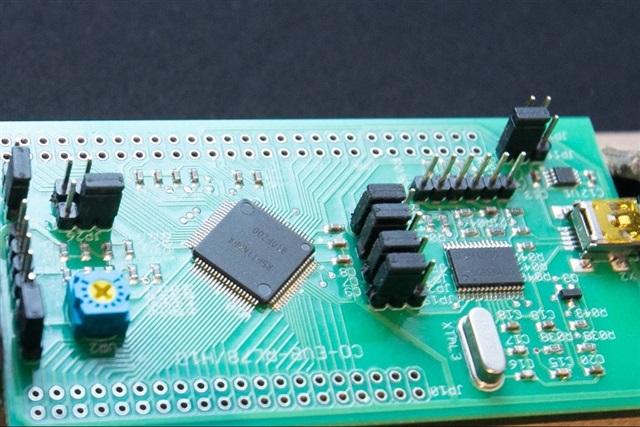
The Analog Integrated Circuit Market and Growth Drivers
The landscape of Taiwanese companies specializing in analog integrated circuits recorded varied revenues in the first quarter of 2026. This scenario reflects the complex dynamics of a sector that, while often less in the spotlight than leading processors, forms the backbone of countless devices and systems. The variability in results highlights how different market segments are responding differently to current economic and technological conditions.
Among the factors that have supported growth for some of these entities, two main areas stand out: motor control systems and Power Management ICs (PMICs) for DDR5 memory. While motor control finds application across a wide range of industrial and consumer sectors, the rise of DDR5 PMICs is particularly significant for the world of high-performance computing, including systems dedicated to artificial intelligence.
The Importance of DDR5 PMICs in the Hardware Ecosystem
DDR5 PMICs are essential components for managing the power supply of DDR5 memory, the latest standard for synchronous dynamic RAM. These integrated circuits are responsible for regulating and stabilizing the voltage supplied to memory modules, ensuring efficient and reliable operation. With the increasing speeds and densities of DDR5 memory, the precision and efficiency of PMICs become increasingly critical to prevent instability and optimize power consumption.
The widespread adoption of DDR5 memory is a fundamental trend in the evolution of servers, workstations, and high-performance computing systems. These memories offer greater bandwidth and capacity compared to previous generations, which are indispensable requirements for intensive workloads such as the training and inference of Large Language Models (LLMs). Therefore, growth in the DDR5 PMIC segment is not just a market indicator but reflects a broader adoption of advanced hardware infrastructures.
Implications for On-Premise AI Deployments
For organizations evaluating the deployment of on-premise AI workloads, the quality and reliability of core hardware components, such as DDR5 PMICs and the memories they serve, are of paramount importance. A self-hosted infrastructure for AI demands operational stability, energy efficiency, and consistent performance to handle the high throughput and low latencies required by LLMs. Efficient PMICs directly contribute to reducing the overall power consumption of servers, a key factor in calculating the Total Cost of Ownership (TCO) of a local data center.
In air-gapped environments or those with stringent data sovereignty requirements, the selection of robust and well-supported hardware is crucial. The availability and innovation in segments like DDR5 PMICs ensure that server manufacturers can offer increasingly performant and reliable platforms. This is particularly relevant for CTOs and infrastructure architects who must balance performance, operational costs, and regulatory compliance when designing their local AI stacks.
Future Outlook and Technological Trade-offs
Growth in the DDR5 PMIC sector highlights a continuous trend toward power optimization and performance in memory systems. This evolution is a prerequisite for the advancement of more complex technologies, including AI systems. However, the choice of hardware components for an AI deployment always involves trade-offs. For example, adopting high-speed DDR5 memory can increase initial costs (CapEx) but offer significant benefits in terms of throughput and latency for LLM inference, influencing long-term TCO.
The ability to effectively manage power and heat generated by high-performance components is a fundamental constraint in modern data center design. Innovations in PMICs and other analog circuits are therefore indirectly but deeply connected to the feasibility and efficiency of large-scale AI deployments. For those evaluating on-premise solutions, understanding these market dynamics and their technical implications is essential for making informed decisions.





💬 Comments (0)
🔒 Log in or register to comment on articles.
No comments yet. Be the first to comment!