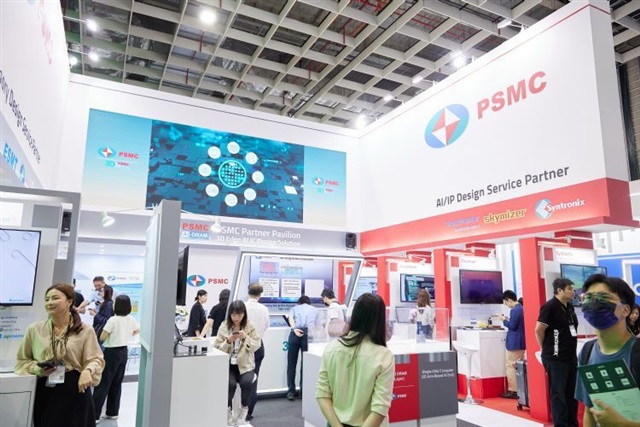
Powerchip Unveils 3D AI Foundry at COMPUTEX 2026
Powerchip, a prominent player in the semiconductor manufacturing landscape, captured industry attention with the announcement of its "3D AI Foundry" during COMPUTEX 2026. This initiative represents a significant leap forward in the production of chips dedicated to artificial intelligence, promising new capabilities for the integration of critical components. At the core of this innovation is the adoption of Wafer-on-Wafer (WoW) DRAM stacking, a technology that could redefine the performance and efficiency of future AI accelerators.
The introduction of a dedicated "AI Foundry" underscores the increasing specialization required for AI hardware manufacturing. The computational demands of Large Language Models (LLM) and other AI workloads push the limits of current packaging and integration technologies, necessitating advanced solutions to overcome traditional bottlenecks, particularly those related to memory.
Technical Detail: 3D WoW DRAM Stacking
The Wafer-on-Wafer (WoW) DRAM stacking technology is a key element of Powerchip's proposal. This approach enables the vertical integration of multiple layers of DRAM memory directly onto a logic wafer, such as a processor or an AI accelerator. Unlike traditional packaging techniques, which connect chips laterally or through complex interposers, WoW stacking creates direct, high-density connections between layers.
The advantages of this architecture are manifold. Firstly, it drastically increases the memory density available for a given physical footprint, a critical factor for AI models that require enormous amounts of VRAM. Secondly, it significantly reduces the distance between computing logic and memory, resulting in higher bandwidth and lower latency. This improved throughput is essential for LLM inference and training, where rapid data transfer between compute cores and memory is a primary limiting factor for overall performance.
Implications for On-Premise AI Infrastructure
For organizations evaluating the deployment of on-premise AI workloads, advancements in packaging technologies like Powerchip's 3D WoW DRAM stacking are highly relevant. The ability to have AI accelerators with greater VRAM and internal bandwidth can translate into more compact and powerful systems, reducing physical footprint and energy consumption per unit of performance. This is a crucial factor for the Total Cost of Ownership (TCO) of self-hosted infrastructures.
More efficient and dense hardware better supports data sovereignty and compliance requirements, allowing companies to keep their sensitive models and data within their air-gapped or strictly controlled data centers. The ability to run large LLMs locally, without relying on external cloud services, offers unprecedented control over data and security. For those considering on-premise deployments, there are significant trade-offs between initial CapEx and long-term OpEx, and hardware innovations like this can shift the balance towards more competitive local solutions.
Future Prospects and Trade-offs
Powerchip's announcement at COMPUTEX 2026 highlights a clear direction in the evolution of AI hardware: the increasingly tight integration between compute logic and memory. This trend is fundamental for unlocking new capabilities in Large Language Models and other artificial intelligence applications, enabling larger and more complex models with improved performance. However, the adoption of these advanced technologies also brings challenges.
Initial production costs for 3D WoW DRAM stacking can be high, influencing the final price of accelerators. Furthermore, the thermal management of such densely integrated chips requires advanced cooling solutions, which add complexity and cost to the infrastructure. Despite these trade-offs, Powerchip's innovation represents an important step towards the democratization of high-performance AI, making on-premise deployments increasingly feasible and attractive for a wide range of industrial sectors.





💬 Comments (0)
🔒 Log in or register to comment on articles.
No comments yet. Be the first to comment!